About Lithobates heckscheri (Wright, 1924)
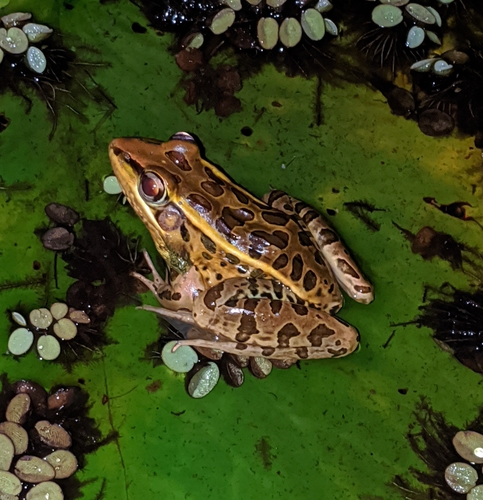
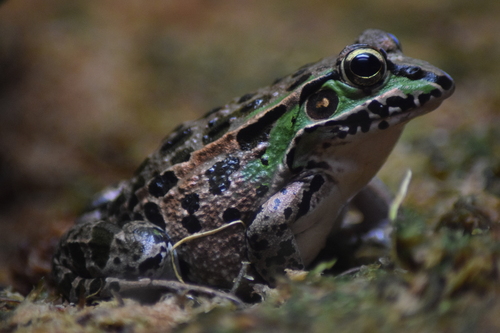
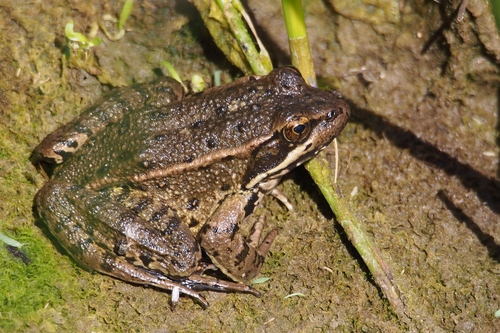
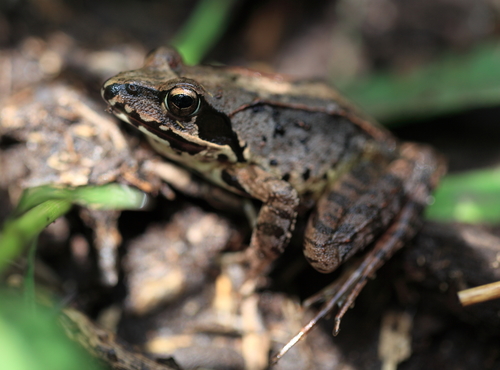
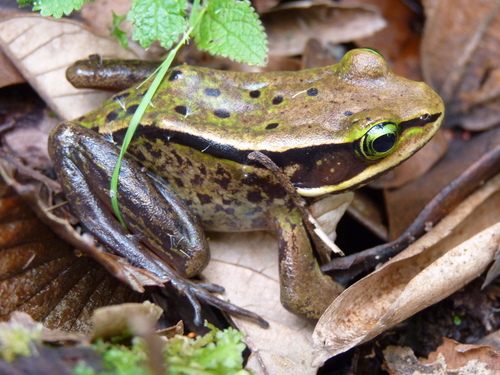
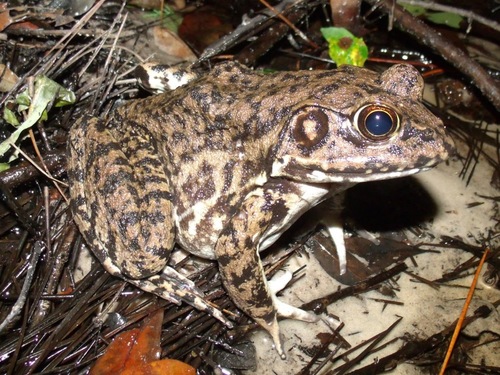
Description: The river frog (Lithobates heckscheri) is a very large frog species. Adult individuals commonly measure between 7 and 13 cm (3 and 5 inches) in length. Its skin is rough and wrinkled, and it lacks the dorsolateral ridges that are present on the green frog (Lithobates clamitans). The frog's back is some shade of dark green or blackish-green, and its belly is dark grey or blackish, marked with pale wavy lines and specks. A distinctive trait of this species is white spots on the lips, particularly the lower lip. This feature helps distinguish the river frog from bullfrogs (Rana catesbeiana) and pig frogs (Rana grylio). Another distinguishing feature is a pale band that outlines the groin. Males have a yellowish throat, and their tympani (eardrums) are larger than their eyes, while the tympani of females are smaller than their eyes.
Distribution and habitat: The river frog is endemic to the Atlantic and Gulf coastal plains of the southeastern United States. At least historically, its range stretched southward from southern North Carolina to southeastern Mississippi and northern Florida. It is now considered extirpated from North Carolina as a result of habitat loss. Its typical habitat consists of marshes and other wet areas with emergent vegetation, located near streams, rivers, ponds and lakes.