About Litaneutria minor Scudder, 1872
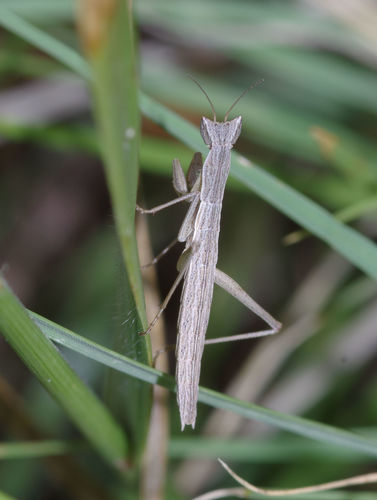
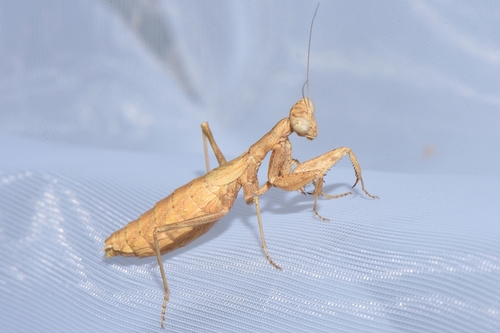
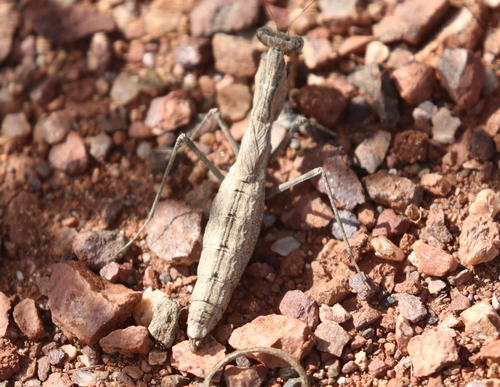
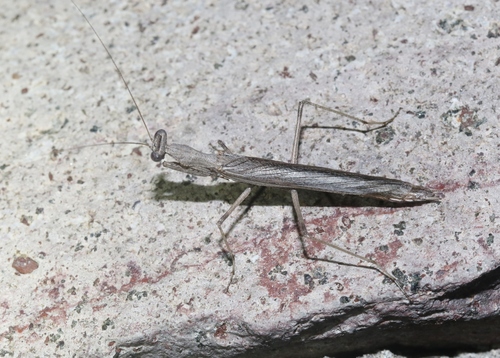
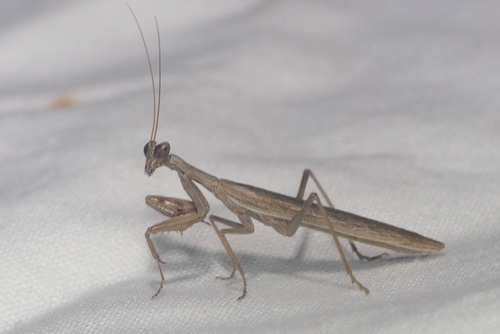
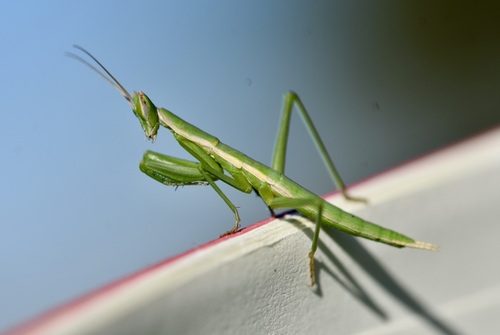
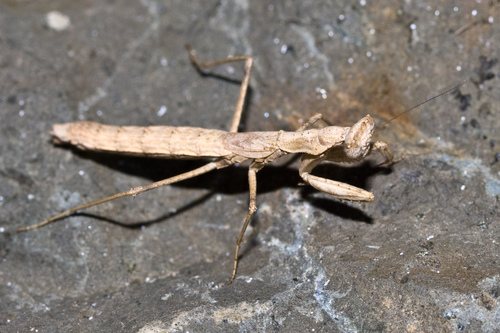
This species, known scientifically as Litaneutria minor Scudder, 1872, reaches approximately 30 millimeters (1.2 inches) in length for both males and females when mature in the wild. Adult individuals are typically colored dark grey or dark tan. The outer ventral margin of the fore femur bears 4 spines, the fore femur lacks the groove that is characteristic of other mantids, and this species has long, thin, filamentous antennae. Males have 8 abdominal segments and a brown spot near the base of the forewings; females have 6 abdominal segments, a rough pronotum, lack fully developed wings, and almost always show visible wing pads. While males have much more fully developed wings than females, they are not capable of flight. In ecology, L. minor can be observed actively hunting on open ground during sunny days. This ground mantid has only been recorded hunting either directly on the ground, or on small shrubs a few centimeters above ground level. Like all mantids, the front legs of L. minor are highly adapted to grab and hold captured prey. The four spines on the fore femur, alongside spines on the tibia, allow the front legs to rapidly close on prey to hold it in a tight grip, while the mandibles begin consuming the prey. As seen in most mantid species, nymphs of L. minor can sometimes be cannibalistic, and begin hunting on their first day after emerging. Young nymphs feed mainly on small flies, but as they grow, they will hunt and attack any prey they can overcome. Confirmed typical food sources for this species include moths, flies, grasshoppers, katydids, and crickets. Unlike most praying mantises that use a sit-and-wait hunting strategy, L. minor has been observed actively chasing down its prey. For its life cycle, L. minor is a solitary species, and like most other praying mantises, individuals only come together to mate. Mating timing for this species is heavily dependent on local weather conditions and prey availability. Typically, females are most likely to accept a mate and produce a successful egg clutch two weeks after their final molt. Male ground mantids detect receptive females by following pheromones released by sexually mature females. Once a male locates a female, he approaches slowly to identify himself as a mate rather than prey, then mounts the female. L. minor is an extremely aggressive mantid species, and females may sometimes mistake a potential mate for prey, attacking and eating the male. Cannibalism during mating occurs across many mantid species, usually in 6 to 30 percent of matings, but Litaneutria minor is an exception: nearly all females eat the male's head during mating. This unusually high rate of sexual cannibalism is not common among most mantid species. Two weeks after mating, females lay their egg cases, called ootheca, on twigs and branches. Each ootheca is 5 to 10 millimeters (0.2 to 0.4 inches) long, and contains 10 to 20 eggs. The eggs remain dormant over winter, and if they survive, nymphs emerge from the ootheca in early spring. Females molt approximately seven times, with their final molt occurring in mid to late summer. Males molt only six times, and also reach their final molt in mid to late summer. Nymphs and juvenile mantids spend all spring and early summer feeding on as much prey as possible to grow. Adults reach sexual maturity in late summer, and mate as soon as they become sexually mature. Females start laying eggs in late summer and early fall, and continue laying eggs until both females and males die off during the fall months. Only fertilized eggs survive the winter, and the next generation emerges the following spring.