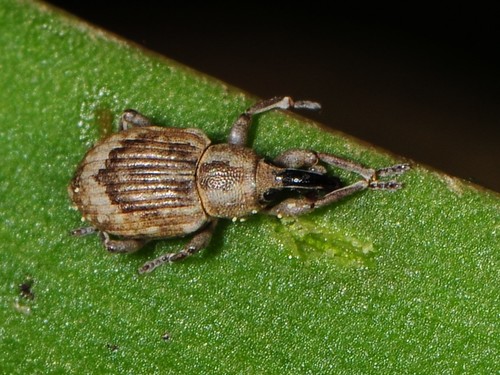
About Lissorhoptrus oryzophilus Kuschel, 1952
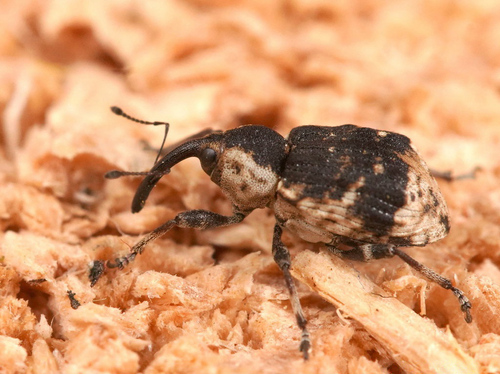
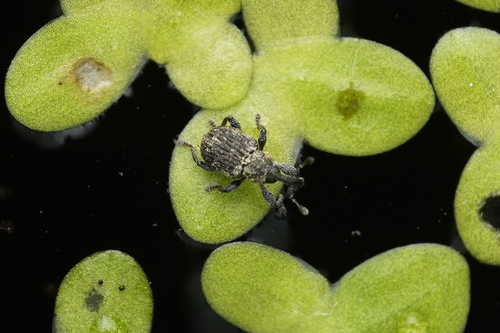
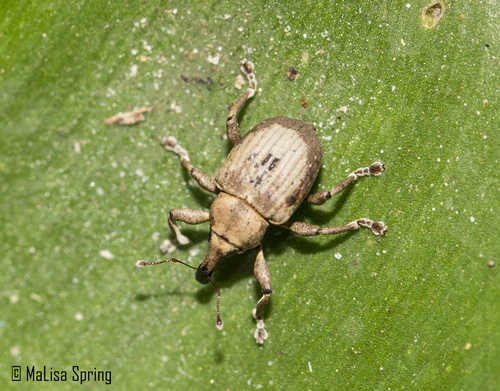
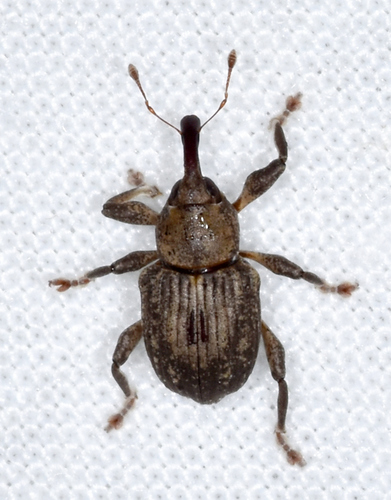
This section describes each life stage of Lissorhoptrus oryzophilus. Eggs are pearly white, cylindrical, and measure 0.8 mm long by 0.14 mm wide, with a very thin chorion. Females lay eggs inside leaf sheaths, and sometimes in roots. Eggs hatch into larvae after 4 to 9 days. Larvae are aquatic, and spend their entire lives in the rhizosphere. They are white, and reach up to 1 cm long when they reach the 4th instar. Larvae survive in the anoxic zone using modified spiracles shaped like dorsal hooks connected to the tracheal system. These hooks penetrate into the aerenchyma cells of rice plants and other wetland grasses to allow respiration. Larvae go through 4 instars, also called stadia, and complete their development in approximately 28 to 35 days. Pupae develop inside a small silk cocoon encased in mud that measures 0.5 to 0.9 cm long, and this cocoon is attached to roots. The pupal stage takes around 7 days to complete. Adult Lissorhoptrus oryzophilus are 3.3 to 3.7 mm long, including the rostrum. Their exoskeleton ranges in color from dark beige to brown or dark brown. Along the center of the elytra, some individuals have an elongated dark brown to brownish-black marking. The middle pair of legs has hydrophobic hairs that let adults swim (Hix et al. 2000).