About Lissopimpla excelsa (Costa, 1864)
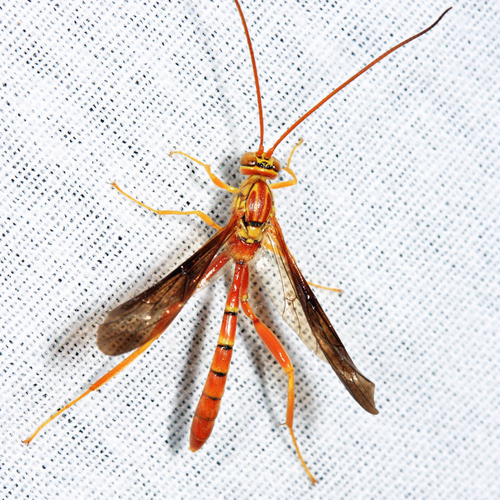
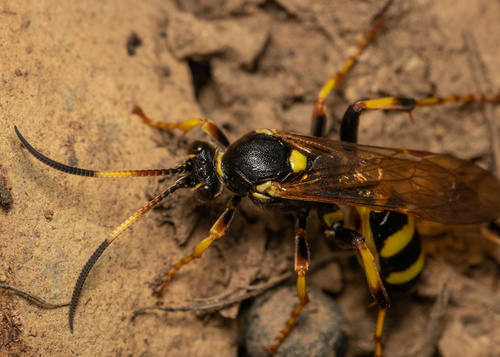
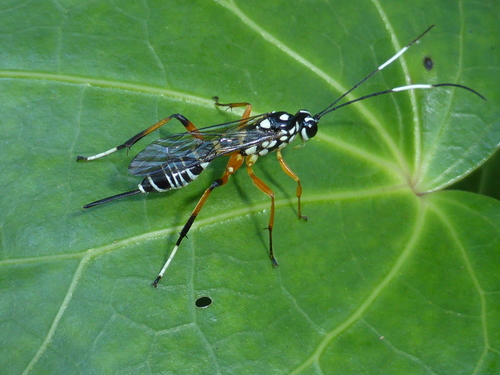
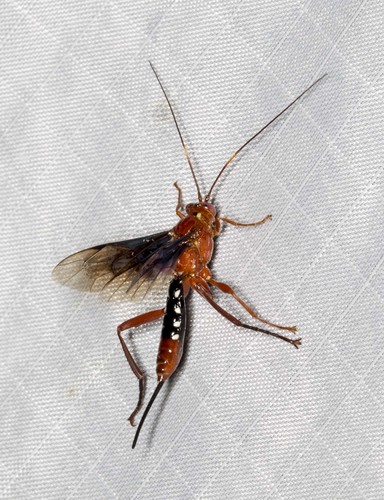
Lissopimpla excelsa, commonly called the orchid dupe wasp, is a species of wasp in the family Ichneumonidae that is native to Australia. It is also found in New Zealand, where it is known as the dusky-winged ichneumonid, and it is likely that the species was introduced there, though another source notes it may be native to New Zealand. This wasp pollinates all five Australian species in the orchid genus Cryptostylis. Male wasps mistake the orchid's flower parts for female wasps and attempt to copulate with the flower. Even though multiple Cryptostylis species can grow in the same location, they prevent cross-fertilization between species, and no hybrids have been observed in nature. Australian naturalist Edith Coleman made this discovery in 1928, and the term "pseudocopulation" was later coined to describe this interaction. Similar mimicry of female wasp body parts by orchid flowers has since been recorded in other orchid genera. While this interaction is called pseudocopulation, the male wasp performs vigorous copulation and ejaculates enough that the resulting emissions are visible to the naked eye on the flower parts. A 2008 field study confirmed these emissions contain wasp sperm. When viewed through the visual system of a hymenopteran, the flowers of Cryptostylis orchids and the body parts of female orchid dupe wasps are very similar in color, even though they look very different to the human eye. The specific colors that ichneumon wasps can see are not known, but bees and wasps have similar color perception, able to detect green, blue, and ultraviolet wavelengths. Cryptostylis flowers have no scent that humans can detect, but they do produce an odor that attracts orchid dupe wasps. Pseudocopulation between Lissopimpla excelsa and the orchid Cryptostylis subulata occurs in New Zealand. The orchid dupe wasp was first described by Italian entomologist Achille Costa in 1864 under the name Pimpla excelsa. In 1889, Joseph Kriechbaumer moved this species to the new genus Lissopimpla (where it became the genus's type species) and named it Lissopimpla octo-guttata Kriechb. The species was also known for many years as Lissopimpla semipunctata, but Costa's original 1864 name has taxonomic priority, so it is the currently accepted correct name. In terms of physical appearance, the head, mesosoma, legs, and apical segments of the metasoma are red-brown. The first four segments of the metasoma are black with paired large white spots, and the wings are a dark smoky brown, except at the apex of the fore wings. Like all species in the family Ichneumonidae, L. excelsa is parasitic. One species that it preys upon is Helicoverpa armigera, a pest species of noctuid moth.