About Liquidambar styraciflua L.
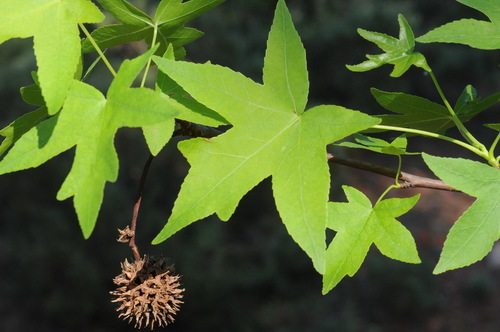
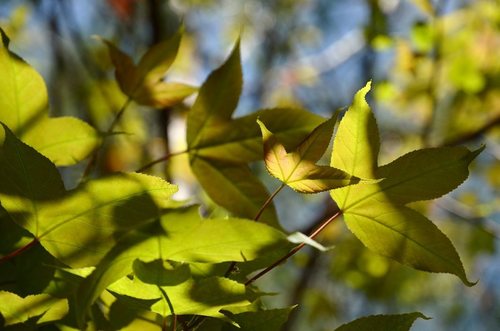
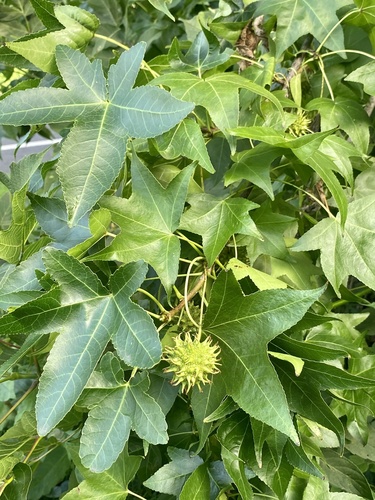
Liquidambar styraciflua L., commonly called American sweetgum, is a deciduous tree in the genus Liquidambar. It is native to warm temperate regions of eastern North America, and tropical montane areas of Mexico and Central America. Sweetgum is one of the most important valuable commercial forest trees in the southeastern United States, and it is a widely popular ornamental tree for cultivation in temperate climates. It is easy to identify by its unique combination of five-pointed star-shaped leaves (which look similar to maple leaves) and hard, spiked fruits. Currently, this species is classified in the plant family Altingiaceae, though it was previously considered part of the Hamamelidaceae family. In its native range, sweetgum is one of the most common hardwood species across the southeastern and Mid-Atlantic United States. It occurs naturally in lowland areas, ranging from southwestern Connecticut south to central Florida, through central Ohio and west to Illinois, southern Missouri, and eastern Texas. It is not found in the colder highland regions of Appalachia or the Midwestern states. This species also grows in Mexico from southern Nuevo León south to Chiapas, as well as in Guatemala, El Salvador, Belize, Nicaragua and Honduras. In Mexico and Central America, it is a characteristic cloud forest plant that grows at middle elevations in humid, more temperate mountainous areas. United States government distribution maps for this species incorrectly mark its southern distribution limit in Florida; the species grows abundantly at Highlands Hammock State Park in Sebring, Highlands County, Florida, and even grows in areas southwest of Lake Okeechobee. Traditionally, sweetgum has been used in Chinese medicine to treat conditions including diarrhea, coughs, and skin sores. Liquidambar styraciflua is a popular ornamental and forestry tree, cultivated for its distinct foliage and intense autumn leaf color. It is commonly grown throughout its native North American range, as well as in many other temperate regions of the world, including at moderately high elevations in the tropics. It is particularly well-regarded in Bogotá, Colombia. This species grows best in moist, acidic loam or clay soil, and can tolerate poor drainage. It typically grows alongside other coastal plain species such as willow oak and sweetbay magnolia. It has moderate salt tolerance. Chlorosis can develop when it grows on alkaline soil, especially in locations with low organic matter content. American sweetgum also does not grow well in shady areas. When grown as an ornamental tree in Australia, it is found across mainland Australia from southwestern Western Australia, southern South Australia, New South Wales, Victoria, all the way north to the Atherton Tablelands in far North Queensland. During the late 1970s and all through the 1980s, sweetgums were a popular choice for landscaping and street trees. Three varieties — Palo Alto, Festival, and Burgundy — were introduced in the late 1950s by the Saratoga Horticultural Foundation in Palo Alto, California, and became popular for California urban landscapes. They were favored for their pleasing appearance, striking fall colors, and ability to grow quickly and thrive. However, as these trees matured, damage caused by their surface roots and increased production of spiked seed balls led the species to be considered a nuisance and liability. Thousands of mature trees were removed, and repairs were required for nearby structures damaged by the roots. A study published in The Western Arborist concluded that sweetgums accounted for the highest number of trees causing this type of structural damage; in the city of Alameda alone, 69% of the Liquidambars planted in the city were already damaging or beginning to damage nearby structures. It is now recommended that these trees be planted at least 15 to 20 feet away from structures, and that they not be used as street trees. Many cultivars of Liquidambar styraciflua exist; cultivars marked agm have received the Royal Horticultural Society's Award of Garden Merit. 'Burgundy' produces dark red to purple fall colors that may persist through winter. 'Clydesform' has a columnar or narrowly pyramidal growth habit, grows slowly to 9 meters, produces yellow-orange fall colors, and is also sold under the name 'Emerald Sentinel'. 'Festival' has a columnar habit, pale green summer leaves, bright yellow, pink and red fall hues, and is less hardy than most cultivars. 'Firehouse' has a pyramidal habit, bright red fall color, defoliates early, and produces little to no seed. 'Goduzam' is variegated, turns pink to red-purple in autumn, and is also called 'Gold Dust'. 'Grazam' has a pyramidal form with glossy leaves, and produces orange, red and purple fall colors. 'Gumball' is a dwarf shrubby cultivar that seldom grows more than 2 meters (6 1/2 feet) tall, with purple-red fall color. 'Lane Roberts' (agm). 'Moraine' has an upright, rounded form, fast growth, red fall color, and is hardy to −30 °C. 'Palo Alto' produces various shades of red in fall, and grows best in California. 'Parasol' develops a rounded crown, reaches a mature height of 10 meters, and has deep red fall color. 'Penwood' (agm). 'Rotundiloba' is a sterile cultivar with rounded leaf lobes, originally discovered in North Carolina in the 1930s. 'Slender Silhouette' has a very narrow columnar growth form. 'Worplesdon' (agm) is a cutleaf cultivar with orange, red and purple fall colors. The organizers of the September 11th Memorial in New York donated a grove of sweetgum trees to the Flight 93 Memorial in Shanksville, Pennsylvania.