About Liquidambar orientalis Mill.
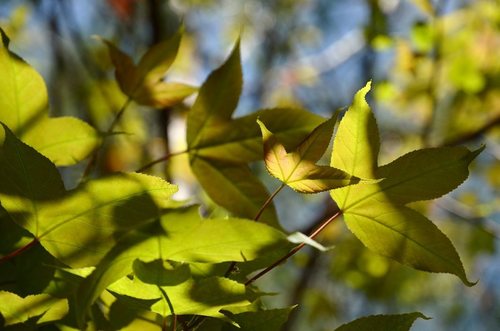
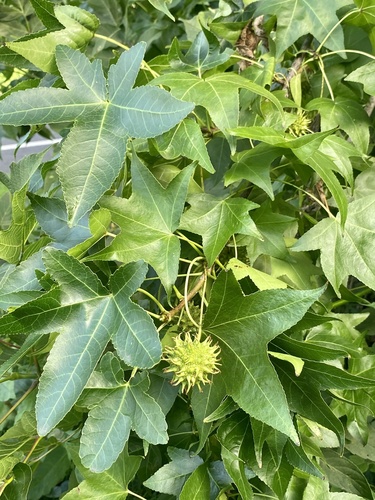
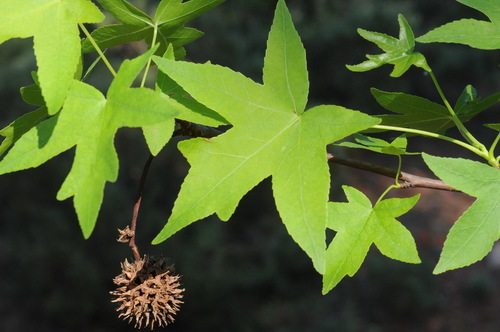
Liquidambar orientalis Mill., commonly known as Oriental sweet gum, is a deciduous tree that reaches 30–35 m (98–115 ft) in height, with a trunk up to 100 cm (39 in) in diameter. It produces unisexual flowers that bloom from March to April; fruits ripen from November to December, and its seeds are dispersed by wind. This species is highly ornamental and particularly valued for its colourful autumn foliage. Oriental sweet gum grows best at elevations between 0–400 m (0–1,312 ft), in areas with a mean annual rainfall of 1,000–1,200 mm (39–47 in) and a mean annual temperature of 18 °C (64 °F). It reaches optimal growth on rich, deep, moist soils such as bogs, river banks and coastal areas, but it can also grow on slopes and in dry soil. Young bark is smooth (not cracked) and grayish, while old bark becomes fissured and turns grayish-brown or brown. Young lenticels start out greenish, later becoming reddish-brown and thin; small lenticels on smooth, shiny bark are visible to the naked eye. Lateral buds are arranged in a multi-row spiral along shoots, and are roughly angled toward the lenticels. The apical bud is slightly larger than the lateral buds. Buds are egg-shaped to ellipsoid, pointed, and shiny; scale margins are slightly fringed, brown, and hairless, while the scales themselves are apple green-brown. Buds are aromatic when rubbed. Leaves have five lobes and radial veins, with each lobe usually divided into secondary lobes. Lobes have blunt or pointed tips, and three or seven lobes occur rarely. Leaf margins are finely and regularly toothed. At the base of the leaf blade, where the main veins join, there are stalked bundles of hairs; on some leaves these hairs are very sparse. The upper leaf surface is completely hairless and bright green. Leaf stalks are thin and quite long. Male flowers form catkin-like clusters: those on the upper axis of the inflorescence are dense and sessile, while those on the lower side are less common. Female flowers form spherical heads, made up of small reddish florets. When mature, the infructescence becomes a spiky cone-shaped structure that is grayish-green. Female flowers are green when they first form, later turning reddish; they are slightly hairy, persist on the mature fruit, and harden into a woody structure. Fruits hang from the end of a long stalk. When fruits mature, they harden, the capsules open, and seeds are released. Seeds are small-winged, dark brown, flattened, rounded at the base, and pointed at the tip; the seed coat is shiny, thin, and hard. This Tertiary relict endemic taxon occurs in pure forests notably in specially protected areas of southwestern Turkey. A 286 ha (710 acres) nature reserve and arboretum for the species' preservation is located between Dalyan and Köyceğiz in Muğla Province, Turkey, and a large stand also surrounds Marmaris. An additional 88.5 ha (219 acres) protected sweetgum forest is located in Bucak district of Burdur Province, alongside the Karacaören dam reservoir on the road to Antalya. The species also occurs locally in Beyağaç and Tavas districts of Denizli Province. The total area of pure Oriental sweet gum forest in Turkey covers 1,348 ha (3,330 acres), all in the southwestern region of the country. This represents a marked decrease from the 1940s extent of 6,000–7,000 ha (15,000–17,000 acres), but protective measures and infrastructure implemented since the 1980s have halted stand loss and led to slight improvements in habitat extent. The species also occurs on the Greek island of Rhodes, where it grows in a riparian forest within a narrow, steep valley on the island's north coast. Historically, the aromatic oil (called storax, or styrax in Ancient Greek) from this species was used as a love potion and perfume by Egyptian Queen Cleopatra, and has been used in medicine since the time of Hippocrates. The ancient Egyptians also used this oil during embalming. Amphorae holding the oil recovered from sunken Phoenician ships confirm that sweetgum oil was an important commodity in ancient Mediterranean trade. Today, extraction of the tree's sap and production of balsam (called sığla yağı in Turkish), along with export of these products, plays an important role in local economies of Greece and Turkey. Sap harvest and oil production is a strenuous process that lasts from May to November, divided into several separate phases. Thick sap is collected between June and September by gradually stripping bark from a quarter of the total trunk lengthwise. Trunk wounding triggers sap flow, which can be further stimulated by tapping. Collected sap is softened in boiling water, then pressed. The resulting styrax is diluted with water to keep it soft and preserve its aroma. Steam distillation produces a light yellow essential oil. There is a risk that the current generation of master oil producers will not be replaced in the near future. In English, this oil is known by many names: it is often called storax as a general term for all sweetgum oils, and also goes by styrax Levant, styrax gum, Asiatic storax, balsam storax, liquid storax, Oriental sweetgum oil, or Turkish sweetgum oil. When diluted with a suitable carrier oil, it is used externally in traditional medicine. It is a distinct product from the benzoin resin obtained from tropical trees of the genus Styrax. The hydrocarbon styrene was named for Levant styrax from Liquidambar orientalis, from which it was first isolated, rather than for the genus Styrax. Industrially produced styrene is now used to manufacture polystyrene plastics, including Styrofoam.