About Liquidambar formosana Hance
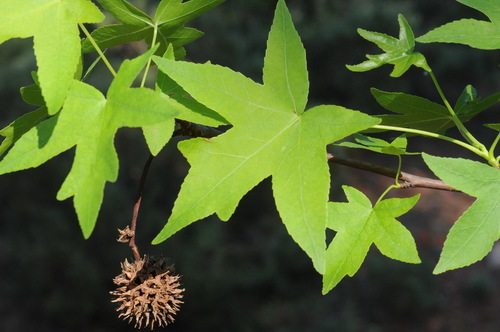
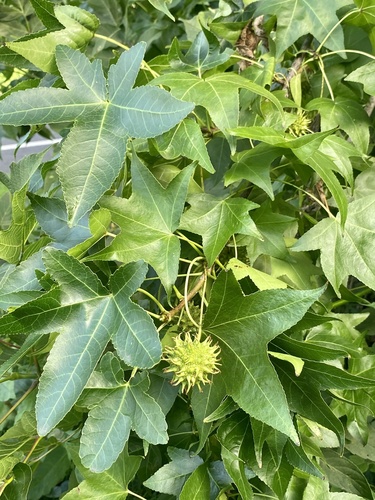
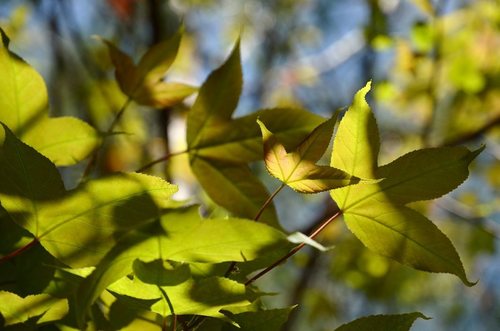
Liquidambar formosana Hance is a large native deciduous tree reaching 30–40 meters in height. Its leaves are 10 to 15 centimeters wide, three-lobed, differing from the five- to seven-lobed leaves of most American Liquidambar species. Foliage turns a very attractive red in autumn. Leaves are alternately arranged, simple, palmately-veined, and have serrated margins. Its roots can be aggressive, and branches are usually covered with corky projections. This species is monoecious, meaning both male and female unisexual flowers grow on the same individual. Male flowers form catkins, while female flowers form dense spherical heads. The fruit is burr-like due to its persistent styles. Liquidambar formosana grows primarily in warm temperate zone woodlands. It requires moist soil and can tolerate conditions ranging from full light to no shade. Its documented distribution includes Hong Kong, Central and Southern China, South Korea, Taiwan, Laos, and Vietnam. This species has a wide range of documented medicinal uses. Leaves and roots are used to treat cancerous growths. Stem bark is used to treat fluxes and skin diseases. Fruits are used to treat arthritis, lumbago, oedema, oliguria, decreased milk production, and skin diseases. Stem resin is used to treat bleeding boils, carbuncles, toothache, and tuberculosis, and the tree trunk produces aromatic resin. Extracts from this resin are used to promote blood circulation and relieve pain. Liquidambar formosana is rare in cultivation. In its native regions, its wood is used to make tea chests, and its leaves are used as food for silk worms.