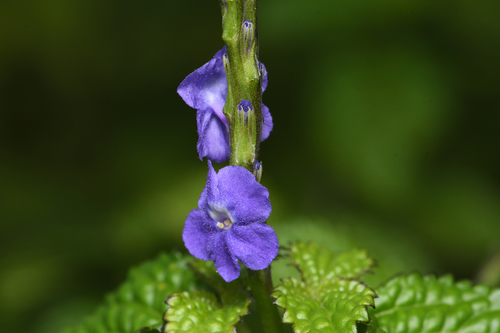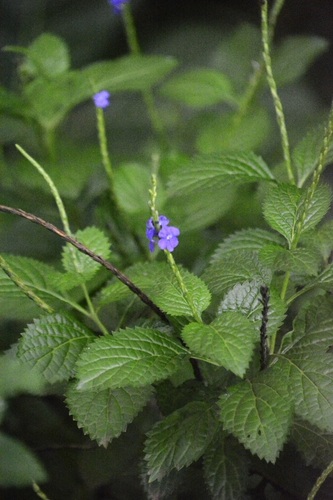
About Lippia dulcis Trevir.
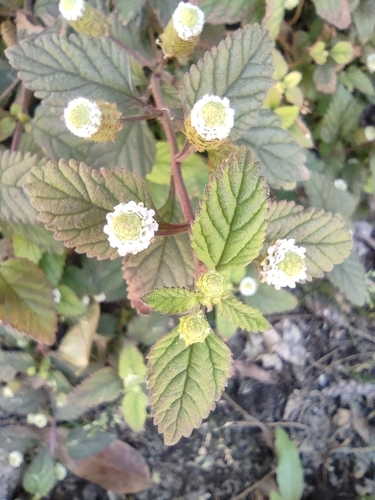
Lippia dulcis Trevir., with the synonym Phyla dulcis, is a species of perennial herbaceous plant. It is native to southern Mexico, the Caribbean (including Cuba, Hispaniola, and Puerto Rico), Central America, Colombia, and Venezuela. It has several common names: Aztec sweet herb, bushy lippia, honeyherb, hierba dulce, and tzopelic-xihuitl, which is its Nahuatl name. Its buds are sold as dushi or dulce buttons; these words mean "sweet" in Papiamento and Spanish respectively. Historically, this plant has been used as a natural sweetener and medicinal herb in its native Mexico and parts of Central America. It was used by the Aztecs, and was introduced to the Spanish after the Spanish arrived. The plant's sweet taste comes from a sesquiterpene compound called hernandulcin, which was discovered in 1985. This compound is named for Francisco Hernández, the Spanish physician who first described the plant in the sixteenth century. Use of Lippia dulcis has not become widespread, because the plant also contains high levels of bitter compounds, most notably camphor.