About Lippia alba (Mill.) N.E.Br. ex Britton & P.Wilson
Lippia alba (Mill.) N.E.Br. ex Britton & P.Wilson is a species of flowering plant in the verbena family, Verbenaceae. It is native to southern Texas (United States), Mexico, the Caribbean, Central America, and South America. It has been introduced by humans to Australia and India. In Ethiopia, this plant is called koseret (Amharic: ኮሰረት), where it is used as a cooking herb, especially to prepare the spiced butter niter kibbeh. Its common names include bushy matgrass, bushy lippia, hierba negra, juanilama, pamporegano, poleo, and pitiona.
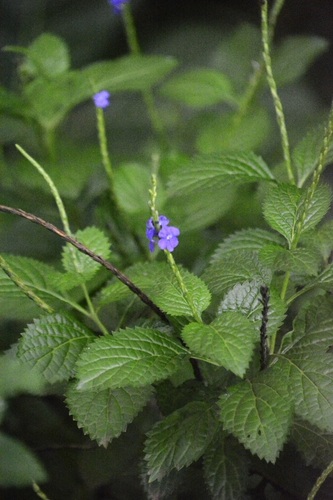
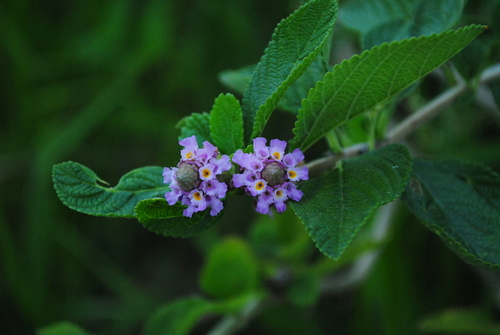
This plant is a multi-branched shrub that grows up to 1.5 m (4.9 ft) tall. Its leaves are 1 to 3 cm (0.39 to 1.18 in) long and 0.9 to 2 cm (0.35 to 0.79 in) wide, and grow opposite one another or in groups of three. Its flowers, which have white, pink, or light blue-purple corollas, form on spikes 2 cm (0.79 in) long.
Lippia alba is widely cultivated as an ornamental plant, valued for its aromatic foliage and attractive flowers. The composition of its essential oil varies between individual plants, and may contain piperitone, geranial, neral, caryophyllene, camphor, eucalyptol, limonene, carvone, germacrene, α-guaiene, β-ocimene, linalool, or myrcene. Its leaves are used to flavor foods, including mole sauces from Oaxaca, Mexico. Medicinally, the plant is used for its somatic, sedative, antidepressant, and analgesic effects.