About Lipoptena mazamae Rondani, 1878
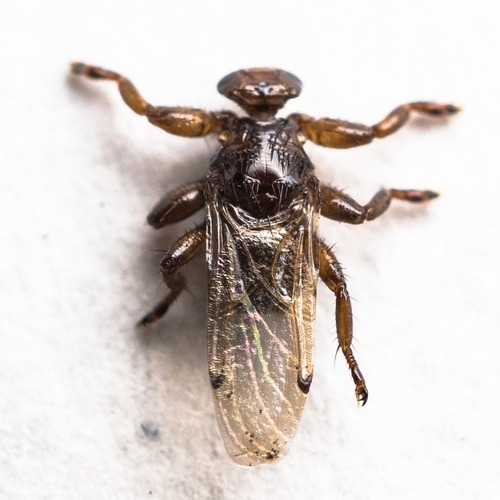
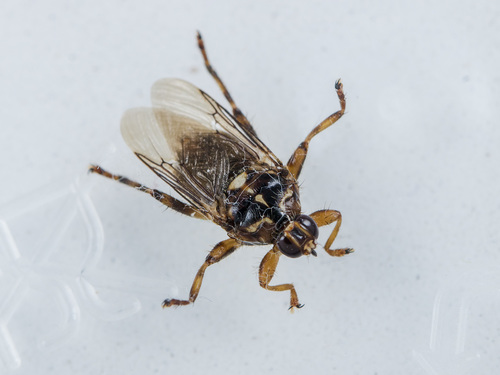
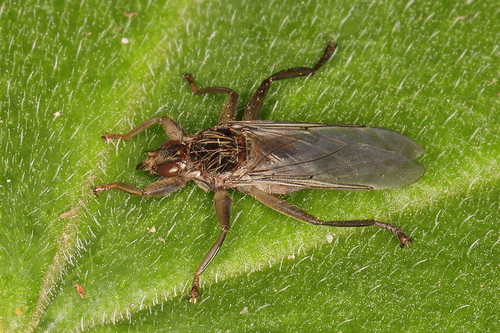
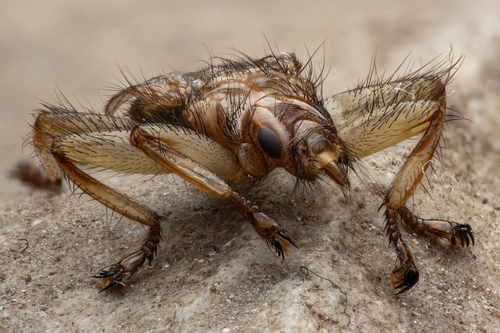
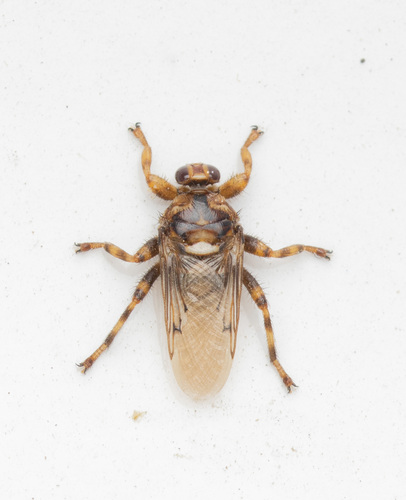
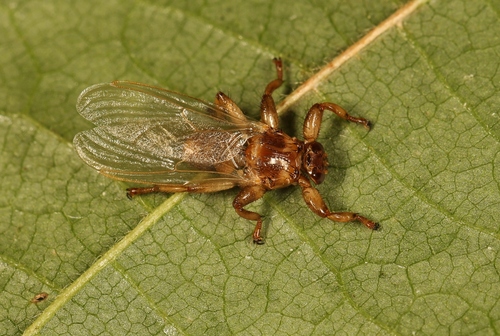
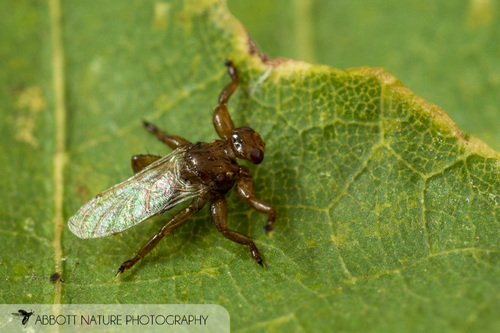
Lipoptena mazamae, commonly known as the Neotropical deer ked, is a species of fly in the family Hippoboscidae. This insect is a blood-feeding parasite. Its primary known hosts include white-tailed deer (Odocoileus virginianus) found in the southeastern United States and Central America, and red brocket deer (Mazama americana) ranging from Mexico to northern Argentina. It also acts as an incidental parasite of domestic cattle, cougars (Puma concolor), and humans. Neotropical deer keds are small, brown, flattened flies. Females are slightly larger than males: females have a body length of 3.5 to 4.5 mm, while males reach 3 mm in body length. They have a tough protective exoskeleton that prevents them from being crushed. After locating a suitable host, they shed their wings. Like all species in the Hippoboscidae family, both adult males and females feed on blood. They are frequently misidentified as ticks. Female flies produce only one larva at a time, and retain the larva inside their body until it is ready to pupate. The larva feeds on secretions from a milk gland located in the female's uterus. After completing three larval instars, a white pre-pupa forms that immediately develops into a hard, dark puparium. Pupae are typically deposited in locations where the host deer slept overnight. Once pupation is complete, a winged adult emerges and flies off to find a suitable host. When an adult finds a host, it sheds its wings and remains permanently associated with that same host, a life cycle trait typical of most members of the Hippoboscidae family. L. mazamae is known to carry multiple species of the bacterium Bartonella. However, it has not yet been definitively confirmed whether these flies act as active vectors for Bartonella infections, or if they carry the bacteria only as a byproduct of their blood-feeding behavior.