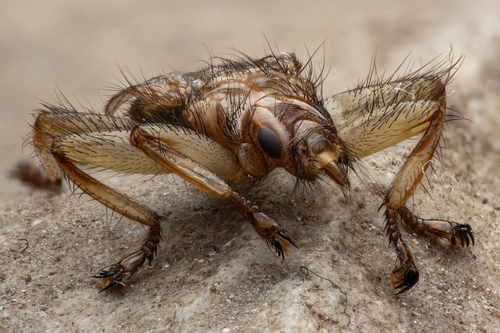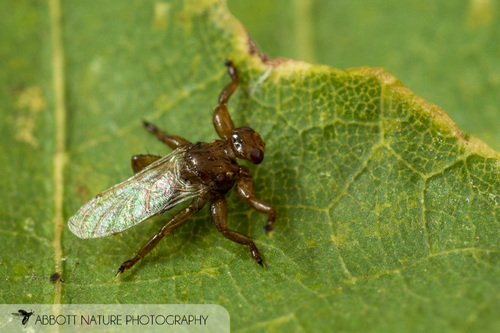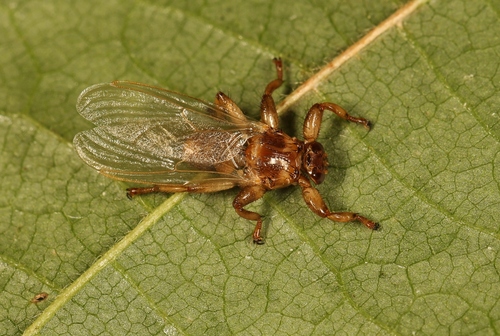
About Lipoptena cervi (Linnaeus, 1758)
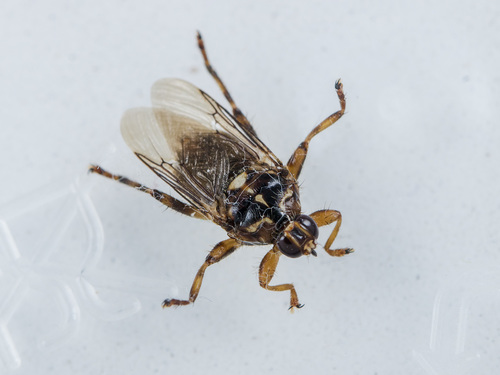
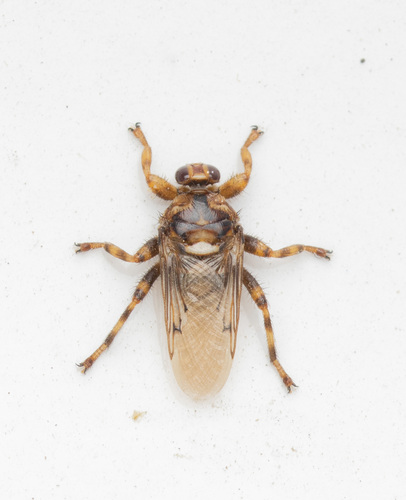
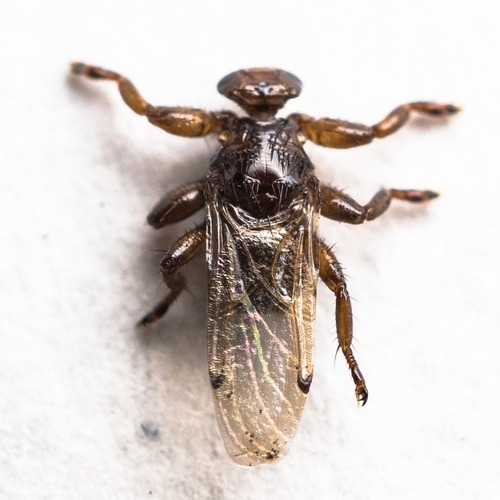
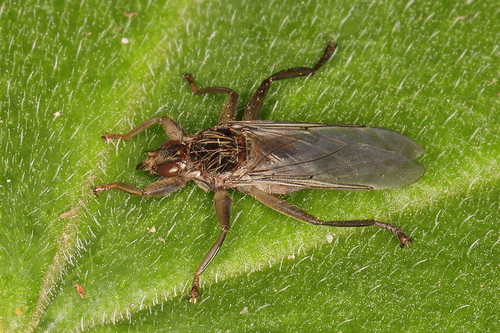
Lipoptena cervi, commonly known as the deer ked or deer fly, is a species of biting fly belonging to the louse fly family Hippoboscidae. This insect is a blood-feeding parasite that targets elk, deer, and other members of the deer family. After reaching a host animal, it burrows through the host’s fur to suck blood. Adult L. cervi are brownish, measuring just 5–7 mm (0.20–0.28 in) in length. Their flat, elastic bodies make them difficult to remove. L. cervi is a weak flier that can only travel short distances by flight. Once it reaches its host target, it sheds its wings and begins burrowing through the host’s fur. This species is most commonly found in temperate regions of Europe, Siberia, and northern China, and has been introduced to North America. Its confirmed distribution includes most of Europe (Great Britain and Ireland included), Algeria, eastern Siberia, and northern China. It was introduced to and is now established in the Eastern United States, specifically in New Hampshire, Massachusetts, Pennsylvania, Idaho, and New York. It spread from Russia to Finland in the early 1960s; in Finland, it primarily feeds on moose, and is currently spreading to reindeer.