About Lipophrys pholis (Linnaeus, 1758)
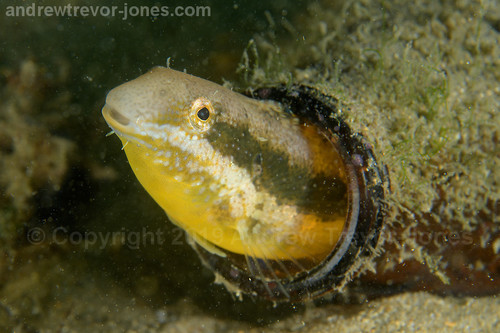
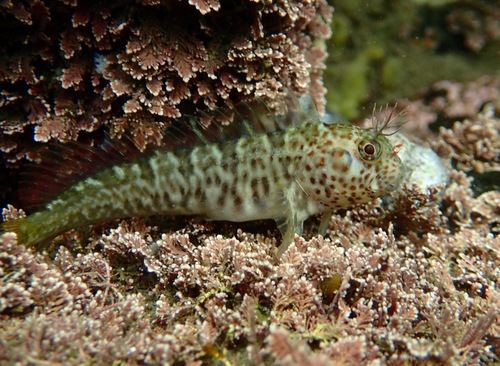
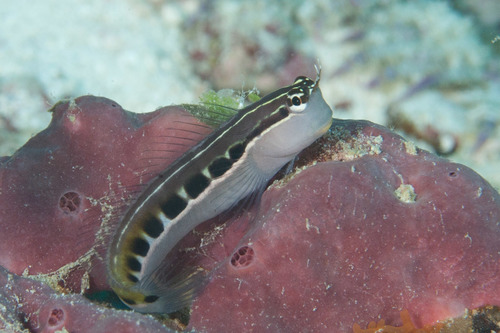
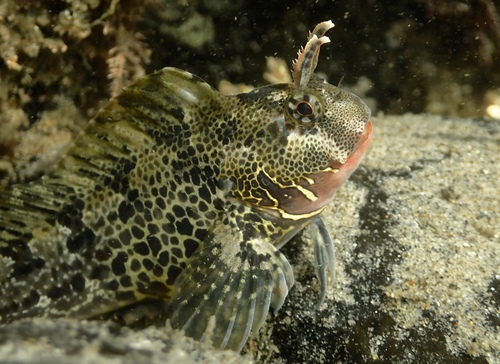
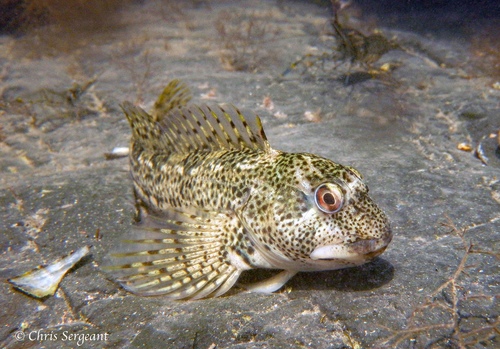
Lipophrys pholis has an elongated body that reaches a maximum length of 16 centimetres (6.3 in). It matches the typical blenny body shape, with an elongated body and a rather large, blunt head that has relatively large eyes set high up. As individuals age, they develop a fleshy ridge on the forehead. Its base body color is brownish, marked with green or yellow spots, and dark spots arranged into 5 to 6 vertical bars along the body. There is also a single large black spot near the origin of the dorsal fin. The base background color can change based on the surrounding habitat, and individual fish can range from blotched dark brown to blackish. When in breeding condition, males turn entirely black, with a contrasting white mouth and a pale blue edge along the dorsal fin. Lipophrys pholis has a wide distribution in the north-eastern Atlantic Ocean and the western Mediterranean Sea. Its range extends from Norway south to Morocco and Madeira, and into the Mediterranean as far east as the Balearic Islands. It is very common along the coasts of Britain and Ireland. This species, commonly called the shanny, is an intertidal fish that shows homing behavior, and lives along rocky coasts in shallow waters. It can stay out of water while sheltering under rocks or seaweed. It is largely active during the day at high tide, and can breathe air when exposed by the ebbing tide. At low tide, it prefers to stay in rock pools; it only shelters in crevices or under boulders if it cannot return to its preferred pool. Its diet is made up of small benthic invertebrates, especially snails, barnacles, and amphipods, plus some algae. Less important prey items in its diet include crabs, polychaetes, isopods, copepods, limpets, mussels, and other small molluscs. This species is oviparous: females lay eggs that are 1.5 mm in diameter. The eggs are demersal and stick to the substrate. Spawning takes place in the warmer months from April to August. Males and females mate in pairs; a single male will mate with multiple females and guard all of their eggs. Each female spawns three times per breeding season. Eggs are laid under rocks in the intertidal zone, and young larvae are commonly found on shorelines in the autumn.