About Liomys irroratus (Gray, 1868)
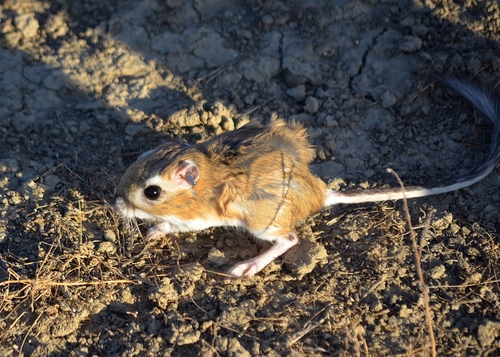
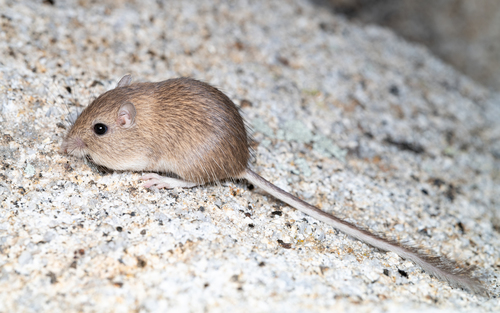
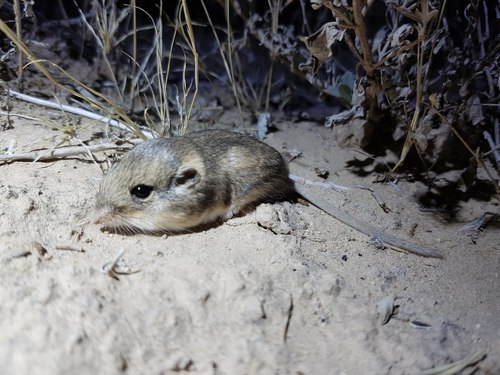
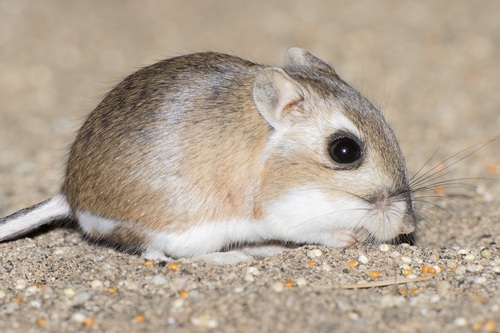
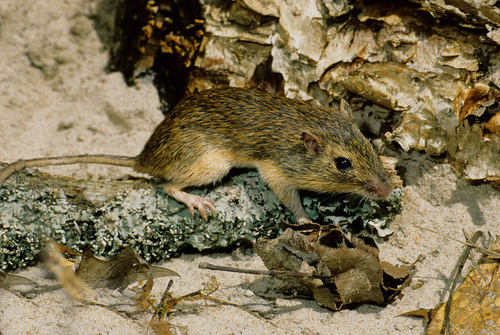
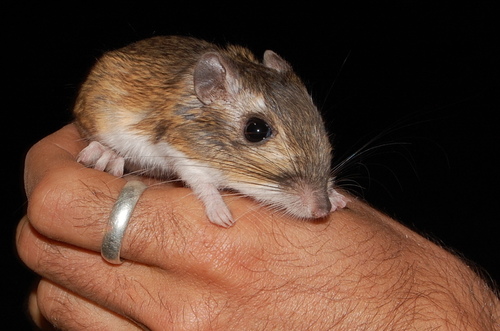
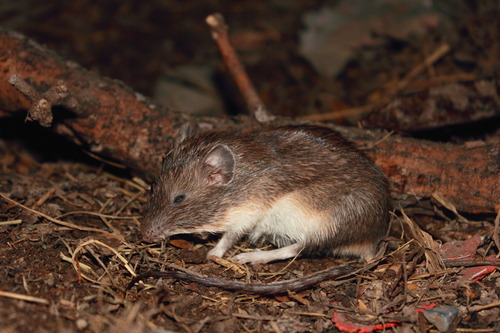
The Mexican spiny pocket mouse, with the scientific name Liomys irroratus (Gray, 1868), has seven recognized subspecies, and there is considerable variation in color and size across different populations. In general, it is a medium-sized member of the genus Liomys. Adults reach a head and body length of approximately 12 cm (4.7 in), with a tail of roughly the same length. Its coat is made up of a mixture of stiff spines and soft hairs; because the soft hairs lie flat, the spines are the most noticeable feature of the pelage. The upper surfaces of the head and body are greyish-brown, while the underparts are whitish. A pinkish or buff lateral line separates these two color regions. Juveniles are grey and do not have spines when young; spines grow into the coat as they mature. The soles of its feet are covered in hair, and this species is unique within its genus in having five tubercles on the hind foot instead of six. The Mexican spiny pocket mouse is endemic to parts of Texas (United States) and Mexico. Its range extends from just north of the Rio Grande southward to the Mexican Plateau, with its southernmost limit at Zapotitlán in the state of Oaxaca. It inhabits dry shrubland at elevations up to 3,000 metres (9,800 ft). Where their ranges overlap, it occupies drier, upland habitats compared to the painted spiny pocket mouse (Liomys pictus). It is not typically found in areas that receive less than 50 centimetres (20 in) of annual rainfall.