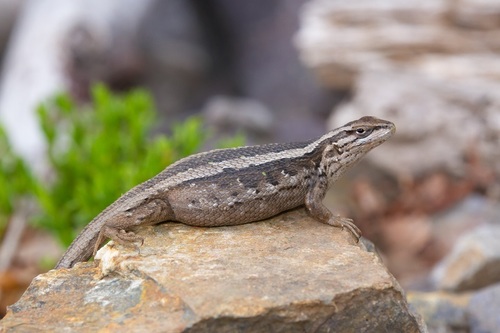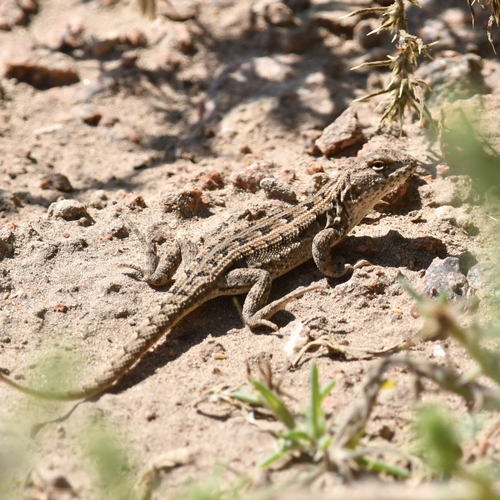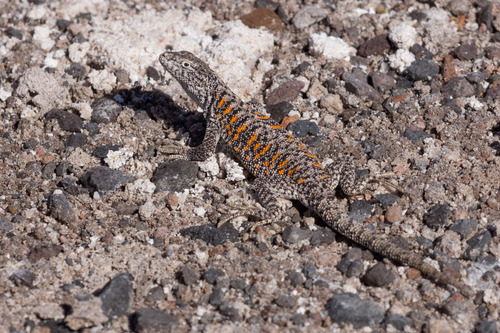
About Liolaemus fabiani Yáñez & Núñez, 1983
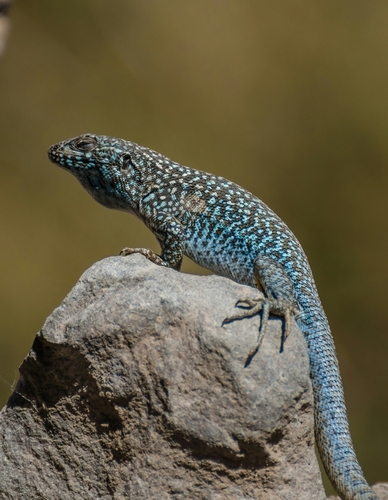
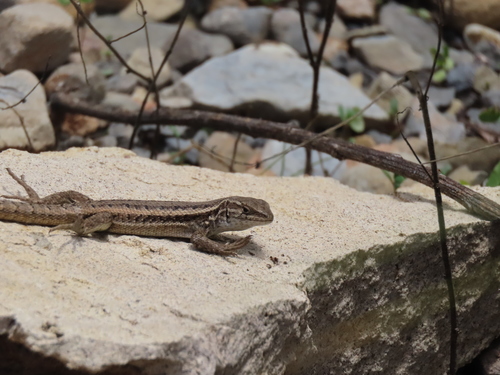
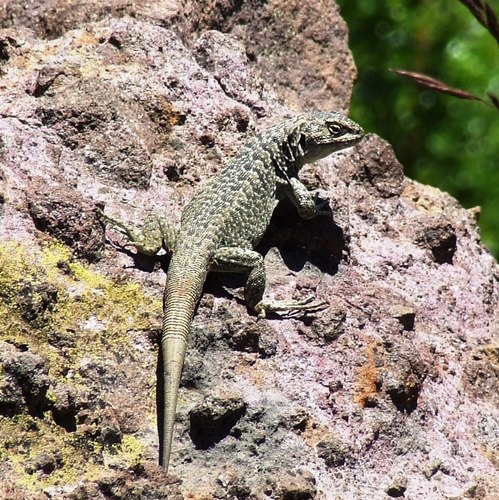
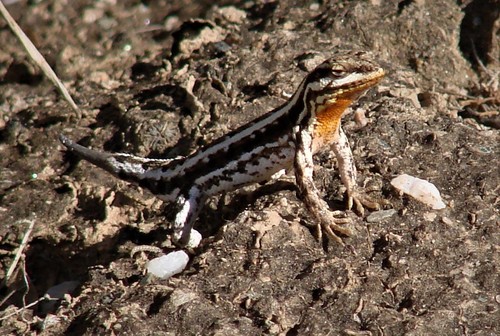
Liolaemus fabiani was first described by José L. Yáñez and Herman Núñez in 1983. The main diagnostic features of this species are as follows: a subtriangular head, with temporal and occipital regions that are more prominent than in other species of the Liolaemus genus; smooth, triangular dorsal humeral scales; and a color pattern marked with red and black spots. L. fabiani is endemic to the Salar de Atacama, the Atacama salt flat, located in northern Chile. The original type specimen sample was collected at a high elevation of 2,450 m (8,040 ft) near San Pedro de Atacama in Llano de Vilama, in September 1981 by the Chilean National Museum of Natural History. The preferred natural habitat of L. fabiani is hot desert, at altitudes ranging from 2,300–3,000 m (7,500–9,800 ft). Individuals of this species live near water, and have been observed swimming while searching for prey. L. fabiani is viviparous.