About Linyphia triangularis (Clerck, 1757)
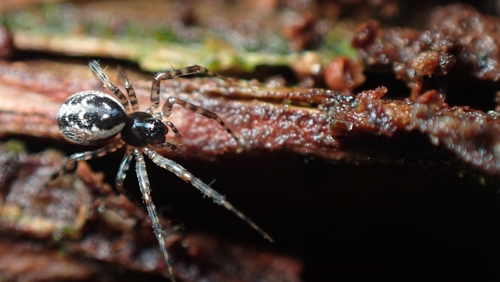
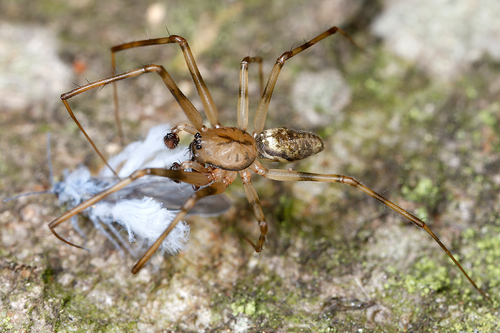
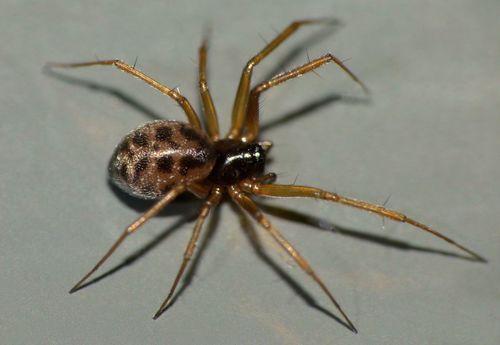
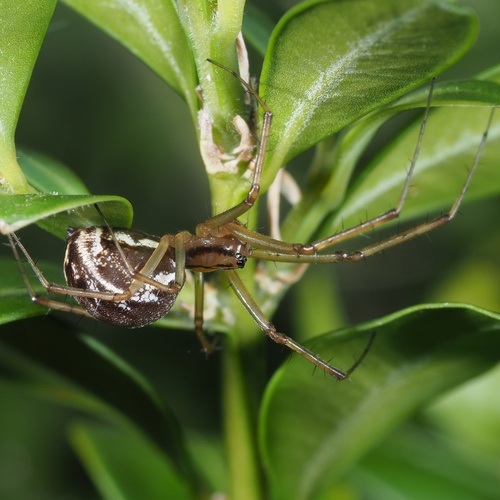
Linyphia triangularis (Clerck, 1757) grows up to 6 millimetres (0.24 in) long. Its carapace is pale brown with darker markings along the edges and down the centre line; its opisthosoma has a coarsely serrate brown band against a white background, with additional brown markings along the sides. The legs are greyish brown and bear many long spines. This species is abundant throughout Europe. It has been introduced to the U.S. state of Maine, where it was first reported on 28 August 1983 at Stover Corner. It has been recorded from at least 15 of the state's 16 counties, and is now abundant within Acadia National Park and some other coastal areas of Maine. Linyphia triangularis lives in a wide range of habitats, and can be found among low bushes and vegetation. It spins a horizontal sheet-web, and rests on the underside of the web to wait for prey. Adult Linyphia triangularis are active in late summer and autumn. Prey become snared by "barrage lines" above the web and fall onto the horizontal sheet, where they are killed by L. triangularis, but are not wrapped in silk.