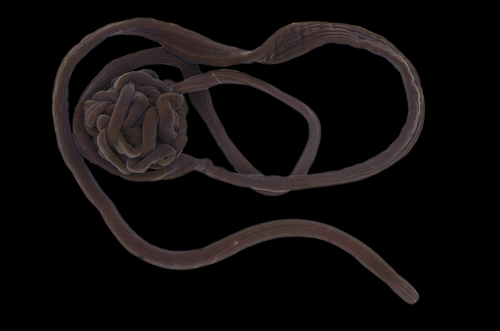
About Lineus longissimus (Gunnerus, 1770)
Lineus longissimus, commonly known as the bootlace worm, may grow to extreme lengths but is usually only 5 to 10 millimetres (0.20 to 0.39 in) in width. Its body is brown with lighter longitudinal stripes. The mucus it produces contains a relatively strong neurotoxin, which it uses for defense against predators. When handled, it secretes large amounts of thick mucus with a faint pungent smell, described as reminiscent of iron or sewage. This toxic mucus has been shown to kill crabs and cockroaches, and could potentially have applications as an agricultural insecticide. Tests of this toxin have demonstrated low toxicity to human cells, as well as low bactericidal and bacteriostatic properties. In 1864, William M'Intosh described a specimen that washed ashore near St Andrews, Scotland, after a severe storm. This specimen measured more than 55 m (180 ft) long, longer than the longest known lion's mane jellyfish, which is often considered the longest animal in the world. However, extreme length records for this species should be approached with caution, as nemertean bodies are flexible and can easily stretch far beyond their usual resting length. Like other nemerteans, Lineus longissimus feeds using an eversible proboscis. Since it belongs to the class Anopla, its proboscis is not armed with a barbed stylet. Instead, it has a cluster of sticky filaments at the tip of its proboscis that it uses to immobilize prey. Lineus longissimus is found on the coasts of Norway and Britain, the east coast of Denmark, and the west coast of Sweden.

