About Lindera benzoin (L.) Blume
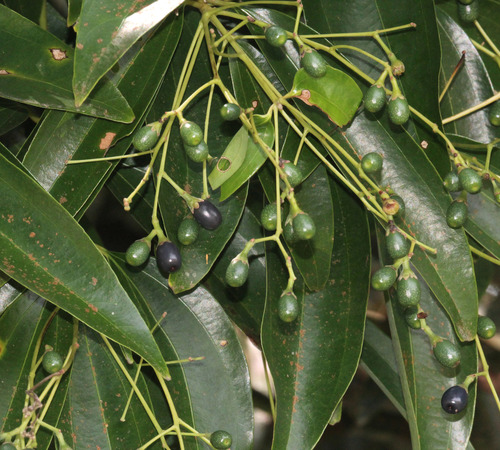
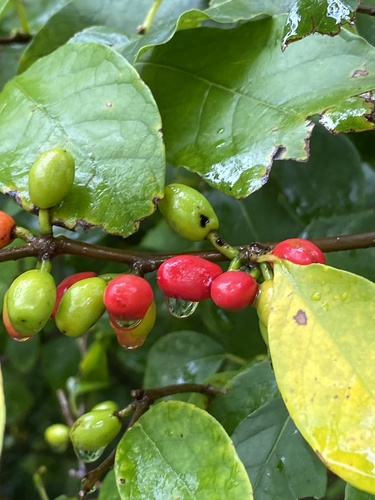
Spicebush, scientifically named Lindera benzoin (L.) Blume, is a deciduous shrub that reaches 1.8–3.7 metres (6–12 ft) in height. It grows in colonies and often reproduces via root sprouting, forming clumps or thickets. Its leaves are alternately arranged on stems, simple in shape, 6–15 cm (2–6 in) long and 2–6 cm (1–2 in) wide. Leaves are oval, or are widest beyond their midpoint, have smooth untoothed edges, are dark green on the upper surface and paler underneath. Both leaves and stems are aromatic when crushed, with a spicy, citrusy scent; this characteristic gives the plant its common name and the specific epithet benzoin. In autumn, the leaves turn a bright yellow color. Yellow flowers grow in noticeable clusters that emerge in early spring, before new leaves begin to develop. The flowers have six sepals and carry a very sweet scent. The ripe fruit is a red, ellipsoidal, berry-like drupe high in lipids, about 1 cm (1⁄2 in) long, and is eaten by several species of birds. It has a turpentine-like taste and aromatic scent, and contains one large seed. Spicebush is dioecious, meaning individual plants are either male or female, so both sexes must be present in a garden to produce drupes with viable seeds. Like other dioecious plants, female plants incur higher reproductive costs than male plants. In wild populations, males are typically more numerous than females, which is possibly a result of the heavier reproductive burden on females. The stem of L. benzoin has slightly rough but smooth bark, covered in small, circular lenticels that give the stem its rough overall texture. It is native to eastern North America. Within its native range, it is a relatively common plant that grows in the understory of moist, rich woodlands, particularly those with exposed limestone. Many animals feed on the leaves, twigs, and berries of spicebush. Mammals that feed on it include white-tailed deer, Eastern cottontail rabbits, and opossums. Over 20 species of birds, including gamebirds and songbirds such as ring-necked pheasant, bobwhite, and ruffed grouse, are known to feed on spicebush. The berries are a favorite food of wood thrushes. Spicebush is often cultivated in gardens or along garden edges. Its brightly colored fruits, early blooming flowers, and rounded growth habit make it a desirable garden plant. It is hardy in USDA zones 4–9, tolerates shade very well, and will also grow in full sun. Plants grown in full sun tend to grow denser and produce more berries and flowers than those grown in full or partial shade. Growing from seed is recommended, because the plant's extensive root system does not tolerate transplanting well. At least three cultivars have been developed, though they are rarely available: 'Rubra' has brick red male flowers, and darker red-brown winter buds; since it is male, it does not produce fruit. 'Xanthocarpa', which produces yellow-orange fruits, was discovered at the Arnold Arboretum in 1967 by Alfred Fordham. 'Green gold' is a male, non-fruiting cultivar with larger ornamental flowers. While several species of butterflies and moths use spicebush as a host plant, they are not considered serious pests. Because spicebush naturally grows in rich woodlands, early land surveyors used it as an indicator of good quality agricultural land. The leaves, buds, and young new twigs can be used to make tea. The fruits can be dried, ground, and used as a substitute for allspice. Native American groups including the Cherokee, Creek, and Iroquois used the plant to treat multiple ailments.