About Linckia laevigata (Linnaeus, 1758)
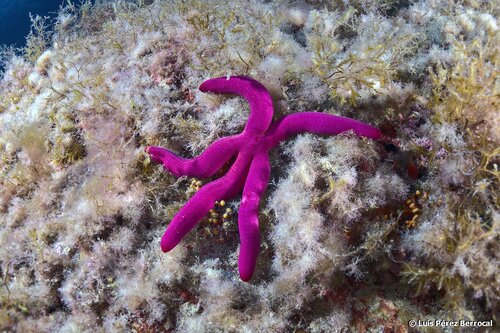
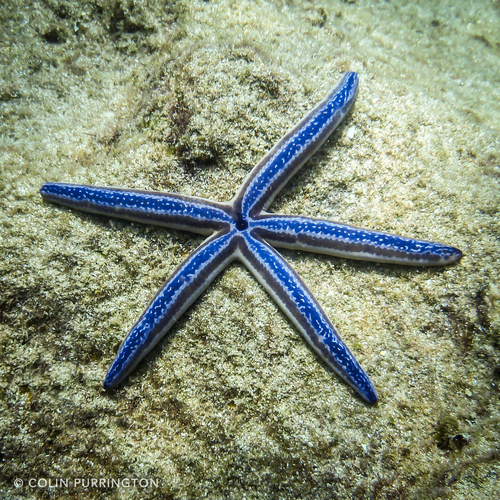
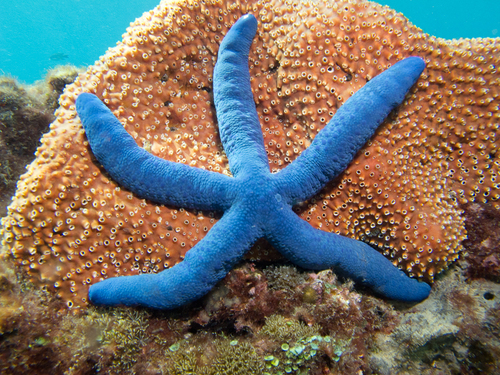
Linckia laevigata (Linnaeus, 1758), commonly called the blue linckia sea star, shows color polymorphism. Its most common color morphs are pure blue, dark blue, or light blue, though aqua, purple, and orange morphs can also be found across its range. These sea stars can grow up to 30 cm (11.8 in) in diameter, with rounded arm tips. Some individuals have lighter or darker spots along their arms. Specimens typically have a firm texture, with the slightly tubular, elongated arms common to most other members of the family Ophidiasteridae, and usually have short, yellowish tube feet. This species inhabits coral reefs and sea grass beds, is relatively common, and occurs at sparse densities across its range. Blue linckia sea stars live in subtidal zones, and sometimes in intertidal zones, on fine sandy or hard substrata, and move relatively slowly, with a mean locomotion rate of 8.1 cm per minute. Like other species in the genus Linckia, this sea star has remarkable regenerative capabilities and can use defensive autotomy against predators. While asexual reproduction has not yet been documented for L. laevigata, it may be able to reproduce asexually, as seen in the related tropical species Linckia multifora. L. multifora has different coloration: it is pink or reddish, mottled with white and yellow, and has been observed reproducing asexually in captivity. L. multifora produces 'comets' – separated arms that detach from the parent individual, and these offspring then grow four tiny arm stubs that mature into full arms. Many wild L. laevigata individuals are observed missing arms, or occasionally found in the comet form, so this species is apparently not an exception to this asexual reproductive behavior. Several reef-dwelling species prey on this sea star. Various pufferfishes, triton shells of the genus Charonia, harlequin shrimp, and some sea anemones have been observed eating whole or parts of this sea star. L. laevigata is also often parasitized by the parasitic gastropod Thyca crystallina. This echinoderm sometimes forms commensal associations; for example, shrimp of the genus Periclimenes are sometimes found living commensally on its oral or aboral surface, feeding on its mucus and detritus. This sea star is fairly popular among marine aquarium hobbyists. It requires proper, slow acclimatization before being added to a tank, and needs an adequate food source similar to what it consumes in its natural habitat. It is generally considered a detritivore, and many sources note that it grazes continuously in aquariums on organic films or sedentary, low-growing organisms such as sponges and algae. In marine aquariums, L. laevigata has been observed eating Asterina starfish, which are often introduced to aquariums on the live rock commonly used in the hobby. In 2021, pictures were posted to Reddit of a Linckia sea star eating an Asterina starfish; the full consumption of the starfish takes roughly 45 minutes. This makes L. laevigata useful for pest control, depending on how abundant its food source is. Success keeping this species in captivity varies, based on factors including shipping conditions, acclimatization, and water quality. This species has not yet been bred in captivity for sustainable harvest. It has long been a common product in the sea-shell trade, where dried sea star skeletons (called tests) are sold as curios or decorations. Continuous harvesting for the sea-shell and tourism industries has caused significant population decreases in some regions of the species' habitat.