About Limnodynastes salmini Steindachner, 1867
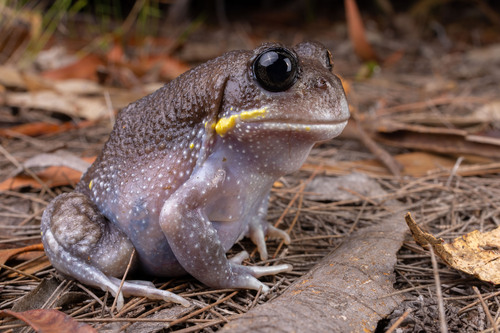
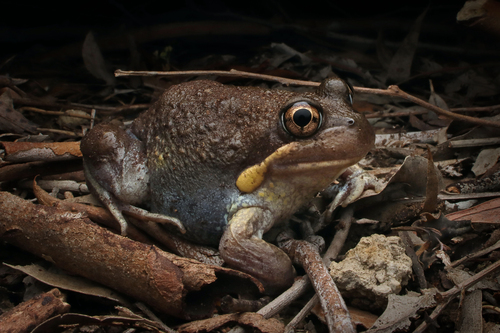
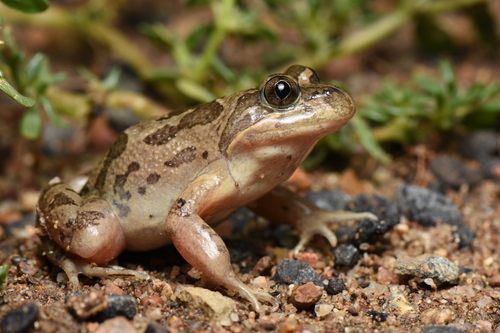
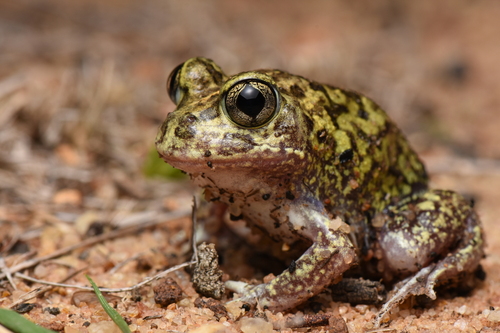
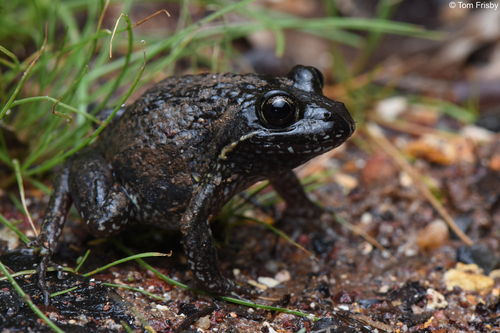
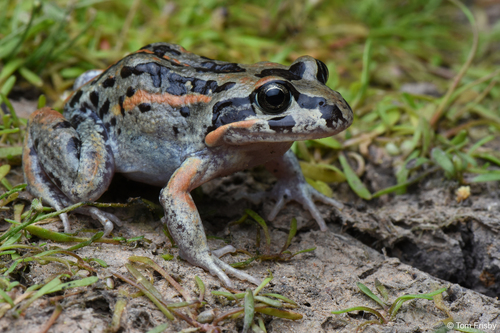
This large frog species reaches approximately 75 mm (3.0 in) in length. Its dorsal side is brown, marked with darker brown spots and blotches. A defining feature of this species is three pink, orange, or red-brown stripes that run along its back: one along the center of the back, and one on each side. It also has a raised orange bar that extends from below the eye to the shoulder, and its armpit is orange. The belly is white, the thighs have a black and white mottled pattern, and the iris is golden. This is most often a burrowing species that spends time underground, or under logs and rocks, to avoid drought. It lives near dams, flooded areas, and ditches, in both open landscapes and woodland. After heavy rains in spring, summer, and autumn, males produce an "unk-unk-unk" call from vegetation growing in water. Females lay around 1500 eggs in floating, foamy masses. Tadpoles hatch 3 to 4 days after eggs are laid. The tadpoles are very dark brown and grow to 67 mm (2.6 in) long. At a water temperature of 30 °C, tadpole development takes approximately 43 days. Newly metamorphosed frogs measure 13–20 mm (0.51–0.79 in) and resemble adult individuals, though their stripes are paler.