About Limnodynastes fletcheri Boulenger, 1888
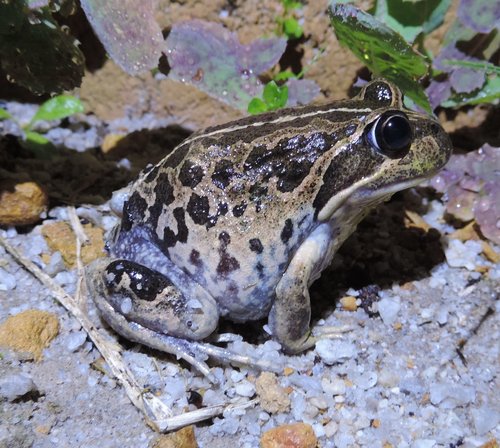
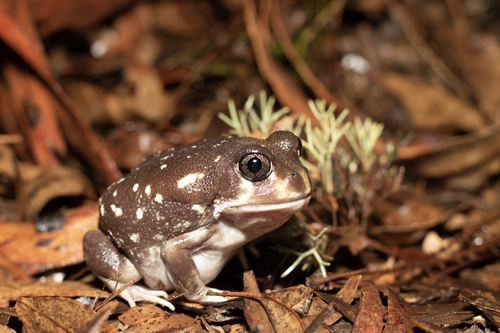
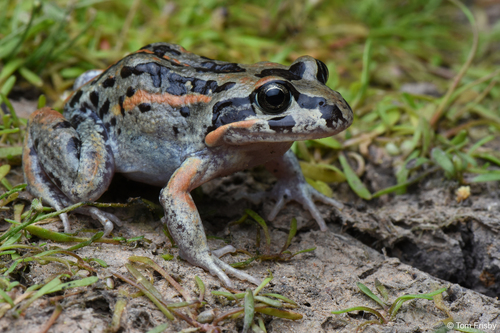
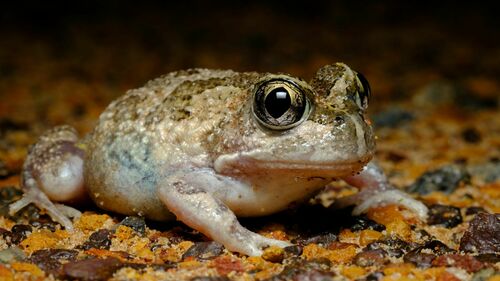
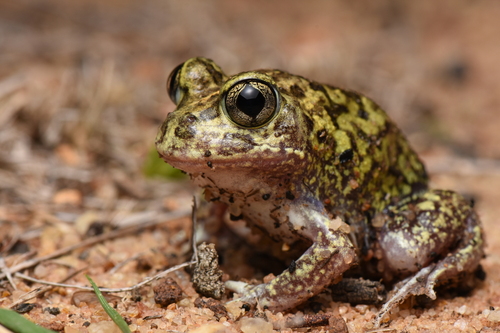
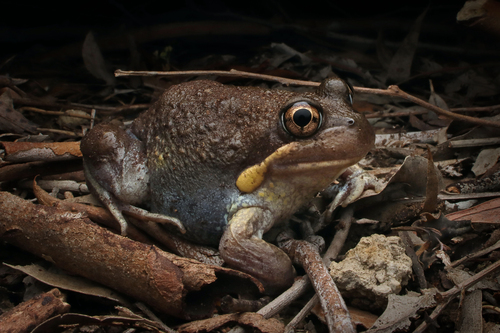
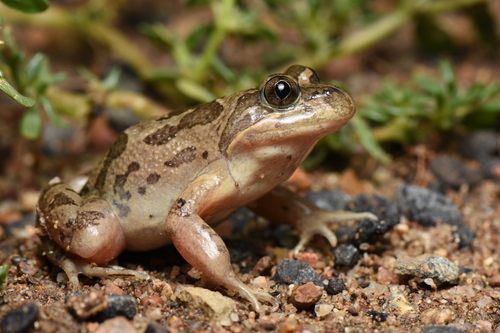
Commonly called the long-thumbed frog, Limnodynastes fletcheri Boulenger, 1888 is a medium-sized frog that grows to around 50 mm in length. Its base color is grey or brown, with irregularly shaped darker patches or spots. Most individuals have a butterfly-shaped patch between the eyes, and a red or purplish patch is usually present above the eye. The belly is white, and the tympanum is indistinct. This species is broadly similar to Limnodynastes tasmaniensis, and the most reliable way to distinguish the two is by the call of L. fletcheri.
This frog is distributed across drier areas west of the ranges of New South Wales, southern Queensland, northern Victoria, and eastern South Australia. It lives in association with often-temporary rivers, dams, and creeks within woodland and grassland habitats. During dry periods, the frogs shelter under rocks, in cracked mud, and inside yabby burrows.
From spring to autumn, after rain or when water levels are high, males produce a dog-like "rok" or "whrup" call from grassy areas along the edges of water bodies. Breeding mostly occurs after heavy rain. Eggs are laid in a floating foamy mass, which is often attached to vegetation. Eggs and tadpoles are typically found in slow-moving or still water. Tadpoles of this species can grow up to 69 mm. As an opportunistic breeder, L. fletcheri can undergo metamorphosis at any time of year. The tadpoles of this species are extremely similar to those of Limnodynastes tasmaniensis, and cannot be easily told apart until metamorphosis.