About Limenitis weidemeyerii Edwards, 1861
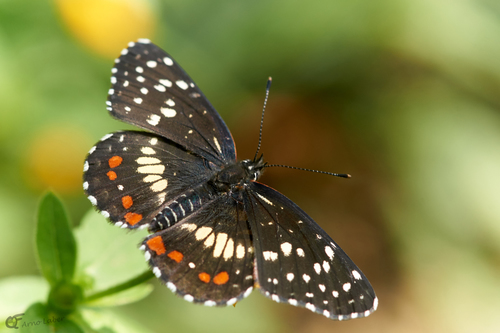
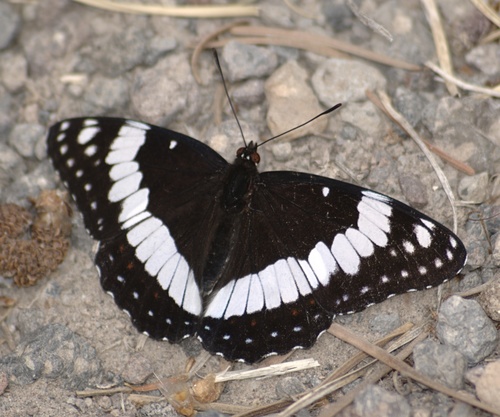
This butterfly species, Weidemeyer's admiral (scientific name Limenitis weidemeyerii Edwards, 1861), has distinct dorsal and ventral wing coloration. On the upper (dorsal) side of its wings, the base color is black, marked with rows of white spots across both wings. On the lower (ventral) side of the wings, the black base color is replaced by brown, with gray markings running along the margins of the hindwing. Caterpillar larvae of this species feed on aspen and cottonwood (genus Populus), willows (genus Salix), oceanspray (genus Holodiscus), and shadbush (genus Amelanchier). Adult Weidemeyer's admirals feed on tree sap, carrion, and flower nectar. The species is distributed across western Canada, an outlying population in the northern Great Plains, and the Western United States, ranging from the Rocky Mountains westward to the Sierra Nevada and California. It is named for John William Weidemeyer, a 19th-century entomologist; the specimen he collected from the Rocky Mountains was used to formally describe the species.