About Limenitis archippus Cramer, 1775
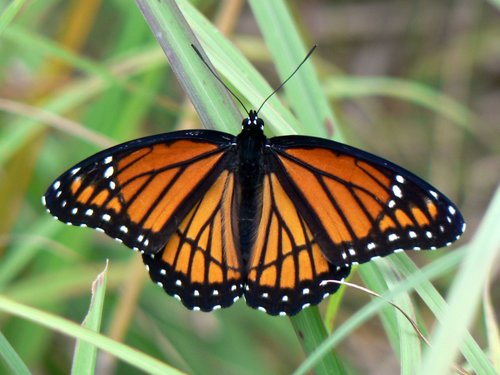
This species, the viceroy butterfly (Limenitis archippus Cramer, 1775), has an orange and black wing pattern. Across most of its range, it acts as a Müllerian mimic of the monarch butterfly (Danaus plexippus). The viceroy has a wingspan between 53 and 81 mm (2.1 and 3.2 inches). It can be told apart from the monarch by its smaller size and the postmedian black line that crosses the veins of the hindwing. In Florida, Georgia, and the American Southwest, viceroys share the wing pattern of the queen (Danaus gilippus), and in Mexico they share the pattern of the soldier (Danaus eresimus). In all three of these regions, the local Danaus populations mimic the coloration of the viceroy. It was originally thought that the viceroy was a Batesian mimic of these three other species, and was presumed to be edible or only mildly unpalatable to predators, but this idea has since been proven incorrect. In an experiment that removed the wings from both monarchs and viceroys, researchers found that birds found viceroys just as unpalatable as monarchs.
The viceroy's range covers most of the contiguous United States, as well as parts of Canada and Mexico. The westernmost part of its range stretches from the Northwest Territories along the eastern edges of the Cascade Range and Sierra Nevada mountains, southward into central Mexico. Its easternmost range extends along the Atlantic and Gulf coasts of North America from Nova Scotia into Texas. It may have been extirpated from California.
Viceroy caterpillars feed on trees in the willow family Salicaceae, including willows (Salix), and poplars and cottonwoods (Populus). The caterpillars sequester salicylic acid in their bodies, which makes them bitter and causes stomach upset in predators. As additional protection, both caterpillars and their chrysalises resemble bird droppings. Adult viceroys are strictly diurnal, and fly most often during late morning and early afternoon. Adult viceroys feed on nectar from milkweeds, thistles, and other common flowers.