About Limbarda crithmoides (L.) Dumort
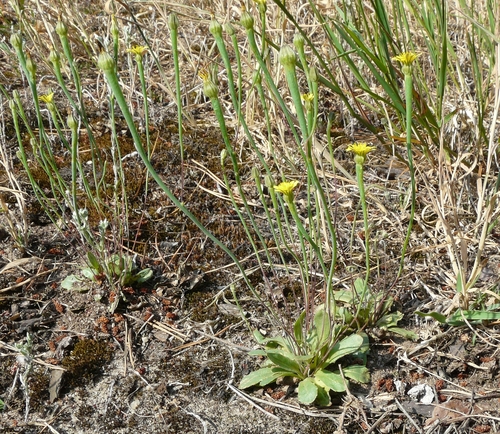
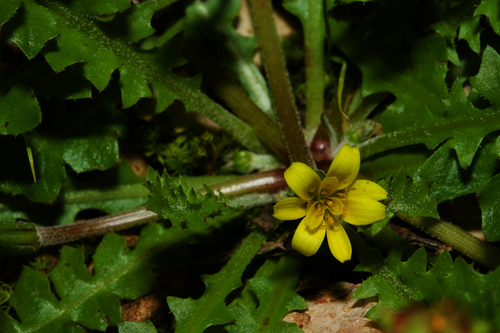
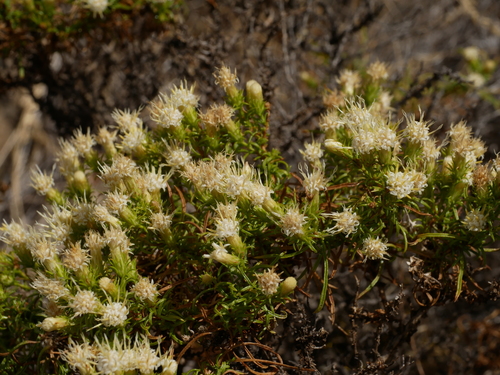
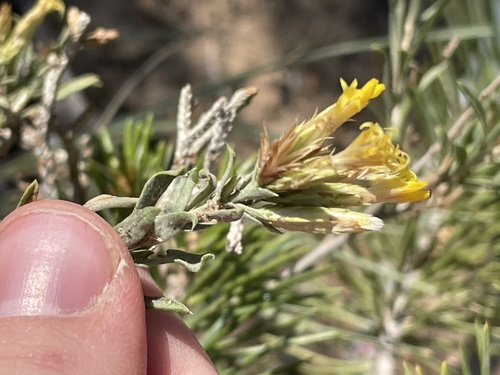
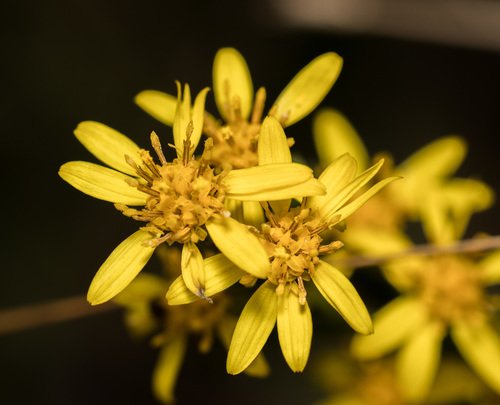
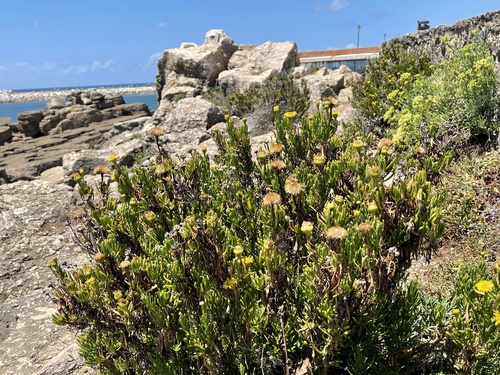
The golden samphire, whose scientific name is Limbarda crithmoides (L.) Dumort, is a perennial coastal plant species. It grows on salt marshes or sea cliffs across western and southern Europe and the Mediterranean. Golden samphire grows in a tufted habit and can reach up to 1 meter tall. It produces narrow, fleshy leaves that range from green to yellow-green, plus large flower heads. Each flower head holds six yellow ray florets, and the entire head can measure 1.5–2.5 cm (1–1 inch) across. Its flowers are self-fertile, meaning they can pollinate themselves, and can also be pollinated by bees, flies, and beetles. Flowers bloom between June and October, and can have a scent similar to shoe polish. This species is native to temperate regions of Africa, Asia, and Europe. In Africa, it occurs in Algeria, Egypt (including Sinai), Libya, Morocco, and Tunisia. In Asia, it can be found in Israel, Lebanon, Syria, and Turkey. In Europe, it is present in Ireland, the United Kingdom (where it is mostly found on the Isle of Sheppey), Albania, Croatia, Greece (including Crete), Italy (including Sardinia and Sicily), Malta, Montenegro, and Slovenia, as well as the south-western European countries of France (including Corsica), Portugal, and Spain (including the Balearic Islands). Young leaves of golden samphire can be eaten raw or cooked as a leaf vegetable. It was formerly sold in London markets for use in pickles. It has been evaluated for use in saline agriculture in Lebanon.