About Limanda limanda (Linnaeus, 1758)
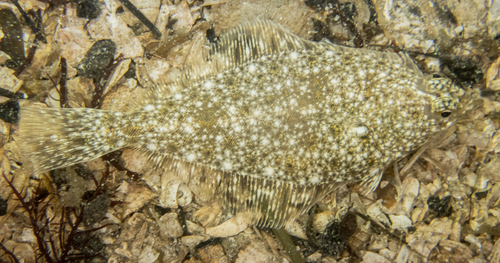
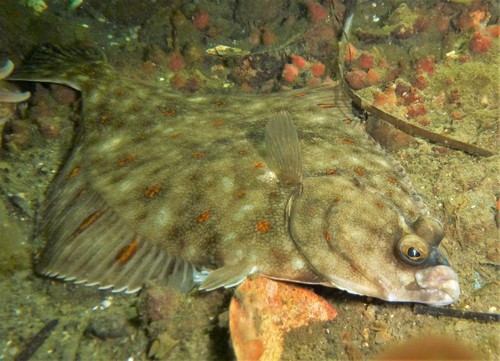
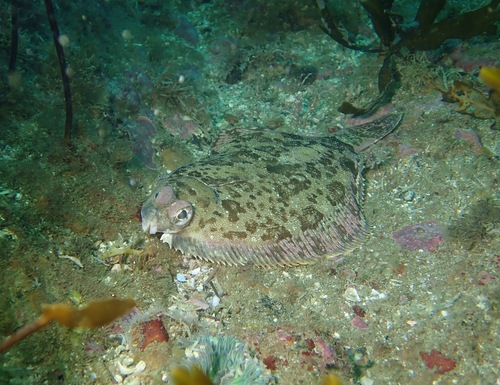
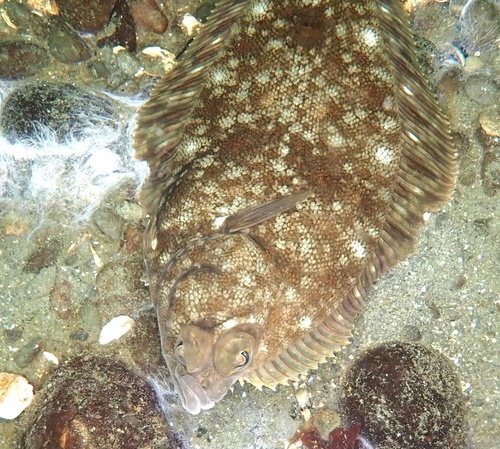
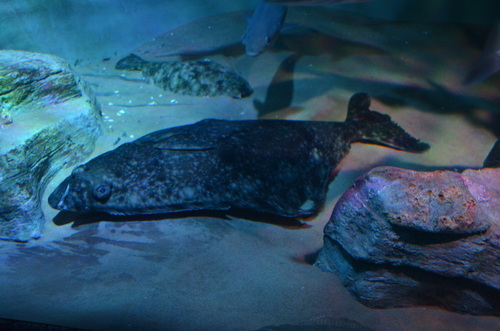
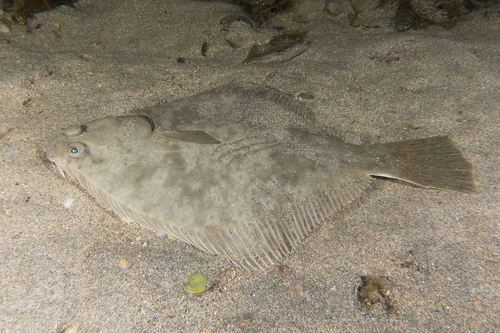
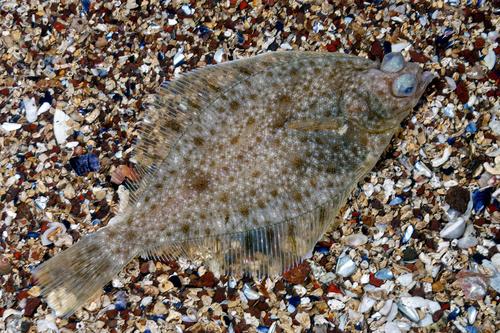
Identification: The common dab (Limanda limanda) looks similar to both plaice and flounder, and like those species, it normally has both eyes on the right-hand side of its body. Its upper surface is usually pale brown, with scattered darker blotches and speckles, but it lacks the orange spots that are typical of plaice. It can be distinguished from flounder by its translucent body. The pectoral fins of the common dab may be orange. The lateral line has a distinctive semi-circular curve above the pectoral fin. The dorsal and anal fins form a gently rounded curve along the body margin. The scales have rough posterior edges, and this fish does not have any large bony projections. The common dab typically reaches a size between 25 and 40 cm (10 to 16 inches).
Distribution: The common dab is a bottom-dwelling fish that lives in coastal waters of the northeastern Atlantic Ocean. Its range stretches from the Bay of Biscay to Iceland and the White Sea, and it is also found in the North Sea and the western part of the Baltic Sea.