About Lilium candidum L.
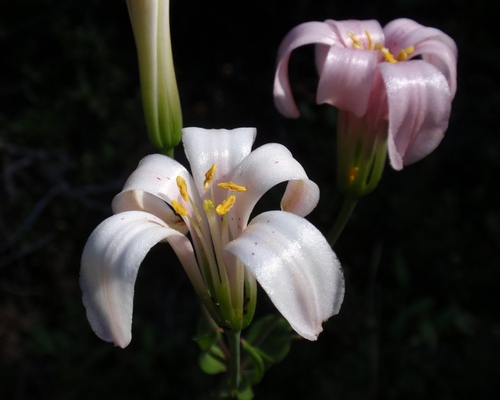
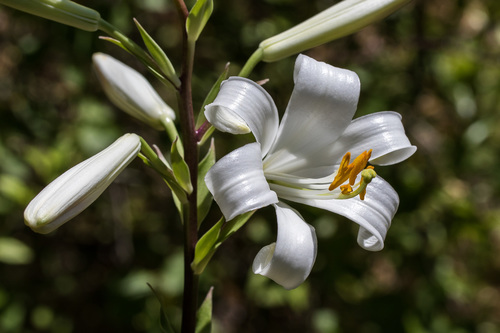
This species, Lilium candidum L., forms bulbs at ground level. Unlike other lilies, it grows a basal rosette of leaves during winter, and these leaves die the following summer. A leafy floral stem emerges in late spring; it generally grows 1.2 metres (3 ft 11 in) tall, and may reach an exceptional maximum height of 2 metres (6 ft 7 in). The stem produces several very sweetly fragrant flowers in summer; the flowers are pure white with yellow tinting in their throats.
Lilium candidum L. is toxic to pets: cats are extremely sensitive to this plant's toxicity, and ingestion is often fatal. Households and gardens that cats visit are strongly advised against keeping this plant, or storing dried flowers where cats may brush against them, become coated in pollen, and ingest the pollen while grooming. If a cat is suspected to have ingested this plant, urgent veterinary attention is required. Rapid treatment with activated charcoal, and/or induced vomiting, can reduce the amount of toxin the body absorbs. Because treatment is time-sensitive, vets may sometimes advise doing these steps at home. A vet will administer large amounts of intravenous fluid to the cat, which can reduce kidney damage and increase the cat's chance of survival.
In Taiwan, both the flowers and bulbs of Lilium candidum L. are used as food. Three other related lily species are also used as food in the same region: L. brownii var. viridulum, L. lancifolium and L. pumilum.