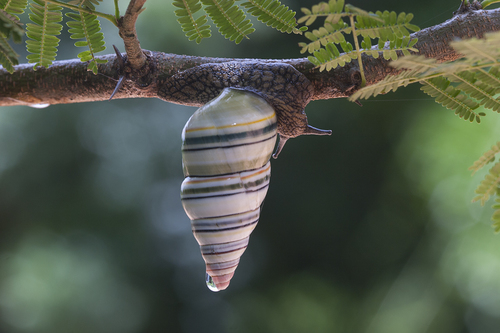
About Liguus virgineus (Linnaeus, 1758)
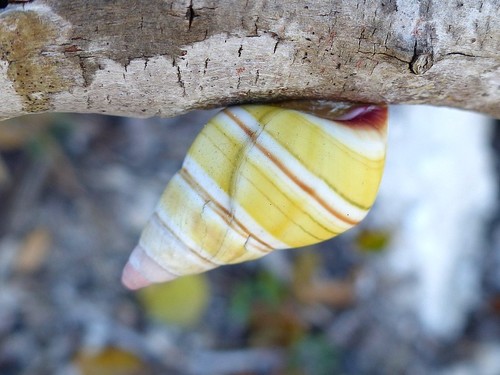
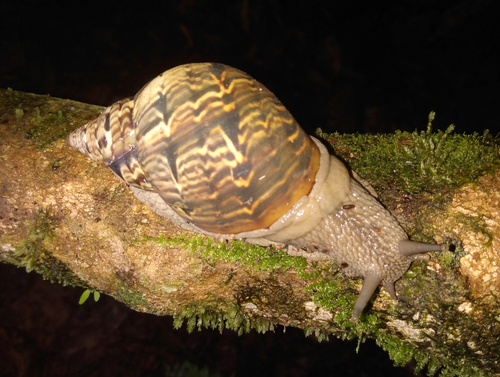
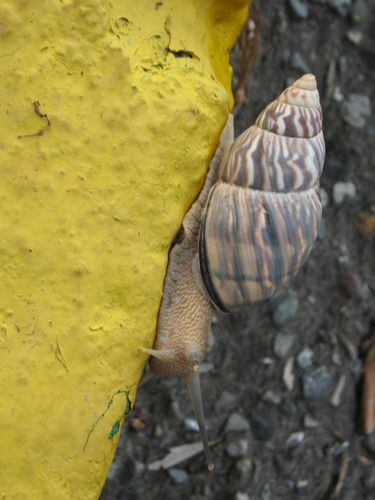
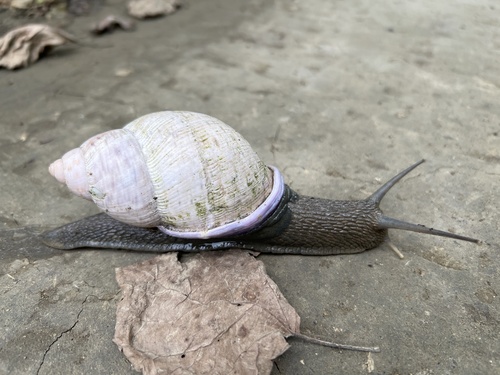
Description: Shells of Liguus virgineus can grow to 30–60 millimetres (1.2–2.4 in) in length. These small shells are oval-conical, thin yet robust, with a smooth, shiny surface. The shell's aperture (its opening) is semicircular, and the shell has seven or eight whorls, with an obtuse (not sharply pointed) apex. Like most gastropods, individuals usually have dextral (right-handed) shells, though sinistral (left-handed) shells have been recorded. Both its slime and epiphragms (temporary structures that stop water loss) are green. The shell has a striking appearance that has been compared to painted porcelain. Its background color is white or creamy white, marked with thin bright spiral stripes that can be brown, black, pink, green, purple, or light yellow. A single shell can have stripes of one color, or up to three different colors, with a typical total of 3 to 6 stripes. The aperture may be dark grey or white-purple, with scarlet lips. The reason this species has such a wide variety of color patterns is not currently understood. The shell's stripes have high contrast against the background in both the visible light spectrum and the near-ultraviolet spectrum (340-400 nm), but very little contrast in the near-infrared spectrum (700-1000 nm). The species' radula (tongue membrane) is long and broad, with around two hundred rows of teeth. Its jaw is slightly arched, and made up of fourteen separate plates. Range and habitat: This species is endemic to the Caribbean island of Hispaniola, which includes the nations of Haiti and the Dominican Republic. It is arboreal, meaning it lives in trees, and has been found on branches of the tree Haematoxylum campechianum. Biology and ecology: Snails in the genus Liguus spend most of their lives in trees, but they do descend to lay eggs on moist ground. After hatching, young snails climb back up into trees. Adult L. virgineus feed primarily on lichens that grow on tree bark. Newly hatched young feed on leaf-growing lichen first, then move to feed on twigs and small branches before eventually switching to bark-growing lichens. Like other snails, this species' shell color is produced by pigment glands in the mantle called chromophores. These chromophores stay active for the entire life of an individual, which produces the continuous colored lines on the shell. Historic use and depictions: L. virgineus shells have been found in midden heaps in the Dominican Republic, which indicates the species was used by indigenous peoples. The presence of L. virgineus shells and shells of two other terrestrial gastropods shows that shells were gathered from both rivers and inland countryside. Because Hispaniola was one of the earliest sites of European contact in the Americas, the brightly colored, distinctive shells of L. virgineus have appeared in scientific illustrations for hundreds of years. The first illustration confirmed to be of L. virgineus was published in 1684 in Filippo Bonanni's Recreatio Mentis et Oculi, making it the first scientific illustration of any neotropical land snail.