About Ligia oceanica (Linnaeus, 1767)
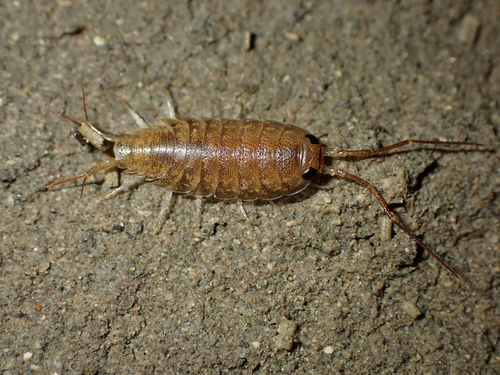
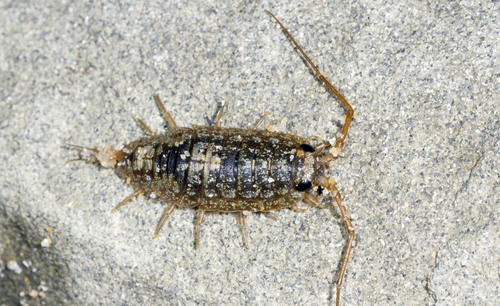
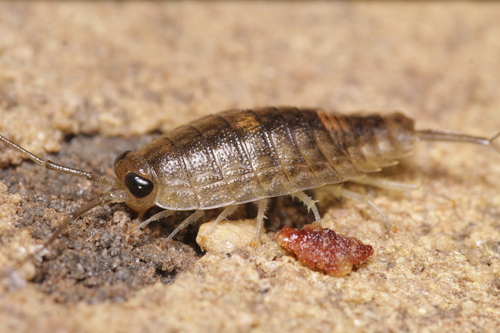
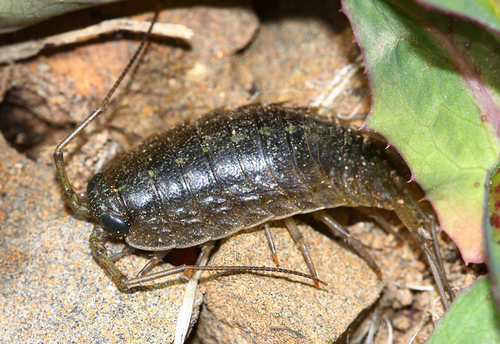
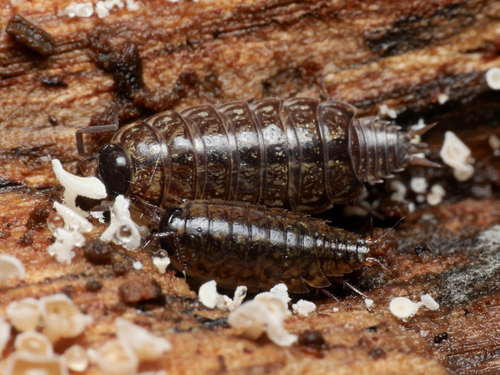
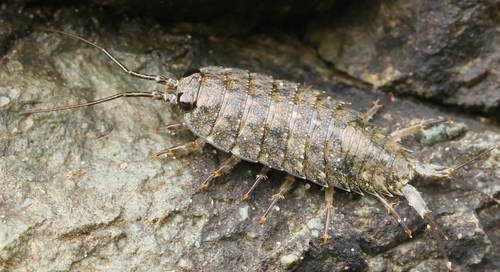
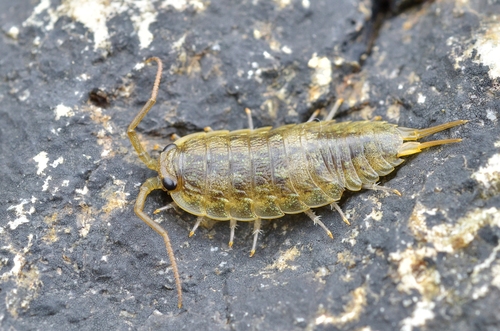
Ligia oceanica (Linnaeus, 1767) is an isopod with a flat oval body that is widest at the middle, and measures twice as long as it is broad. Adult individuals range from 20 mm to 35 mm in total length, and their body color can be brown, slate grey, or olive green. The head of this species is wider than it is long, with a width-to-length ratio of approximately 1.5 and a rounded front margin. It bears a pair of large compound eyes that each contain more than 40 ommatidia, plus a pair of long antennae that reach two-thirds the total length of the body. The flagellum at the tip of each antenna has 12 to 14 bead-like segments. Seven thoracic segments sit behind the head, and adults have seven similar pairs of walking legs. The telson has pointed lateral corners along its posterior margin. Two long uropods extend from this posterior margin; each uropod is around one-quarter the length of the body, and is forked into two branches along its distal half. The native range of Ligia oceanica extends along the northeast Atlantic coast from southern Norway to Morocco, and into the western Baltic Sea as far as Bornholm (Denmark) and Rostock (Germany). It has also been recorded on the Faroe Islands and the southern coast of Iceland. This species has been introduced to the Atlantic coast of North America, where it occurs from Cape Cod to Maine, as well as to the Azores and the Canary Islands. It was likely transported overseas by humans via ship cargo or ship ballast. While this isopod is common in Europe, it is considered rare in its introduced North American range. This species inhabits rocky substrates in the littoral zone, including boulder beaches, the base of rock cliffs, harbor walls, and jetties. It is especially abundant in crevices, rock pools, and underneath stones. Individuals rely on the shelter of rocks or seawalls to regulate temperature and maintain moisture, but they can tolerate near-freezing temperatures during winter. This isopod breathes air and avoids being immersed in water. Its vertical range is restricted to a narrow shore zone stretching from the splash zone to a few meters above the splash zone. It is a furtive, nocturnal species that hides in crevices during the day and emerges to feed at night. It is also fast, agile, and difficult to catch. Its diet consists of green and brown algae (most commonly bladderwrack, Fucus vesiculosus), diatoms, decaying seaweed, and plant detritus. It is likely preyed on by shorebirds, rats, and raccoons. Ligia oceanica breeds during spring and summer. Individuals live 2.5 to 3 years and usually breed only once. In England, females produce 50 to 120 eggs per brood, and larger females produce larger broods. Embryos develop legs before they are released from the female's brood pouch (marsupium), but newly released first-stage free-living juveniles (mancas) lack the final pair of legs that adult individuals possess.