About Ligia exotica Roux, 1828
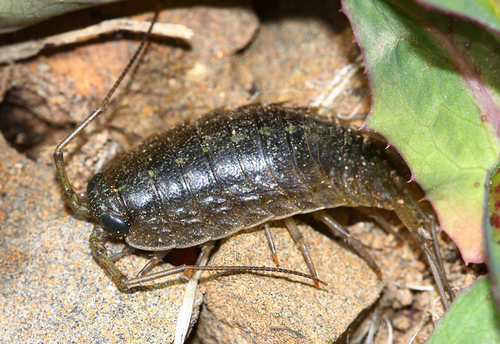
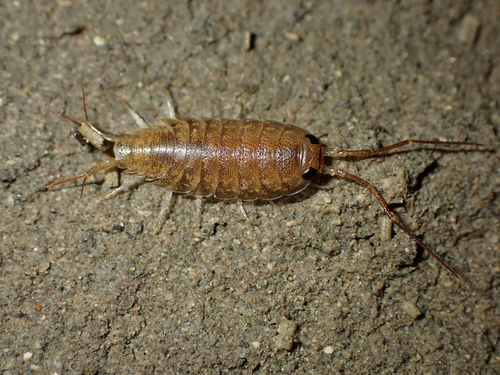
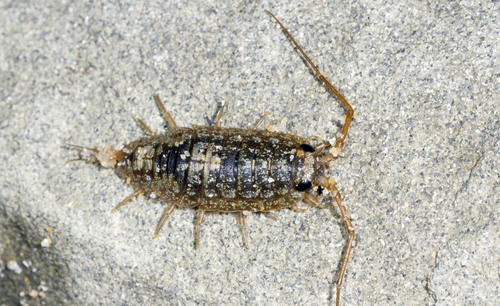
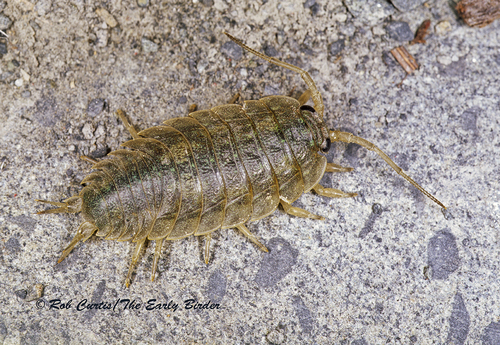
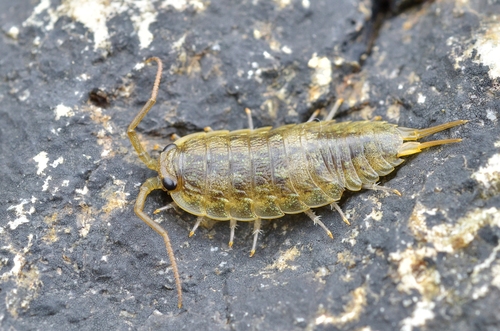
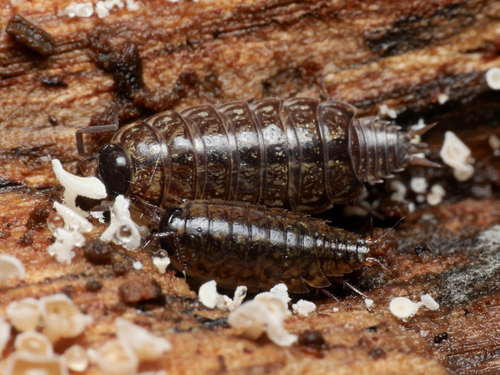
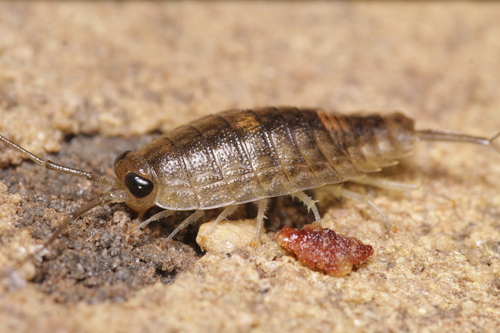
Ligia exotica can grow up to 4 centimetres (1.6 inches) in length, with males being larger than females. Its general body color is dark grey, sometimes marked with brown flecks, and its appendages are pale brown. The head has a pair of long antennae that exceed the length of the body, along with two unstalked, bulging eyes. The body is flattened dorsally, and has seven thoracic segments each bearing a pair of legs, plus six abdominal segments. The first five abdominal segments hold flat, membranous gills, and the sixth bears a pair of long, forked uropods. Ligia exotica is thought by some to be native to the coasts of Western Europe and the Mediterranean Sea, while other authorities suggest it originated in the Pacific and Indian Oceans. When Roux first described the species in 1828 from specimens collected near Marseille, he gave it the specific name "exotica", which may indicate it was not previously known from that locality. It has spread to many other temperate and subtropical regions around the world, including the Red Sea, the eastern seaboard of the United States, and Hawaii. This spread is believed to have happened unintentionally via shipping, either in ballast or between the planks of timber ships. Its natural habitat is rocks and cliffs in the splash zone just above the high water mark, where it lives in damp crevices. It is also found, sometimes in large numbers, on jetties and harbour walls.