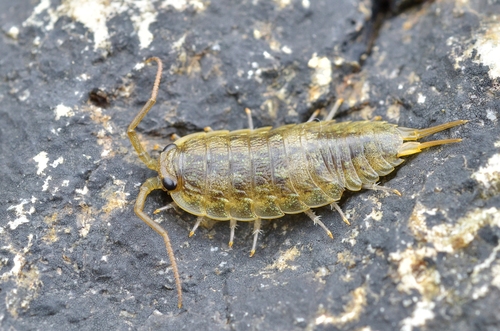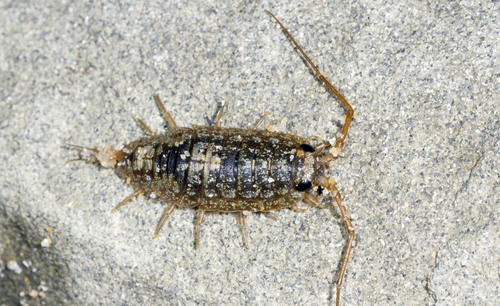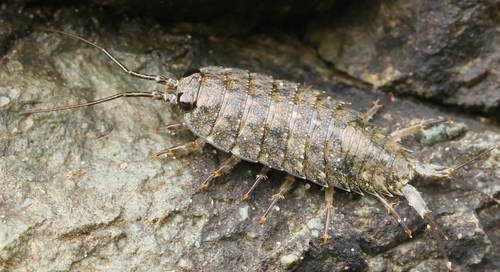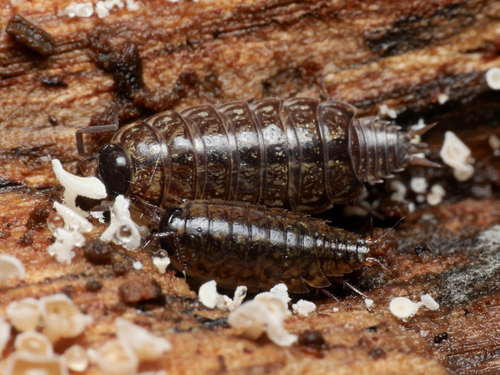
About Ligia cinerascens Budde-Lund, 1885
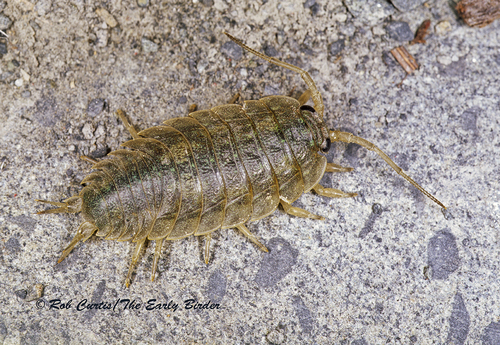
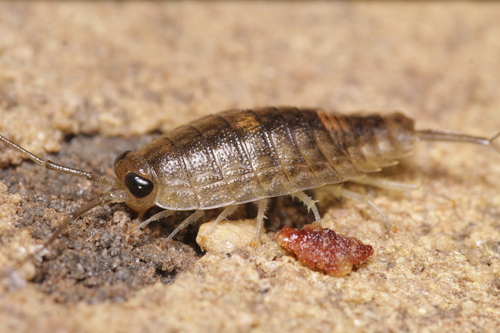
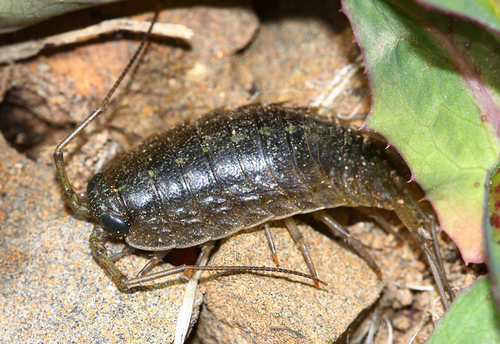
Ligia cinerascens is very similar to L. occidentalis, but it has more antenna segments and a shorter overall antennal length. It can be told apart from L. exotica by its shorter antennae and uropods, along with its uniformly gray color and granular texture. Its specific epithet cinerascens derives from the Latin word meaning "ashy," which refers to this species' gray color. When G. H. A. Budde-Lund collected samples of L. cinerascens during a long ocean expedition, he could not recall after returning whether the specimens originated from Japan, Manila, or Chile. This uncertainty limits current understanding of the species' full geographic range. It has additionally been recorded on the Kuril Islands, specifically Kunashir Island, and in Peter the Great Gulf in far western Russia. It is one of four Ligia species that occur along Japanese coasts. On Japanese coasts, it is primarily found on Hokkaido, with a distinct separate population located in Tokyo Bay. In its natural wild habitat, L. cinerascens typically lives around one year, overwintering just once. Rarely, wild individuals can live up to 2.5 years, overwintering twice. Females breed during their first year over a five-month period, then die before their second winter. They usually produce at most one or two broods over their lifetime. When reared in a laboratory setting, L. cinerascens has a longer lifespan, and can produce three or more broods over its lifetime. This species is parasitized by Thinoseius setifer, a mite that attaches to the ligiid's pleopods.