About Libytheana carinenta Cramer, 1779
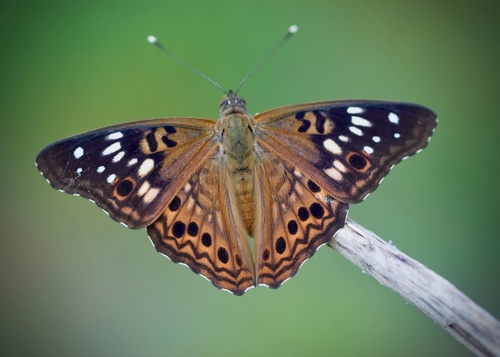
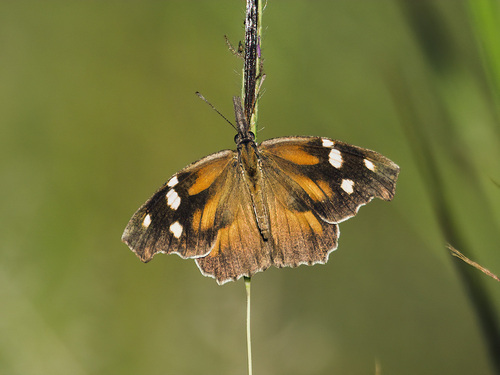
Libytheana carinenta, commonly known as the snout butterfly, gets its common name from the prominent elongated labial palpi (its mouthparts). Together with its antennae, these mouthparts create the distinct appearance of a dead leaf’s stem petiole. Snout butterflies make use of this excellent camouflage by hanging upside down beneath twigs, which makes them nearly invisible to observers. Their wings are patterned black-brown with white and orange markings, and their forewings have a distinctive squared-off, hook-like falcate tip. The caterpillars of this species have a humpbacked appearance: they have a small head, swollen first and second abdominal segments, and a tapered, rounded final abdominal segment. These caterpillars are dark green with yellow stripes running along the top and sides of the body, and have two black tubercles on the top of the thorax. The known food source for this species is the common hackberry tree, Celtis occidentalis.