About Libinia spinosa Guérin, 1832
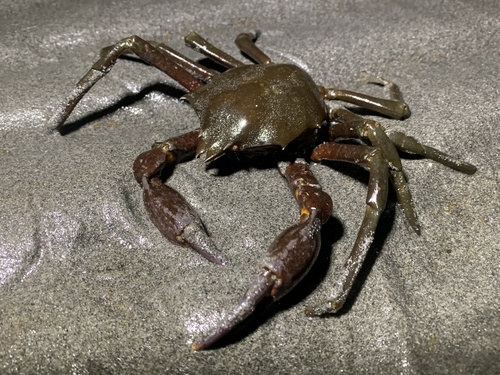
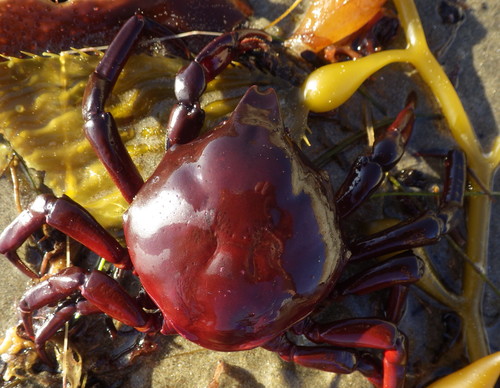
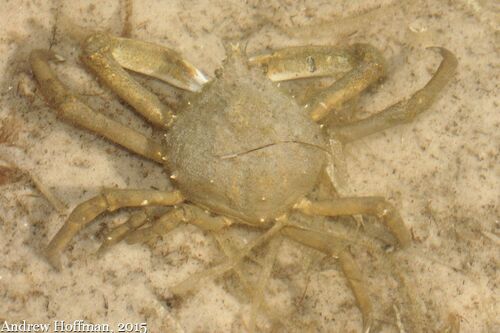
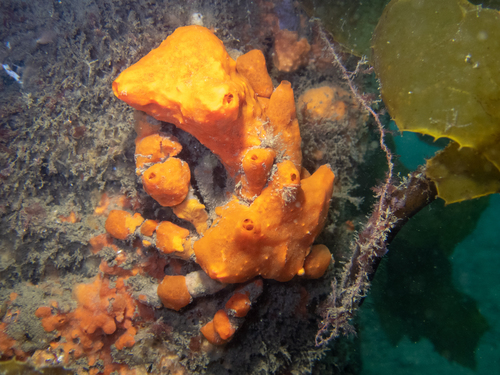
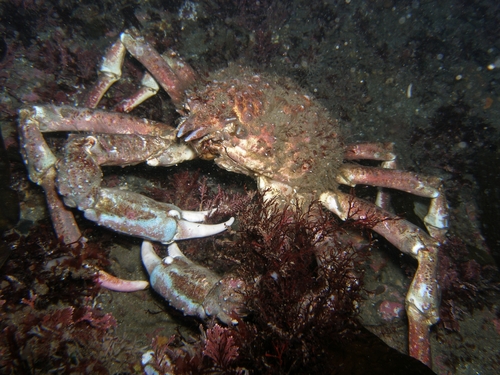
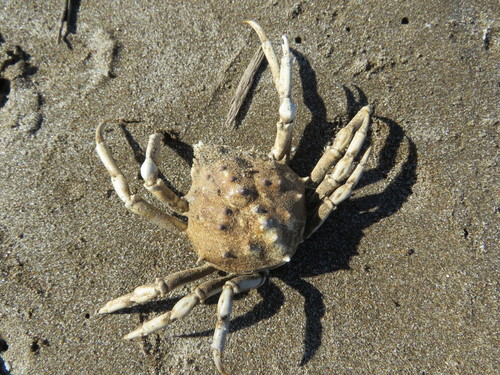
Libinia spinosa Guérin, 1832 is a species of spider crab belonging to the superfamily Majoidea. This species can have a carapace length up to 89 mm, and a maximum leg span of 568 mm. The number of median spines on Libinia spinosa varies; 7 is the most common count, but individuals with 5, 8, or 10 median spines are also commonly observed. The testes of this species are visibly flat, transparent structures that are coiled at their anterior end. Libinia spinosa is most commonly found on mud and sand bottoms in the Southwestern Atlantic and Pacific oceans. In the Southwestern Atlantic, its range extends from Nova Scotia to Argentina. In the Pacific Ocean, it occurs off the coasts of the United States, Baja California, the Galápagos Islands, Hawaii, Peru, and Chile. It can be found at depths ranging from the intertidal zone down to 170 m, and prefers sediment that contains both silt and clay. For reproduction, Libinia spinosa performs precopulatory courting using both olfactory and tactile cues, and indirect sperm transfer is common in this species. Females exercise sexual selection, preferring larger males. For males, large cheliped size is the trait most highly correlated with successful mate acquisition. Males exhibit mate guarding, wrapping their chelipeds around the female to fight off rival males. Precopulatory mate guarding lasts significantly longer than postcopulatory mate guarding. To breed, males position the female upside down below themselves, then insert their gonopods into the female's gonophores. Male copulatory organs are made up of a long first gonopod and a short, stout second gonopod. Females produce between 1 and 3 offspring per breeding season. Libinia spinosa is a dietary generalist that eats both mobile and non-mobile prey. Its diet includes algae, poriferans, cnidarians, mollusks, polychaetes, crustaceans, and small fish. This species has no commercial value, but is caught unintentionally in prawn trawls; this bycatch has caused a decline in its population. Libinia spinosa hosts epibionts such as sea anemones on the surface of its carapace.