About Libidibia coriaria (Jacq.) Schltdl.
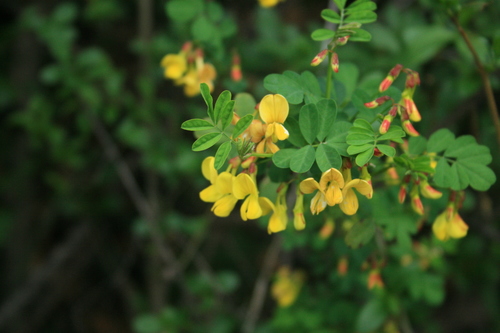
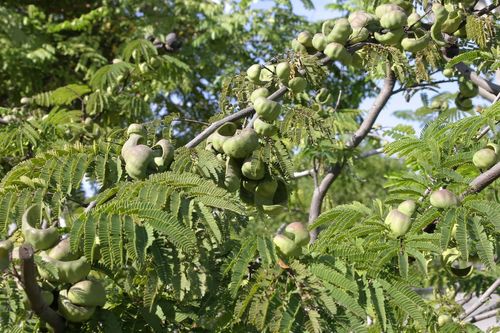
Libidibia coriaria rarely reaches its maximum height of 9 m (30 ft), because its growth becomes contorted from trade winds that batter the exposed coastal sites where it often grows. In other environments, it grows into a low dome shape with a clear sub-canopy space. Its leaves are bipinnate, with 5–10 pairs of pinnae; each pinna holds 15–25 pairs of leaflets. Individual leaflets measure 7 mm long and 2 mm broad. The fruit is a twisted pod 5 cm (2.0 in) long. According to the FAO's Ecocrop database, the pods of this species yield tannin and a black dye used in the tanning industry and for ink. The pods also have medicinal properties. The hard, dark-colored wood is used for carpentry, and the tree can be planted to provide shade. Annual pod yields per tree range from 45–135 kg.