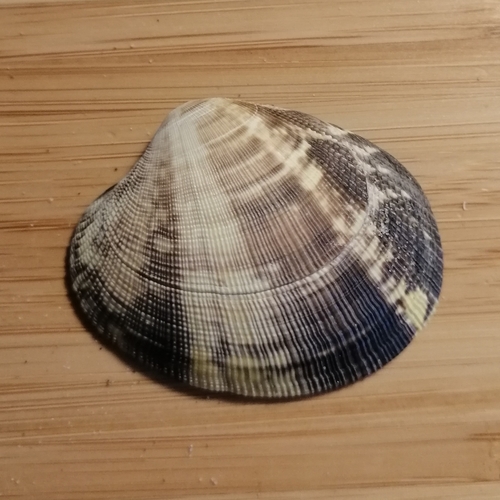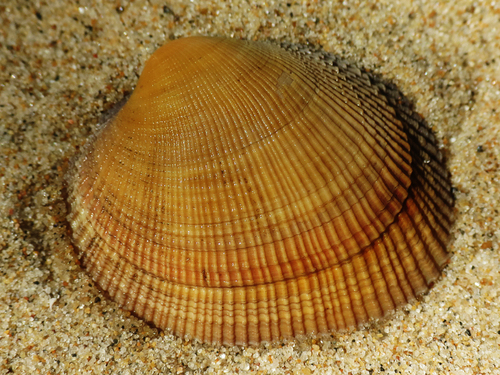
About Leukoma staminea (Conrad, 1837)
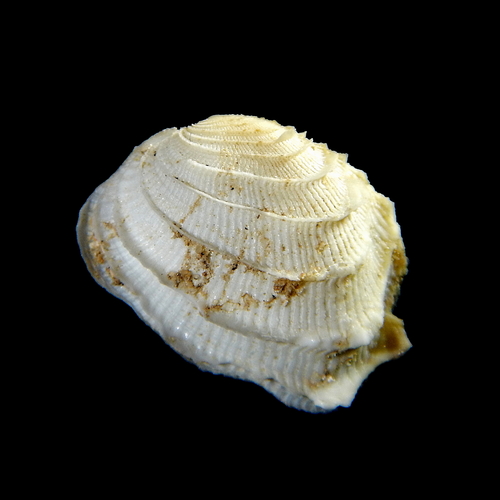
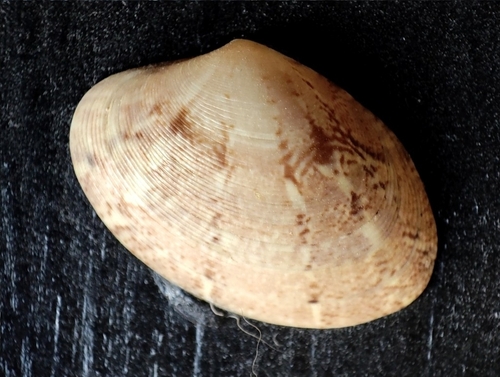
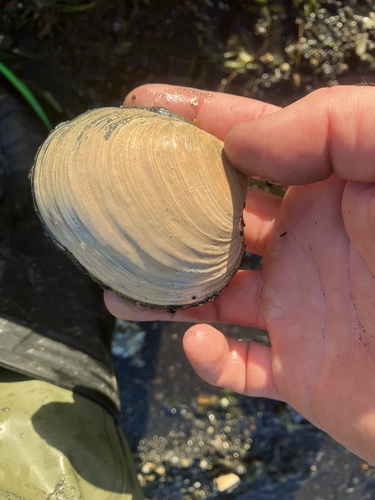
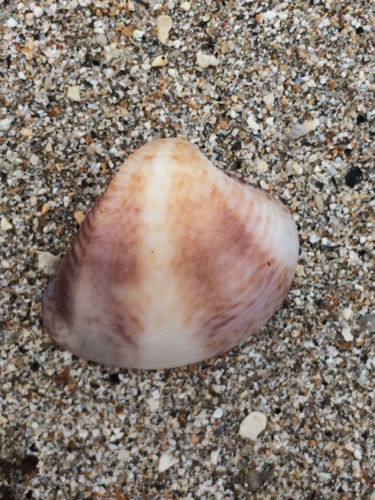
Like other members of the Veneridae family, Leukoma staminea has a chalky shell, with its umbo positioned anterior to the shell's midline, but closer to the midline than to the shell's anterior end. Its two equal-sized valves are either oval or heart-shaped. The shell's width is greater than one quarter of its length, and the shell rarely reaches over 6 cm (2.4 in) in length. The umbones point toward the anterior end of the shell. Each valve has three cardinal teeth on the hinge, and a row of small teeth runs along the ventral margins of the valves. The shell has numerous concentric ridges, which are more clearly defined at the anterior end, though radial ridges are often more clearly sculpted. This species has a large foot and a distinct pallial sinus. Leukoma staminea is native to the eastern Pacific Ocean, with a range along North American coasts stretching from the Aleutian Islands and Alaska in the north to Baja California in the south. It most commonly inhabits protected areas with sand, hard mud, or clayey-gravel substrates, from the mid and lower shore down to depths of around 10 m (33 ft), and usually buries less than 8 cm (3 in) beneath the sediment surface. It can occasionally be found in more exposed locations, inside gravel-filled rock cracks or the empty burrows of other clams. This clam is a filter feeder that eats microscopic algae including dinoflagellates, diatoms, and cyanobacteria. Some dinoflagellates produce neurotoxins such as saxitoxin and its derivatives, which bioaccumulate in clams and other bivalve mollusks. If a person eats contaminated clams, these toxins can cause paralytic shellfish poisoning (PSP). Even with this risk, this clam was historically consumed by Native Americans, and it remains used as human food today. Per a 1996 report from the Marine Advisory Program at the University of Alaska, the United States Food and Drug Administration (FDA) classifies seafood as unsafe if it contains more than 80 μg of PSP-causing toxins per 100 g of tissue. PSP is caused by a mixture of at least 21 distinct chemical species; some of these species undergo chemical transformations within dinoflagellates or within the animals that take up saxitoxins, and different animals retain these toxins for different lengths of time. PSP-causing toxin levels are typically much higher during summer months, but this does not mean seafood is automatically safe at other times of year. Risk also varies between species, but retail seafood is legally required to meet FDA toxin standards. In summer 1993, PSP poisonings occurred in Kodiak, Alaska, where saxitoxin levels as high as 19,600 μg / 100 g were measured in the Alaska blue mussel Mytilus edulis — a level high enough to deliver a lethal dose in a single 2.5 g mussel. Per the 1996 report, the highest recorded saxitoxin level measured in the Pacific littleneck clam Leukoma staminea was 580 μg / 100 g. The report notes that littleneck clams are typically less toxic and retain toxins for a shorter length of time than species such as butter clams and blue mussels, which tend to accumulate the highest levels of PSP toxins, while geoducks and scallops tend to remain toxic for longer periods. Even with this lower risk, this does not mean littleneck clams are always safe to eat, and PSP can still be contracted from eating this species. The difference in toxin profile is likely due to an enzyme in Leukoma staminea that converts saxitoxin into decarbamoylsaxitoxin, a capability that neither blue mussels nor the butter clam Saxidomus gigantea share — in butter clams, saxitoxin levels as high as 7,750 μg / 100 g have been recorded. This transformation to the decarbamoyl derivative has also been documented in some other clam species, and it significantly reduces the toxicity of the present saxitoxins. Known predators of Leukoma staminea include molluscs such as the leafy hornmouth snail (Ceratostoma foliatum) and Lewis's moon snail (Neverita lewisii), the crabs Metacarcinus magister and Cancer productus, the giant Pacific octopus (Enteroctopus dofleini), and the sea otter. Fish like the Pacific staghorn sculpin sometimes nip off the clam's extended siphons when the clam is feeding. In the northern portion of its range, this clam spawns during the summer. It is a slow-growing species and can live for up to sixteen years.