About Leucorrhinia caudalis (Charpentier, 1840)
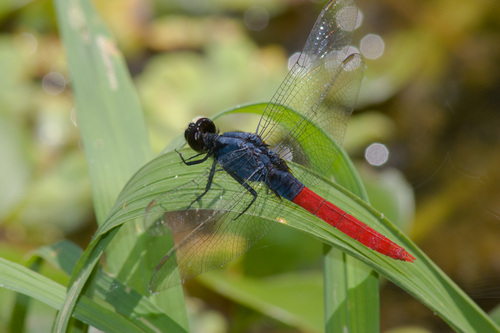
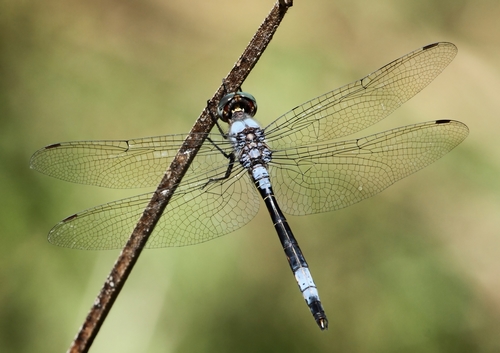
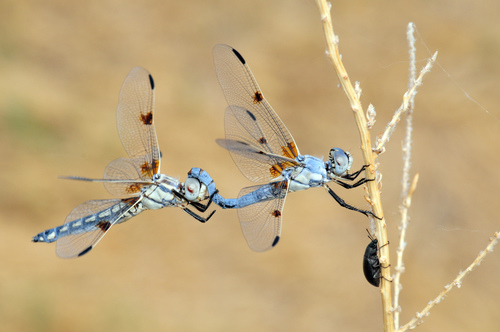
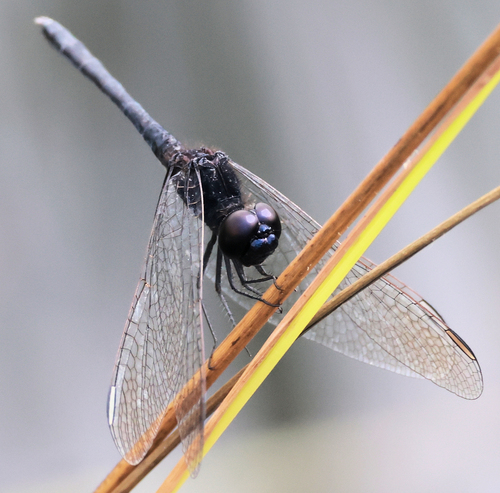
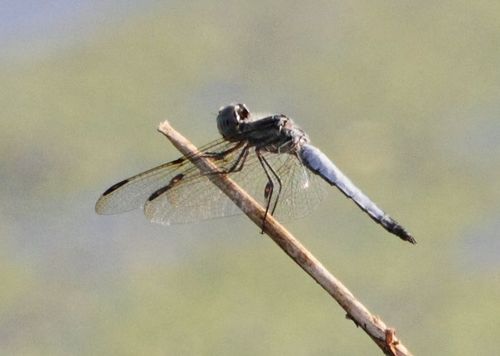
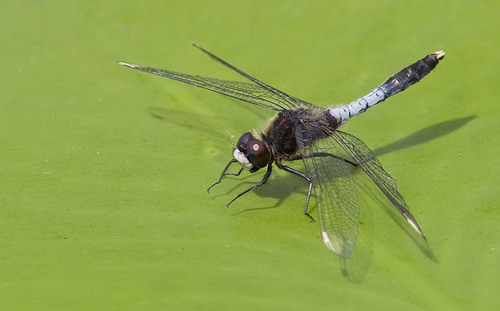
Leucorrhinia caudalis, commonly called the lilypad whiteface, is a large, easily identifiable dragonfly species with a broad clubtail. Males have dark bodies with white markings on their face, abdomen, and wing tips. This is a Palearctic species whose range extends from central Siberia to western Europe. It is common in Scandinavia, the Baltics, and eastern Europe. Historically, it was threatened and localized in continental Europe, but it is now well-established in western and central parts of the continent, with an increasing population and expanding range. Its distribution in southeastern Europe is scattered, but it is also expanding here, with newly established populations in countries including Bosnia and Herzegovina. The species' distribution across Russia and Ukraine is not well understood, but it is thought to be locally common in Belarus. It was locally extinct in Wallonia, the Netherlands, Denmark, Serbia, and Czechia, but has successfully re-established populations in the first three of these regions. It has not been recorded recently in Slovenia, and its known populations in Hungary have apparently disappeared. The lilypad whiteface is a lowland dragonfly that lives in stagnant, mildly eutrophic low-nutrient bodies of water. Unlike other species in its genus, which are strongly restricted to nutrient-poor habitats, the lilypad whiteface is more tolerant of other habitat types. It occurs most often in forested aquatic environments, including ponds, pools, lakes, peat excavations, and other water bodies that hold abundant vegetation such as Nymphaea and Nuphar water-lilies. It can sometimes also be found in environments with almost no vegetation. At the southern edge of its range in south-central Europe, it inhabits oxbow lakes, quarries, and fishponds. Most water bodies that host this species have high fish concentrations, because its larvae have large spines that help them survive in these environments better than other dragonfly species. Males typically cling to floating vegetation like water-lilies, but may also perch on jetties and boats. Females and newly emerged teneral individuals prefer sunny, wind-sheltered locations further away from breeding grounds. Males are frequently observed raising their tails. Breeding occurs on floating vegetation such as water-lilies and pondweed. Females usually lay eggs alone, but are occasionally guarded by males during egg laying. Larval development takes up to three years in Scandinavia, but generally only one year in warmer regions. Adult lilypad whitefaces can be seen from mid-May to early August, and are most abundant during June. The species leaves its exuviae on vegetation next to the water after emergence.