About Leucocarbo chalconotus (G.R.Gray, 1845)
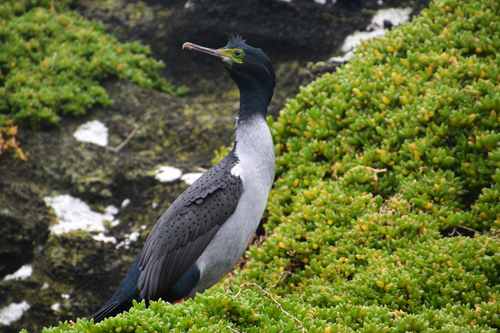
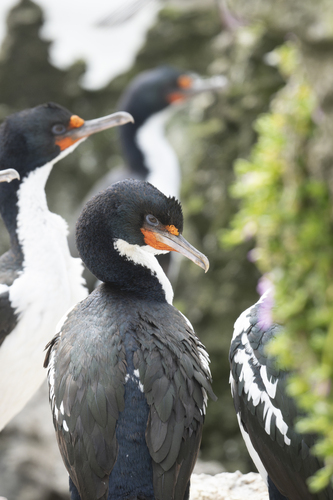
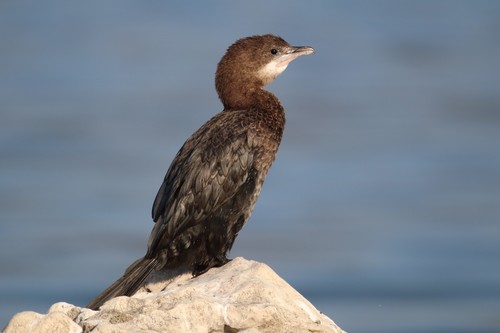
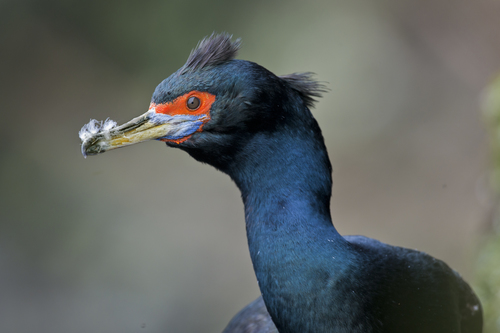
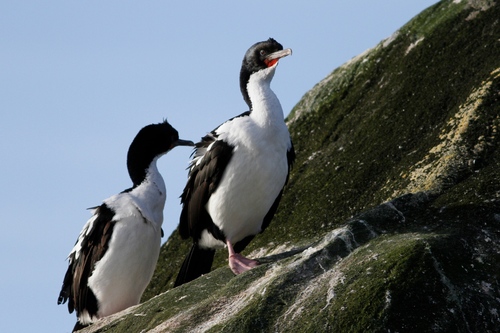
Leucocarbo chalconotus is a dimorphic species with two distinct plumage patterns. Approximately one quarter of all individuals have a pied plumage of dark and white feathers, while the remaining three quarters, called bronze shags, are entirely dark. Both plumage morphs breed with one another. These are large, chunky birds that reach about 70 cm in length and weigh between 2 and 3 kg. During the breeding season, Stewart Island shags show variation in facial ornamentation: roughly half of breeding individuals have dark orange papillae on their face, while the other half have small bright orange caruncles above the base of the bill instead. The colour of the gular pouch also varies in the breeding season, ranging from bright orange to dark orange to purple. Archaeological evidence shows that Stewart Island shags were once distributed along the entire east coast of the South Island of New Zealand, as far north as Marlborough. After human arrival, the population was devastated, declining by 99 percent within 100 years, which caused a corresponding loss of genetic diversity. The species became restricted to rocky offshore islets off Otago Peninsula, and has not meaningfully recovered since that time. Fewer than 2500 Otago shags remain today, and they can be observed in Otago Harbour, ranging as far north as Oamaru and as far south as the Catlins. Because the species is restricted to a small range and has little to no genetic variation, it needs conservation efforts specifically designed to address these extinction risk factors, including possible reintroduction to part of its former range. Stewart Island shags breed colonially from May to September, building raised cup nests from organic material and guano on islands and sea cliffs. Colonies are large enough to be easily visible, and are reused year after year. One well-known colony is located on the northern shore of Taiaroa Head, at the mouth of Otago Harbour. They feed in coastal waters less than 30 m deep, and are rarely or never seen inland or far out to sea.