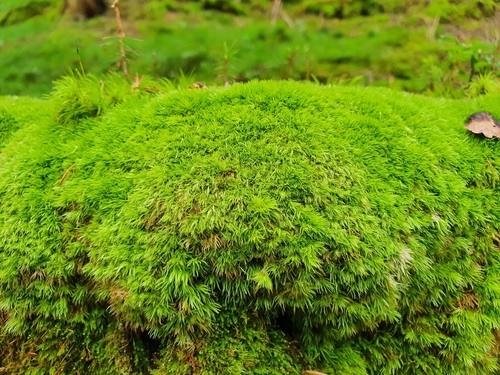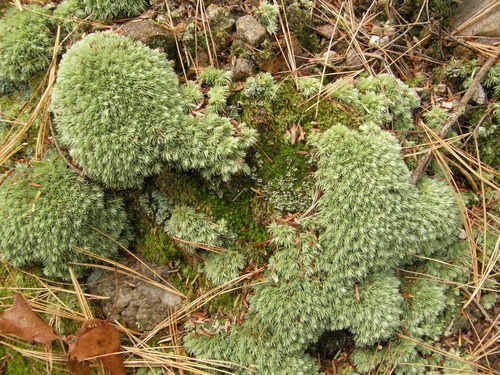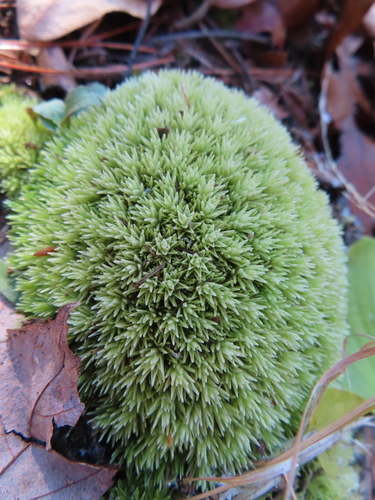
About Leucobryum glaucum (Hedw.) Ångstr.
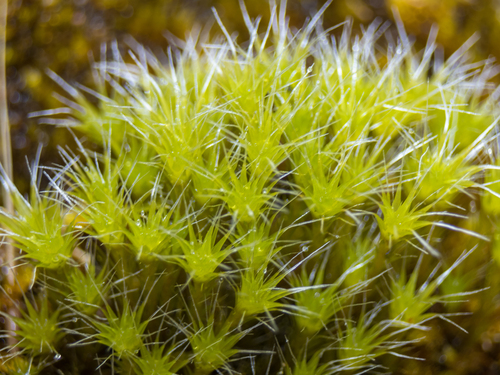
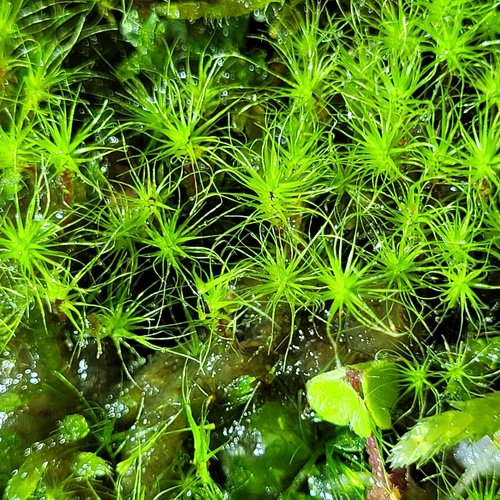
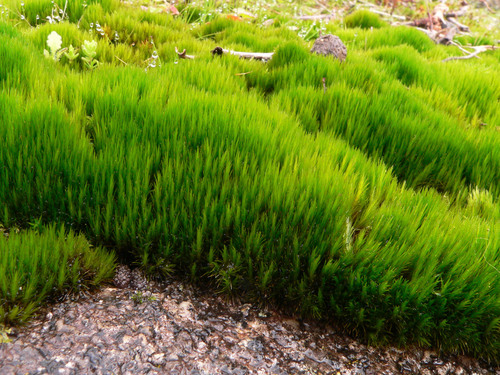
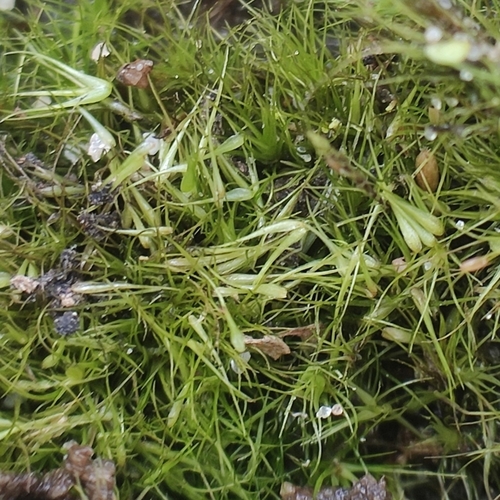
Leucobryum glaucum, commonly called leucobryum moss or pincushion moss, is a species of haplolepideous mosses in the subclade Dicranidae. It has a wide distribution across eastern North America and Europe, and grows in temperate forests throughout the Northern Hemisphere. Its structural features let it absorb metal ions. This moss reproduces via three methods: apical growth, fragmentation, and a form of sexual reproduction known as oogamy. Oogamous reproduction requires moist conditions, because the moss sperm can only travel through water. Salinity stress is a major problem that reduces global crop production. The naturally occurring inorganic compound titanium dioxide (TiO2) can help mitigate some negative effects of salinity stress, but chemical synthesis of TiO2 has harmful impacts on the environment. Biochar is a carbon-rich compound that is known to reduce the harmful effects of industrial pollution. Researchers have synthesized both TiO2 nanoparticles and biochar from Leucobryum glaucum (pincushion moss) biomass, and the results of this process have been promising. This approach reduced the negative impact of salinity stress on crop production of Amaranthus dubius, also known as Chinese Spinach.