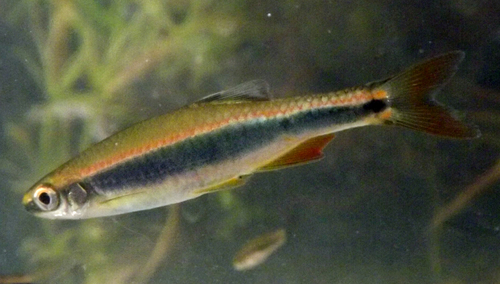
About Leucaspius delineatus (Heckel, 1843)
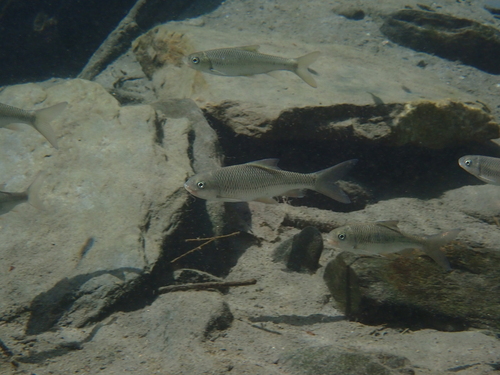
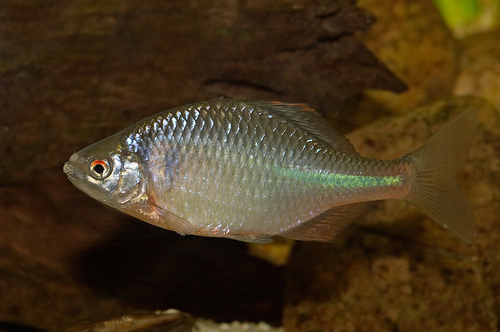
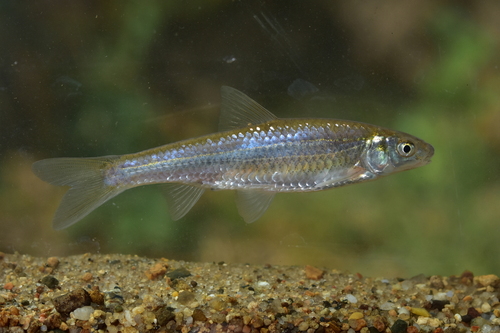
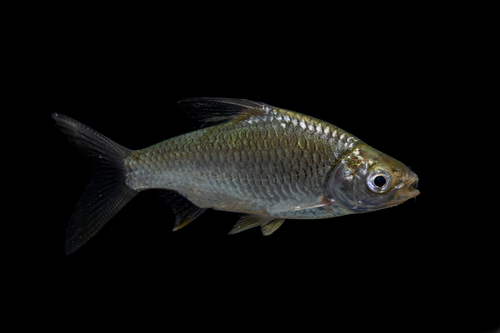
The belica, Leucaspius delineatus (Heckel, 1843), is a slender, tapered fish that typically reaches 4 to 6 cm (1.6 to 2.4 in) in length, and rarely grows larger than 10 cm (3.9 in). It has an upturned mouth and a short lateral line that extends seven to ten scales from the gill cover. Its short anal fin contains eleven to fourteen rays. It is a silvery fish, with a particularly intense dark band running along its flank. This species is found across most of temperate continental Europe, barely extending into Central Asia in the Caucasus region. The southern edge of its range is marked mainly by the Pyrenees and the Alpide belt. Its German-origin common name Moderlieschen appears to transliterate roughly to "mouldy Lizzy", but it is actually a bowdlerized form of an older name, Mutterloseken, which is still used in parts of Germany. This older name translates literally to "the little motherless one", a reference to the unusual ability of this fish's sticky eggs to survive exposure to air for long periods. The eggs are laid on aquatic plants, and will sometimes stick to the feet of ducks and similar water birds, which carry them to temporary ephemeral ponds. When these ponds dry up, large numbers of young belica are often found with no adult fish present, leading to the original belief that the young fish were motherless. Belica has been introduced to Great Britain, where it is established in the Avalon Marshes of Somerset. In this area, it has been linked to spreading a new species of parasitic fluke to both European otters and American mink, and it may now be an important prey source for piscivorous birds.