About Lethrinus obsoletus (Forsskål, 1775)
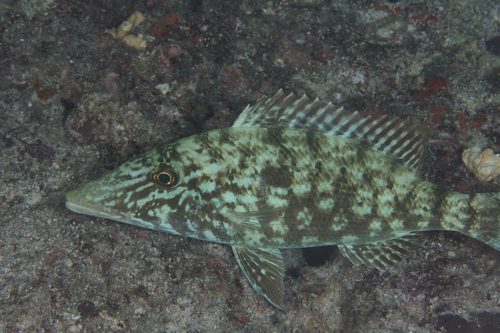
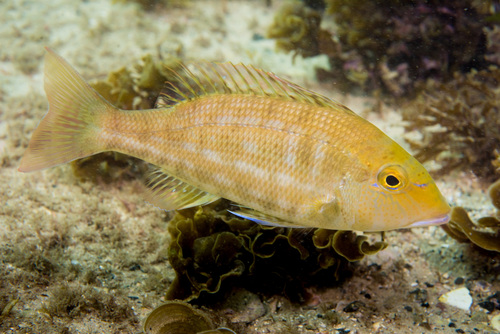
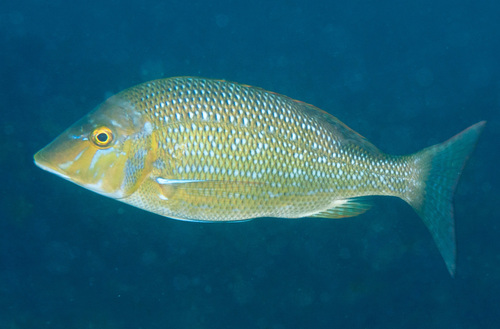
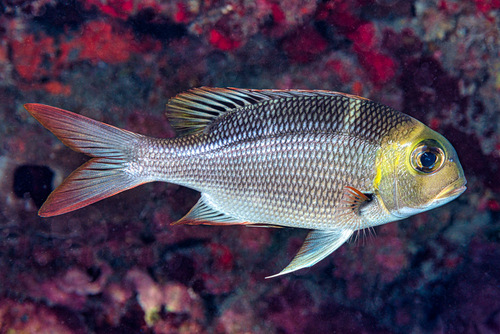
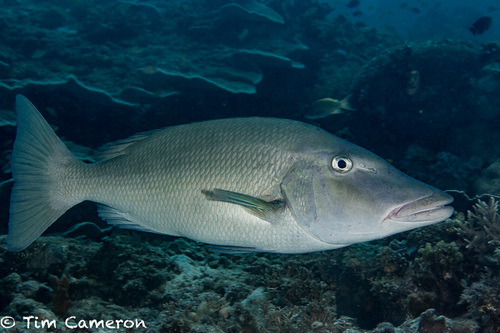
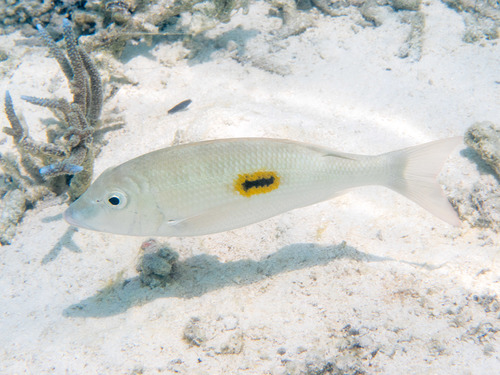
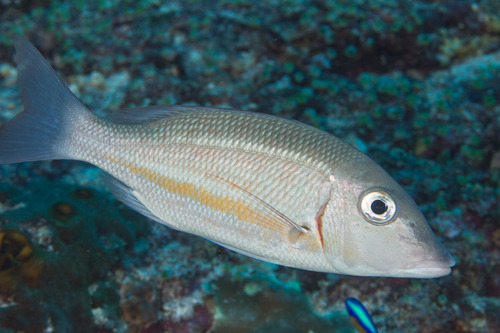
Lethrinus obsoletus, commonly called the orange-striped emperor, has a dorsal fin supported by 10 spines and 9 soft rays, while its anal fin is supported by 2 spines and 8 soft rays. Its body is moderately deep, with body depth measuring 2.4 to 2.8 times its standard length. The dorsal profile of the head around the eye is straight or slightly convex, and it is also slightly convex along the snout. The teeth at the sides of the jaws are either rounded or conical, and the axilla of the pectoral fin is densely scaled. The overall body colour ranges from light tan to olive-brown, with a horizontal yellow-orange stripe running along the lower flank from the base of the pectoral fin to the caudal peduncle. Two indistinct yellowish orange stripes sit above this main stripe. The head has a number of wide, faint vertical and oblique dark and light bands, and white spots sometimes appear under the eyes. Fins are whitish or yellowish brown, and sometimes have blotched patterning. This species has a maximum published total length of 60 cm (24 in), though 30 cm (12 in) is a more typical size. Lethrinus obsoletus has a wide distribution across the Indian and Western Pacific oceans. It occurs along the coast of eastern Africa from the Red Sea south to Sodwana Bay in South Africa, and ranges across the Indian Ocean into the Pacific Ocean as far as the Ryukyu Islands, Tonga, and Samoa. In Australian waters, it is found at Rowley Shoals, Scott Reef, and Hibernia Reef off Western Australia, the Cocos (Keeling) Islands, Ashmore Reef in the Timor Sea, and along the northern Great Barrier Reef off Queensland. Orange-striped emperors typically inhabit seagrass beds, as well as sand and rubble areas in lagoons and reefs. Juveniles prefer seagrass beds, and move into reef habitats as they mature. This species can be found at depths down to 30 m (98 ft).