About Lethrinus nebulosus (Forsskål, 1775)
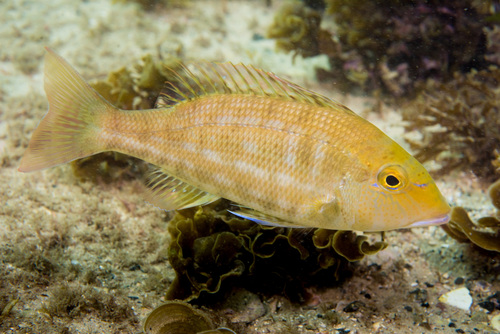
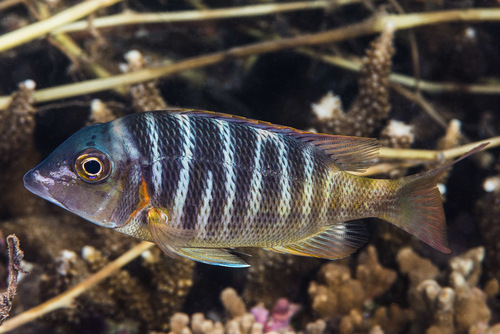
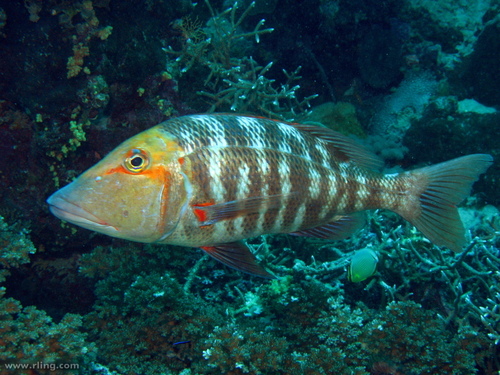
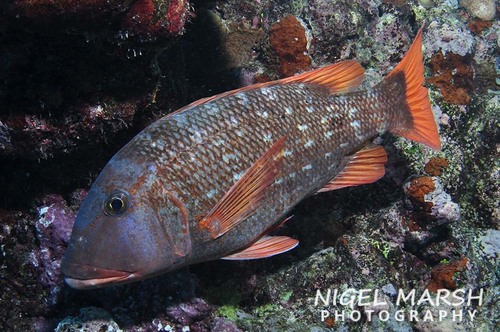
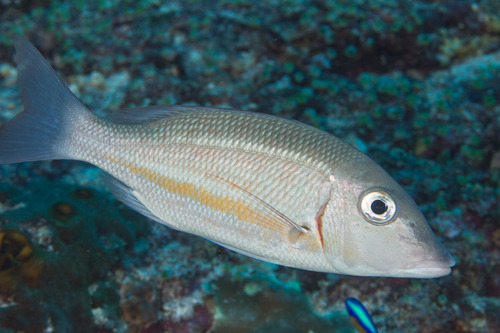
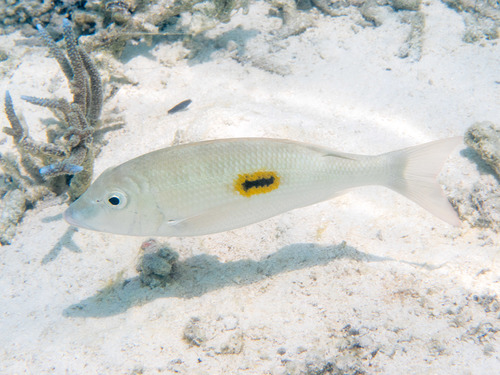
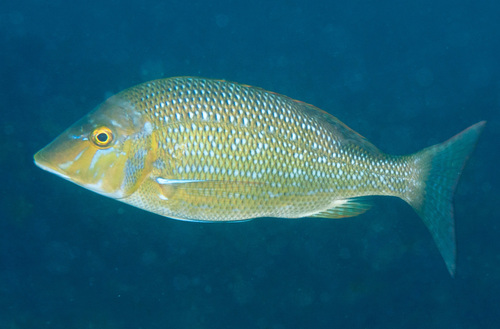
This species commonly reaches approximately 70 cm in length, with the largest recorded individuals measuring 87 cm. Its body color ranges from yellow to yellowish-brown or bronze, with a lighter belly. Scattered blue markings cover its body. The cheeks lack scales and may have vertical blue markings. Its fins are whitish or yellowish, with a yellow-edged dorsal fin. This fish is found in waters ranging from East Africa to southern Japan, including Australian coastal waters, the Red Sea, the Persian Gulf, and New Caledonia, where it is one of the major commercial fish. It inhabits both marine and brackish waters at depths between 10 and 75 metres. It is a non-migratory species found on coral and rocky reefs, seagrass beds, mangrove swamps, and over sandy substrates. Juveniles may occur in large schools. Spangled Emperor are very common in many of these locations. Another source notes they usually inhabit waters 20-300 meters deep, but can be found shallower, most commonly near structure. As a popular good eating fish, overexploitation has significantly decreased its population, especially in the Persian Gulf, where the development of Emirati fishing vessels has considerably reduced the catch of this fish (called 'Sheri' or 'Sherry' locally). Despite this decline, the species is still caught at near sustainable numbers, and its offshore populations are of lower concern. Around 3000 tons of Lethrinus nebulosus is caught every year in the Persian Gulf. It is sought after by recreational fishers and is considered delicious.