About Lethenteron appendix (DeKay, 1842)
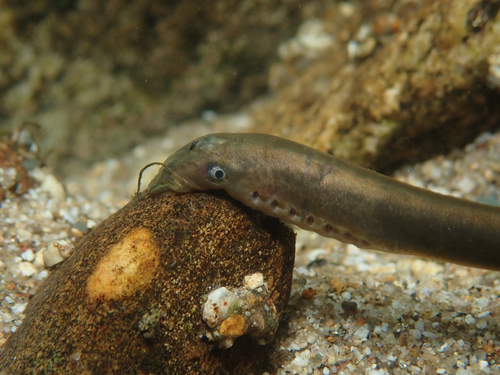
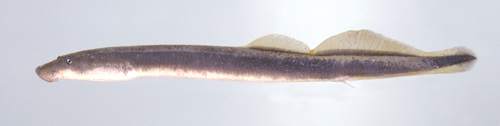
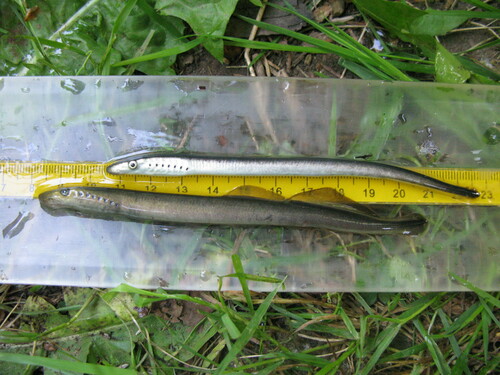
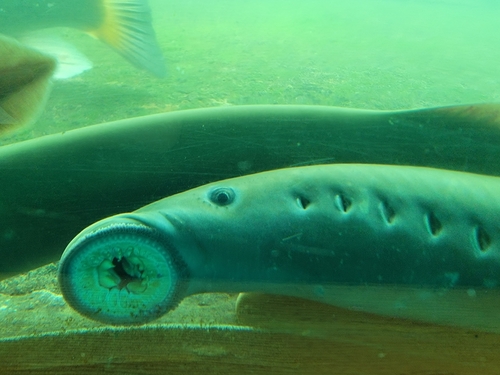
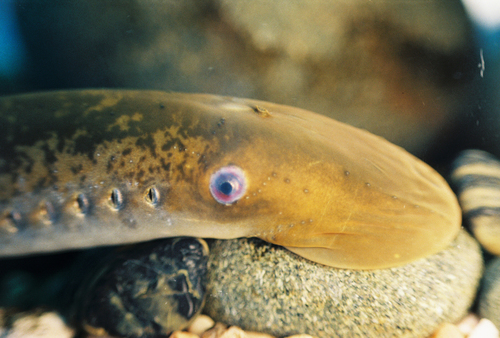
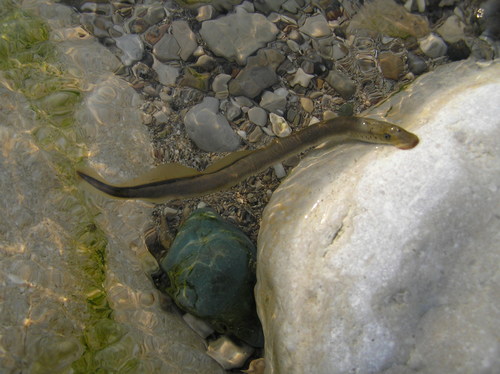
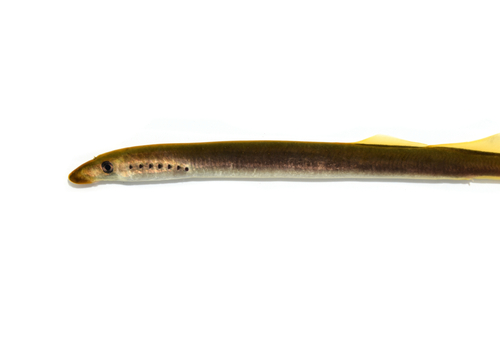
The scientific name of the American brook lamprey, often shortened to ABL, is Lethenteron appendix (DeKay, 1842). This species produces small, white, sticky eggs that measure approximately 1 mm (0.04 in). When hatching occurs, the resulting embryos are also small, measuring less than 5 mm (0.20 in); they are white and worm-like in shape. The embryos develop their larval appearance within one month of hatching. All lamprey larvae are called ammocoetes. Small American brook lamprey ammocoetes have a dark longitudinal band running along their body, a dark head region, and clear body tissue everywhere else. As the ammocoetes grow in size, their overall body becomes progressively darker, reaching a dark brown color when they reach their maximum size of roughly 250 mm (10 in). During this growth, the original dark longitudinal band on the body also begins to lighten, and is no longer distinct in more mature ammocoetes. Mature ammocoetes do develop a distinct dark spot on the caudal fin, however. There are likely multiple ABL races that may have location-specific color patterns. In Ohio, older ABL ammocoetes have a dark yellow band that runs the full length of their dorsal surface, along with additional pigmentation on the caudal fin. Coloration changes drastically when the ammocoete undergoes metamorphosis into the adult form. Adult ABL are silver during fall and winter, but may turn darker black or brownish by spring, when breeding begins. Adults have a dark back, pale belly, yellowish fins, and a dark blotch at the end of the tail. Their skin is smooth, leathery, and completely lacks scales. Adults usually retain a silvery overall appearance even after reaching full maturation. Adult American brook lampreys are typically around 200 mm (8 in) long, though adult length can vary widely. ABL generally inhabit clear, cold brooks and small streams. ABL ammocoetes feed on algae and detritus for a period between three and seven years, before undergoing metamorphosis into sexually mature adult fish. Metamorphosis occurs in late summer and early fall, and adults become ready to spawn at the end of winter, when spring temperatures reach approximately 15 °C, which is suitable for egg development. One or more males, assisted by one or more females, build small nests by lifting pebbles with their mouths and moving the pebbles to form the rims of a shallow depression. Adults often work in groups and build nests communally. During and after nest construction, the sticky ABL eggs are deposited into the nest and adhere to the surrounding sand and gravel. Adult ABL cannot feed, because they have a nonfunctional intestine, and adults only live for four to six months. Because of this, adult ABL die shortly after spawning.