About Lestes sponsa (Hansemann, 1823)
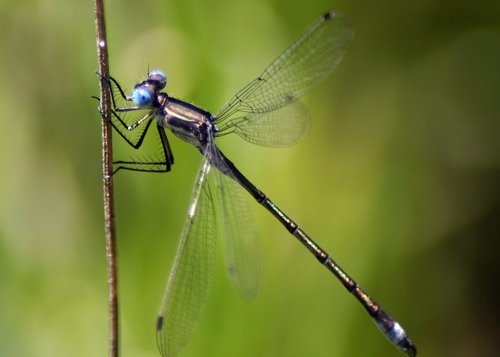
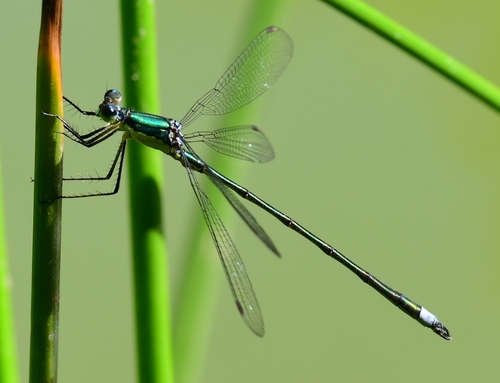
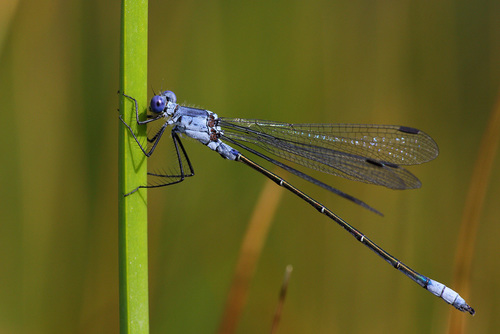
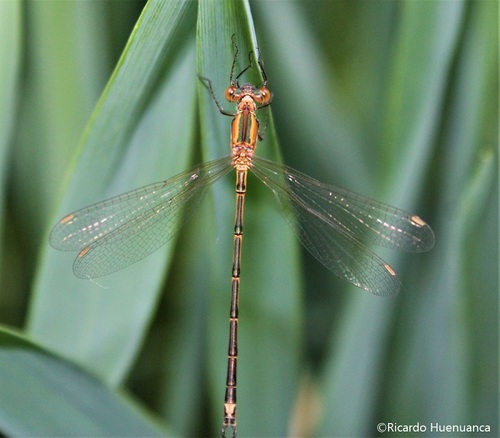
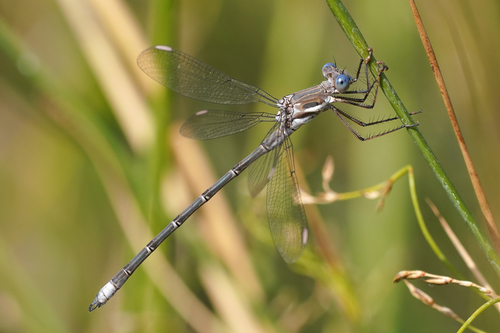
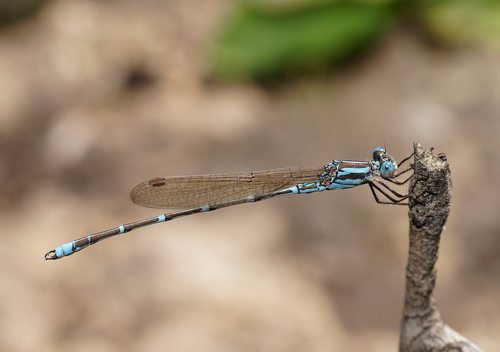
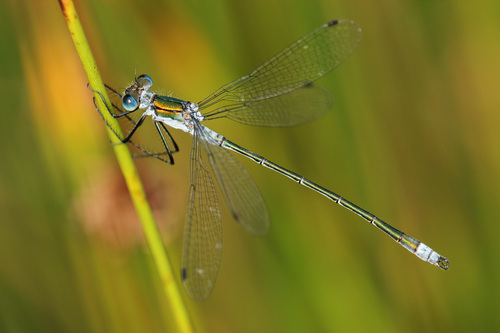
All species in the genus Lestes are very similar and hard to tell apart in the field. The shapes of their anal appendages are the key characteristic for identification. In L. sponsa, the anal appendage is black; the outer superior appendages have two internal teeth, while the inferior appendage is elongated and cylindrical. Five species of Lestes occur in northern Europe, and six occur across Europe as a whole, so identification can be problematic, and it is best to check as many features as possible. L. sponsa is a typical member of the genus, with a green metallic body and wings held away from the body at rest. Its abdomen is 26–33 mm (1.0–1.3 in) long, and its wings are 19–23 mm (0.75–0.91 in) long. Mature males have a powder blue color on the prothorax and on segments 1–2 and 9–10 of the abdomen, and they also have blue eyes. Females lack this blue color. Immature males also do not have the blue pruinescence, and have greenish brown eyes. The pterostigmata of immature males are almost white. This species prefers habitats of pools, ponds, and moorlands, and lives in still or very slow flowing water. The emerald damselfly has a large Palaearctic distribution, found across a band of central Europe and Asia from Spain to the Pacific. It does not live in the far north of Europe and Asia or in the extreme south, and is absent from southern Spain, southern Italy, and Greece. It probably occurs in some areas of North Africa, and around the Mediterranean it is found at altitude. In Great Britain, it is the only common species in the genus Lestes.