About Lespedeza virginica (L.) Britton
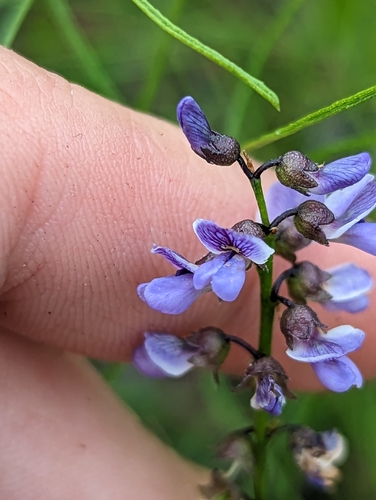
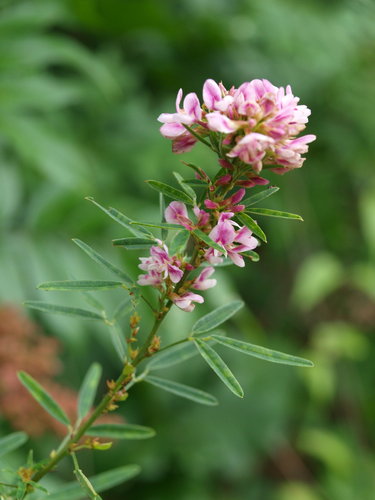
Lespedeza virginica, also called slender bush clover, is an herbaceous perennial legume. It can grow up to 2.5 feet tall. It has trifoliate compound leaves with slender primary petioles, and its stem is covered in small white hairs. Its alternate leaves are dark green, though they sometimes appear pale. The flowers are pink, with a broad upper petal and two side petals. Flowers are either cleistogamous or chasmogamous. Slender bush clover flowers from July to September, and sets seed from September to October. L. virginica grows well in full to partial sun, and can grow successfully in rocky or sandy soils. It produces a taproot that helps it establish. Lespedeza virginica is distributed from Maine south to Florida, west to Texas, north to Michigan, and also occurs in Eastern Canada. Disjunct populations are found in Nuevo León, Mexico, central Wisconsin, and southern Minnesota. L. virginica prefers drier habitats, and can be found in prairies, rocky and sandy forests, savannas, and well-drained environments such as roadsides. A wide variety of wildlife eats Lespedeza virginica. It makes up a large part of the diet of bobwhite quail, deer, and other ground birds. Both the seeds and leaves are eaten. Nectar and pollen are eaten by various long-tongued insects such as butterflies and bees. Scarification of the seed testa is reportedly necessary for germination, which means seed consumption by animals is important to this plant's life cycle.