About Lepyronia coleoptrata (Linnaeus, 1758)
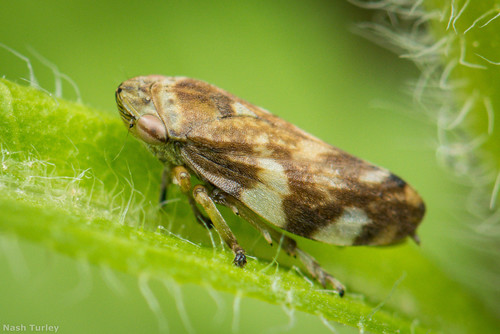
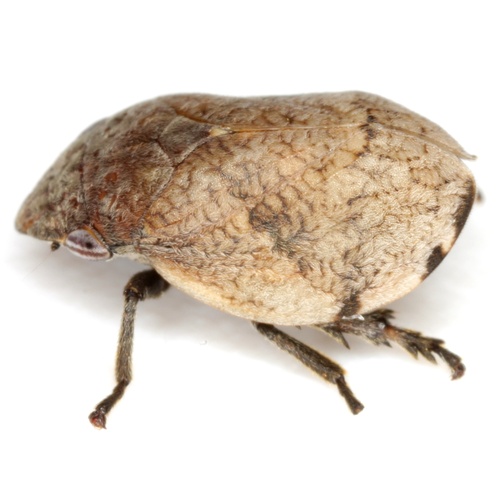
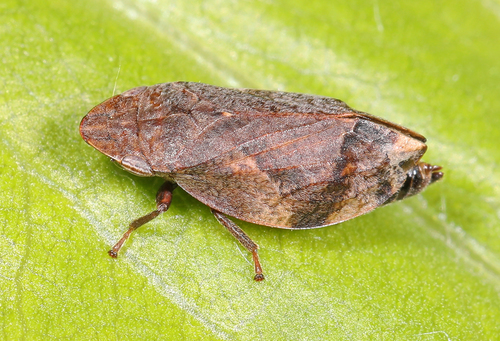
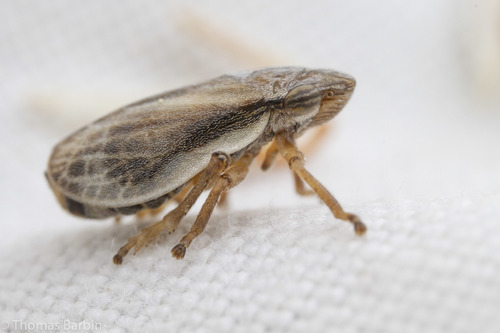
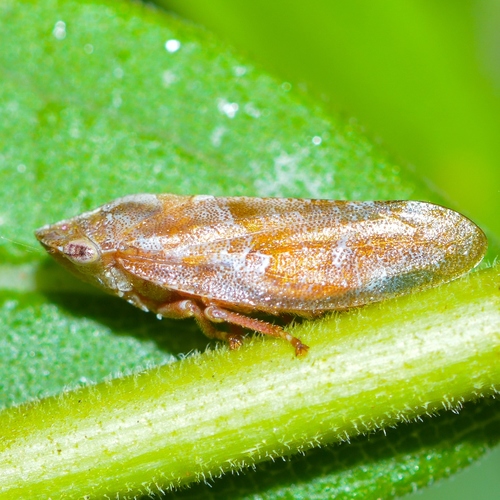
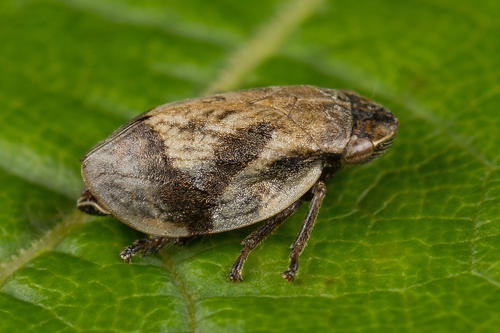
Imago (adults) of Lepyronia coleoptrata measure 5.1–7.8 mm, and are pale brown with dark membranes on their front wings. Eggs measure 1.6–0.4 mm, are oblong, somewhat curved, flattened on the dorsal side, and convex on the ventral side. Mature larvae reach 5.7–6.7 mm, and older larvae have distinct dark spots across their bodies. This species overwinters as eggs under the bark of perennial plant shoots. Larvae emerge between late April and the first half of May. They colonize both annual lavender shoots (at a rate of 55–96%) and perennial lavender shoots (at a rate of 40–45%), and are concentrated mainly within 20 cm of the soil surface. Larvae feed while surrounding themselves with foam made from their own secretory fluid. At feeding damage sites, shoot tissue dries out and cracks, which blocks the movement of water and nutrients to plant parts located above the damage. Severely damaged shoots grow and develop more slowly, thin out, turn pale, develop wavy bending in the upper portion, and fail to open fully. Inflorescence mass decreases by between 12% and 67% in damaged plants. Winged adult forms disperse in the second half of June. After dispersing by flight, they can be found not only on lavender, but also on other agricultural crops, in forest belts, along field edges, and on wastelands with a variety of grassy vegetation. They feed on leaves, which causes the formation of small yellowish spots. Adults reach full sexual maturity between August and September. Females lay eggs that remain dormant through the winter. One generation of Lepyronia coleoptrata develops per year.