About Lepus tolai Pallas, 1778
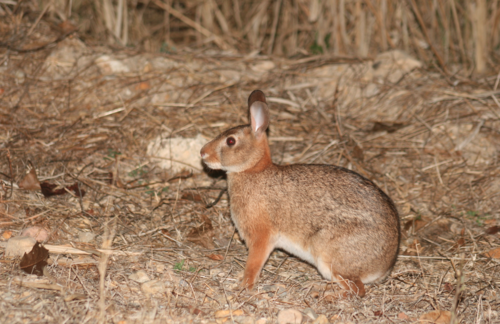
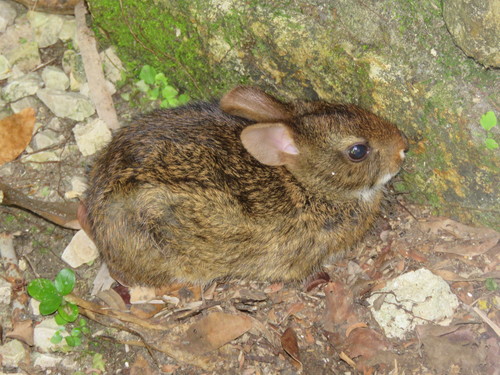
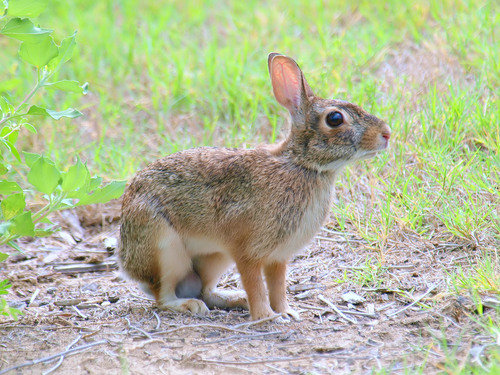
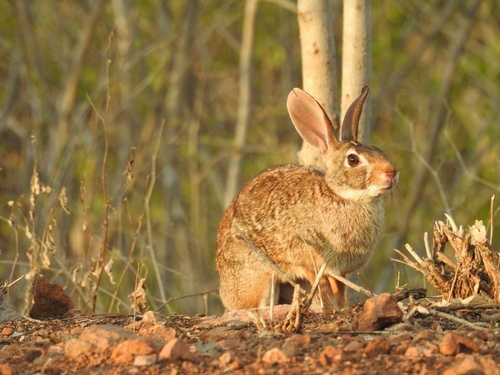
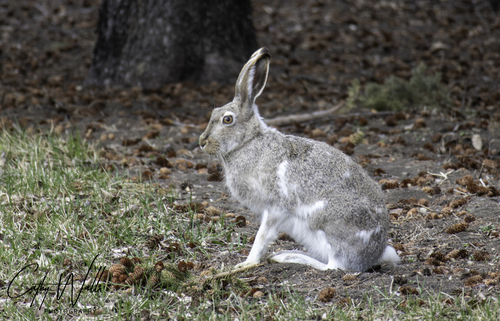
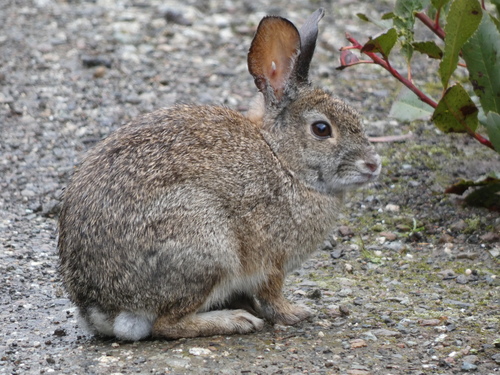
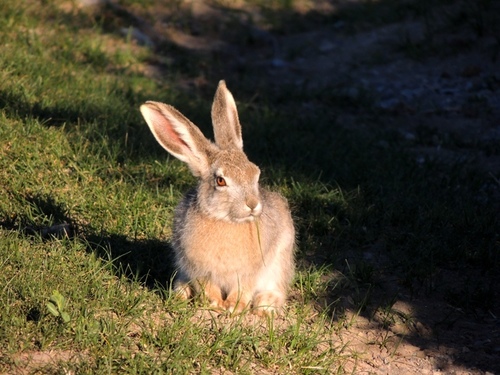
Lepus tolai Pallas, 1778, commonly known as the tolai hare, reaches a head-and-body length of 40 to 59 centimetres (16 to 23 inches), with a tail that measures 72 to 110 millimetres (2.8 to 4.3 inches). Its ears are 80 to 120 mm (3.1 to 4.7 in) long, and its hind feet range from 110 to 127 mm (4.3 to 5.0 in) in length. Adult individuals weigh between 1.7 and 2.7 kilograms (3.7 to 6.0 pounds). Colouration in this species varies across its range. Upper body fur can be dusty yellow, pale brown, sandy yellow, or sandy grey, and may bear dark brownish or reddish stripes. The hip region is sometimes coloured ochre or grey. A pale, bare patch of greyish or ochraceous skin surrounds the eye; this patch extends forward nearly to the muzzle and backward to the base of the long ears, which have black tips. The underparts and flanks are solid white, and the top of the tail has a broad black or brownish-black stripe. Like other leporids, the tolai hare has a dental formula of 2.0.3.3/1.0.2.3 × 2 = 28: it has two pairs of upper incisors, one pair of lower incisors, no canines, three upper premolars and two lower premolars on each side, and three upper and three lower molars on either side of the jaw. Few reliable features exist to distinguish tolai hare subspecies, because their original descriptions relied mostly on external characteristics and were based on small sample sizes. Clear distinctions between subspecies remain unclear, as the species shows gradual changes in colouration across its geographic range. The tolai hare is native to central and eastern Asia. Its range stretches from the eastern shore of the Caspian Sea, through eastern Iran, Afghanistan, southern Kazakhstan, Turkmenistan, Uzbekistan, and Kyrgyzstan, then across southern Siberia and Mongolia to western, central, and north-eastern China. Most individuals live at elevations between 600 and 900 m (2,000 and 3,000 ft), but one individual has been recorded at a much higher elevation of 4,900 m (16,100 ft). A single specimen found in Jammu and Kashmir suggests the species' distribution may extend further south. The tolai hare occupies a variety of habitats, from arid sand dunes to river valleys with tall vegetation. It prefers wetter habitats, and populations are recorded as abundant in the Hailar river valley. It avoids steppes that support low-lying vegetation. Other confirmed habitats for tolai hare populations include grasslands, deserts, semi-deserts, rocky areas, and forest steppes; it is not present in heavily forested regions. The tolai hare is primarily nocturnal, and its diet consists of grasses, sedges, wood, bark, seeds, bulbs, shoots, and roots. It will occasionally leave its nocturnal routine to forage during daylight, and young hares are generally more active during the day. Except when breeding, the species does not dig burrows. Instead, it scrapes a shallow depression in the ground called a form with its front paws to rest in during the day. This depression is shallow in hot weather, and deeper when conditions are colder. Tolai hares breed two or three times per year, and each litter produces between two and six young. Later litters in a breeding season are usually smaller than earlier litters. The breeding season generally starts in late February and continues through March, but it can start earlier or end later depending on location; in some regions, it lasts up to five months. The species has a diploid chromosome number of 48. Multiple species of parasites from the genus Eimeria use the tolai hare as a host, specifically E. leporis and E. gobiensis. 22 different tick species have been found on tolai hares, including species from the genera Dermacentor and Rhipicephalus. Mite numbers are typically highest during spring and summer. Fleas, trematodes, cestodes, and nematodes have also been found on or in tolai hares. The species also carries the pathogens that cause tularemia, plague, and brucellosis.