About Lepus granatensis Rosenhauer, 1856
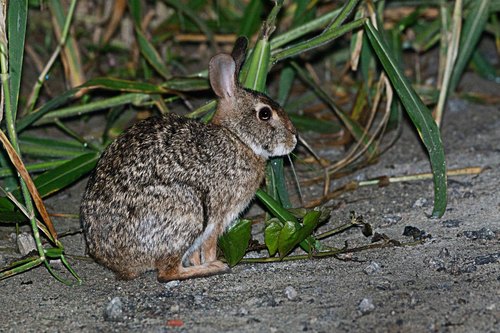
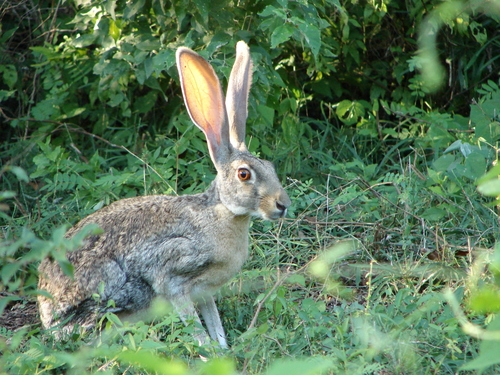
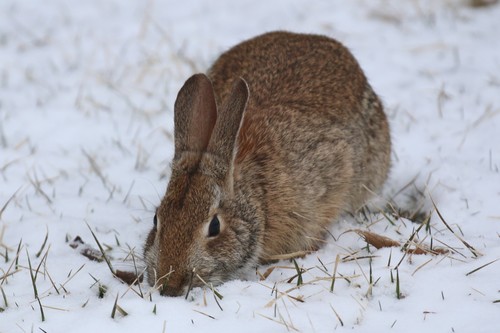
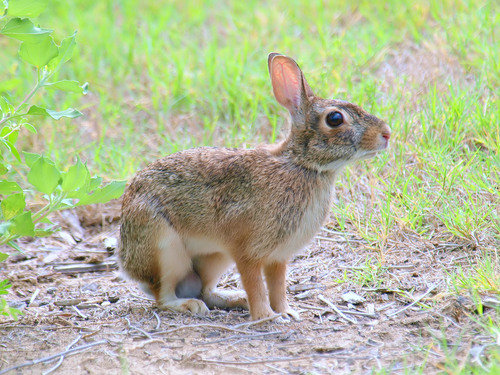
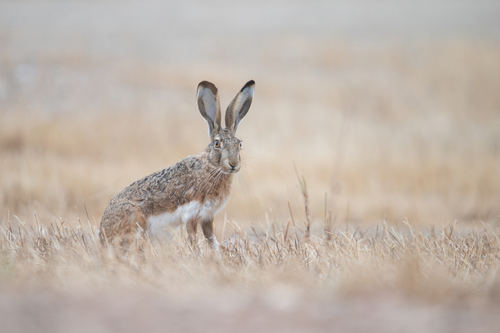
The Granada hare, scientifically named Lepus granatensis Rosenhauer, 1856, has an average adult weight of 2–2.6 kilograms (4.4–5.7 lb). It has distinctive reddish outer legs, and a clear contrast between the gray-brown fur on its back and the white fur on its underside and inner legs; this white colour extends all the way to the tips of its toes. This species is smaller than the broom hare (L. castroviejoi) and European hare (L. europaeus), both of which also live on the Iberian peninsula. The Granada hare has a head and body length of 44.5 to 47.3 centimetres (17.5 to 18.6 in), a hind foot length of 11.66 to 12.74 cm (4.59 to 5.02 in), and an ear length of 9.25 to 10.27 cm (3.64 to 4.04 in). The species shows some degree of sexual dimorphism, with females averaging a heavier weight than males. In terms of behaviour and ecology, female Granada hares produce an average of 2 young per litter, though litters as large as 7 leverets have been recorded. This hare can be parasitized by Taenia pisiformis, a tapeworm, as well as by parasites from the genus Eimeria that cause coccidiosis. These parasites noticeably impact the host hare's ability to escape, and the negative effects become stronger as the number and variety of parasites increase. Many other parasites are known to infect the Granada hare, including species from the genera Ixodes, Spilopsyllus, Mosgovoyia, Trichostrongylus, Graphidium, Nematodiroides, Passalurus, Micipsella, Hyalomma, Haemaphysalis, Rhipicephalus, Haemodipsus, Linguatula, and Dicrocoelium. The Granada hare has never been recorded to contract European brown hare syndrome, but it is susceptible to some strains of rabbit hemorrhagic disease virus that have been known since the 1990s. It can also develop bacterial infections such as tularemia.