About Leptuca thayeri (Rathbun, 1900)
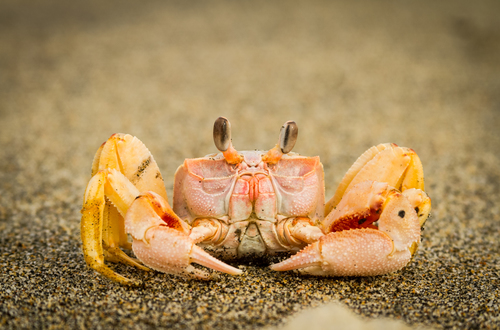
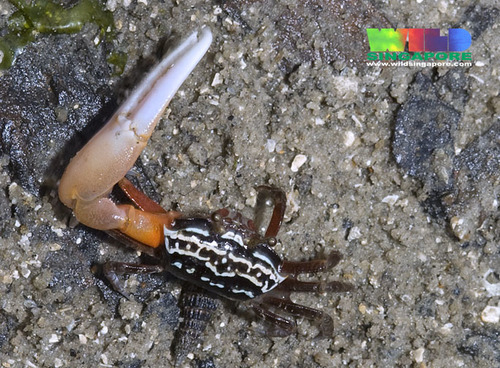
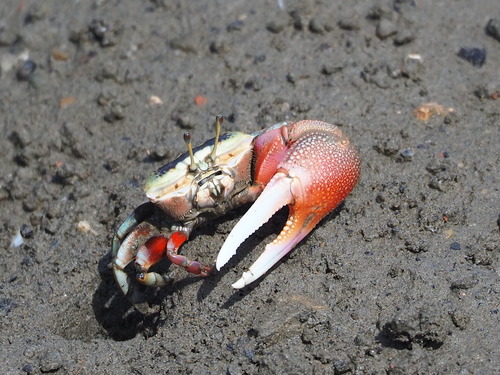
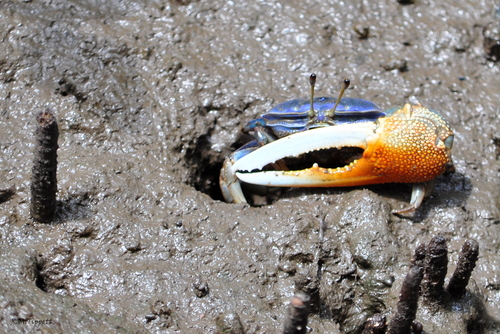
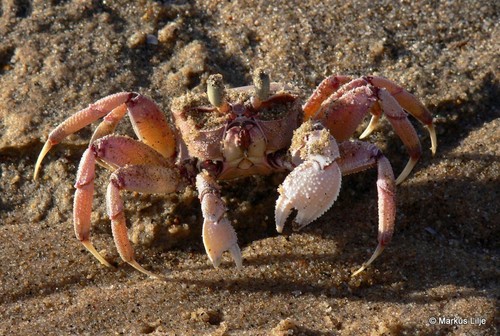
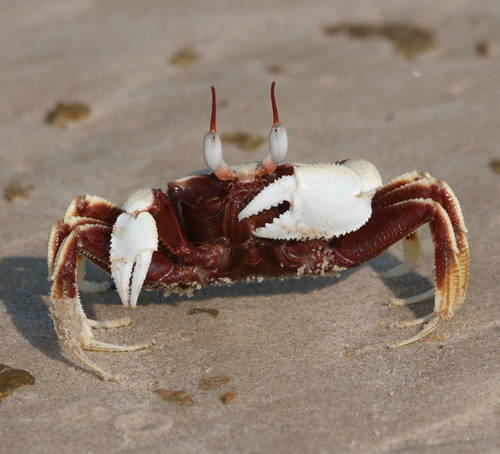
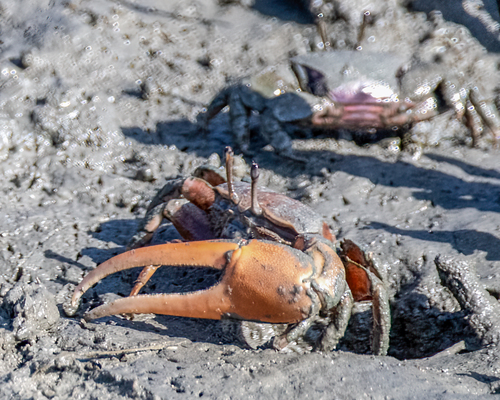
Leptuca thayeri, commonly known as the Atlantic mangrove fiddler crab or mangrove fiddler, is a species of true crab belonging to the family Ocypodidae. This species is distributed across the Western Atlantic; specifically, it occurs in subtropical mangroves of Ubatuba, State of São Paulo, Brazil. It was formerly classified under the genus Uca, but in 2016 it was moved to the genus Leptuca, which was previously a subgenus of Uca.
Within mangrove habitats, Leptuca thayeri is euryhaline, able to survive in salinities ranging from 4 to 32. Its distribution within mangroves depends on several environmental factors: substrate quality including the balance of pebbles, sand, silt, and clay, organic matter availability, and seagrass abundance, as well as temperature. During warmer months, the species has a larger population and a wider distribution compared to the colder fall and winter months.
Leptuca thayeri lives on and within mangrove sediments and plays an important ecological role in this habitat. It shapes sediment structure and biology through its foraging behavior and construction of defensive burrows. Foraging by this species alters bacterial assemblages in surrounding mangrove sediment by decreasing bacterial diversity. While foraging, these crabs sort individual sediment grains using their spoon-tipped setae. This sorting of sediment grains drives bioturbation, which supports deeper oxygen penetration into sediment and the remineralization of organic matter.