About Leptuca pugilator (Bosc, 1801)
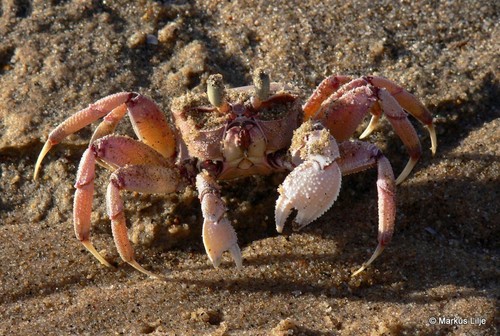
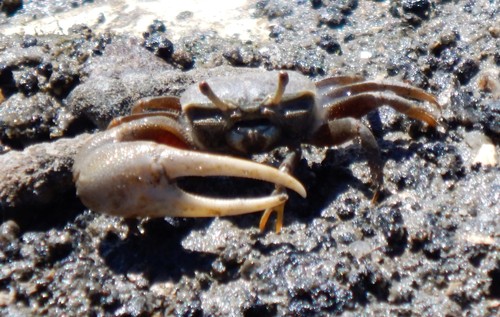
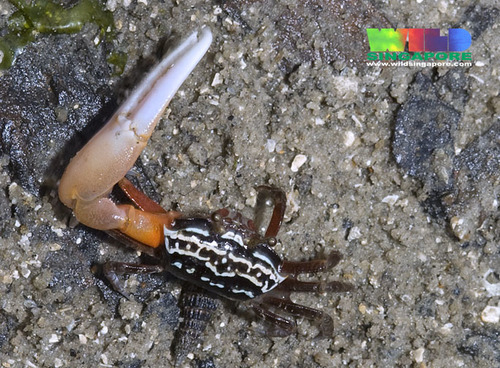
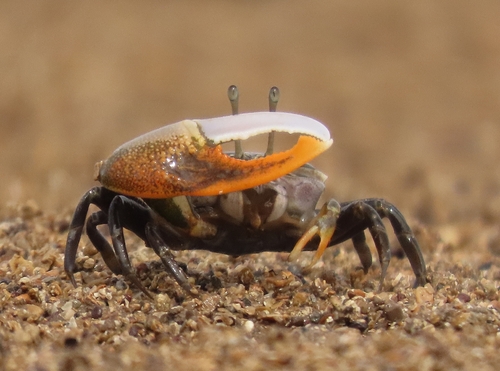
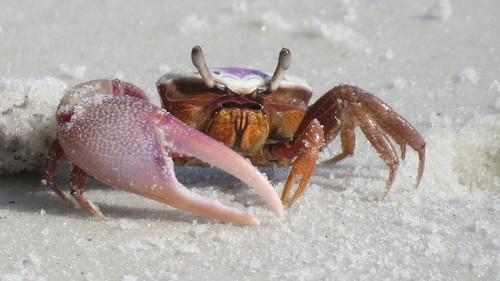
Leptuca pugilator, first described by Bosc in 1801, has a square carapace that tapers slightly toward the rear. The carapace can reach a maximum width of 25 millimetres (0.98 in), but most individuals reach up to 21 mm (0.83 in) wide and 14 mm (0.55 in) long. The distance between its two eyes is much shorter than the length of its eyestalk. Males of this species have one extremely enlarged chela (claw), which they use to defend territories and fight other males. This enlarged claw can grow much larger than the crab's entire body, reaching up to 35 mm (1.4 in) long, and can exceptionally reach up to 41 mm (1.6 in) long. It is common for males to lose their enlarged claw during fights; after loss, the claw regenerates, and the claw on the opposite side of the body begins to enlarge, so individuals may be either right or left clawed. Unlike the closely related species Minuca pugnax and Minuca minax, the inner surface of Leptuca pugilator's enlarged claw is very smooth. Leptuca pugilator is one of only five fiddler crab species that occurs primarily in temperate regions. Its native range includes the east coast of North America and the Gulf of Mexico, where it has been recorded as far north as Massachusetts, and as far south as Texas and Florida. The species has also been reported from the Bahamas, and may be found in warmer Atlantic waters along the west coast of Africa. This crab lives in estuarine, coastal, and sheltered shore habitats with sandy or muddy substrates. It is often found in areas adjacent to marshes, and along the banks of tidal streams, where it can occur in very large populations numbering from thousands to millions of individuals.