About Leptotarsus huttoni (Edwards, 1923)
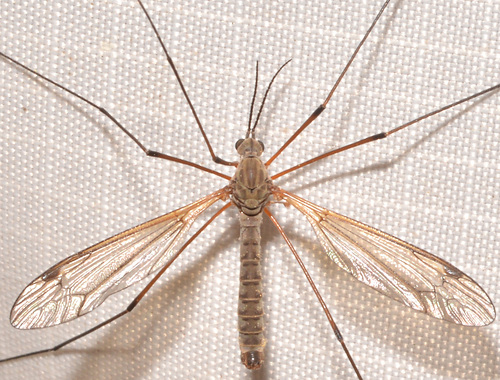
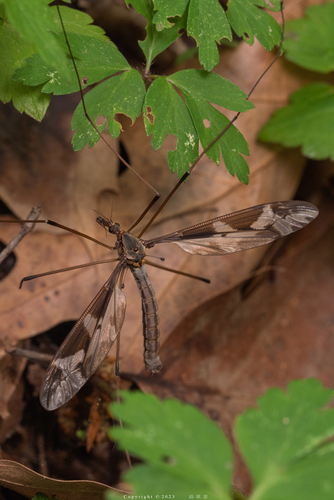
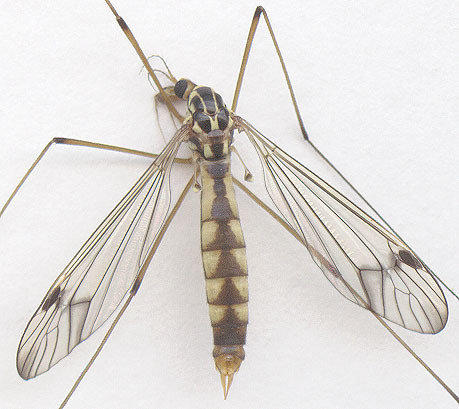
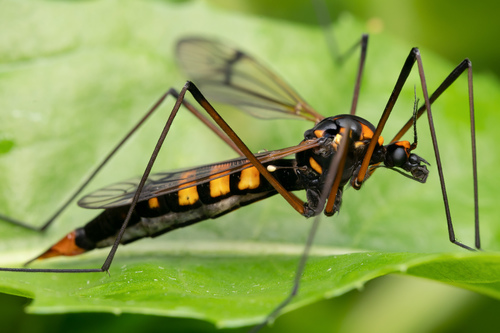
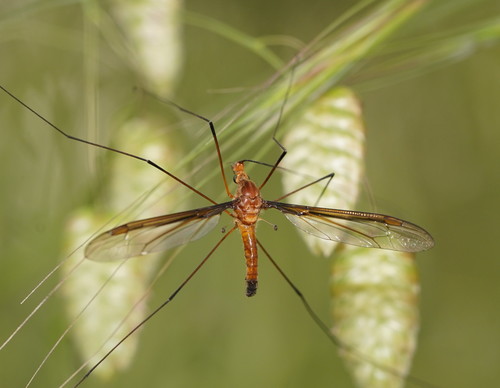
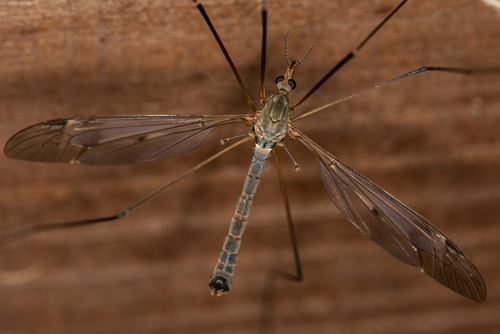
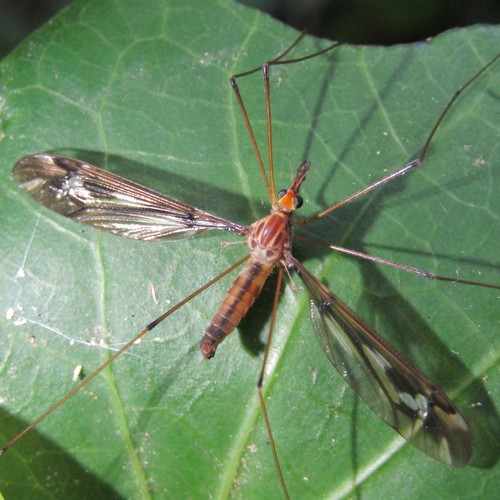
Leptotarsus huttoni was first described by Edwards in 1923, who provided the following physical description: The head is dull dark ochreous, with very little darkening in its middle area, and has light ochreous-grey dusting around the eyes. The frons is roughly one-quarter as wide as the head, with a moderately sized tubercle. The rostrum is slightly longer than the head, and is noticeably darker than the vertex; the nasus has long hairs at its non-bifid tip. The palpi are blackish. The antennae are a fairly dark brown, and look identical in both males and females; they are shorter than the thorax, with a slender first scapal segment. The first flagellar segment is slightly shorter than the second, third, and fourth flagellar segments; the fifth and sixth are shorter still, while the final five segments are thinner and indistinctly separated from one another. The thorax is similar in appearance to that of Leptotarsus lunata, but is far less hairy, and the area above the blackish pleural spot is not noticeably pale. The abdomen is very similar to that of L. lunata, but lacks prominent grey dusting on any area; the dark blackish dorsal stripe is narrower, particularly on the second abdominal segment. The legs, especially the tarsi, are distinctly longer and more slender than those of L. lunata; the femora and tibiae are brown with black tips, and the tarsi are darker. The wings are similar to those of L. lunata, but have a small white streak before the humeral cross-vein and a whitish marking in cell M1; the stem of cell M1 is shorter, measuring between one-fifth and one-eighth the length of the cell itself. Adult body length ranges from 9 to 10 mm (0.35 to 0.39 in), wing length ranges from 14 to 16 mm (0.55 to 0.63 in), and male hind leg length ranges from 38 to 42 mm (1.5 to 1.7 in). This species is endemic to New Zealand, occurring on both the North Island and South Island. Its typical habitat is rotting wood.