About Leptotarsus albistigma (Edwards, 1923)
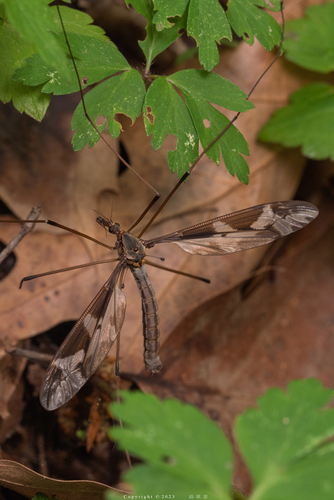
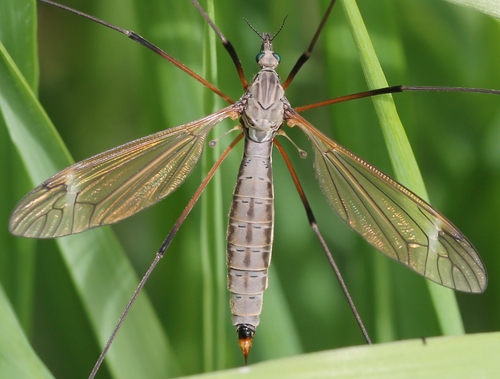
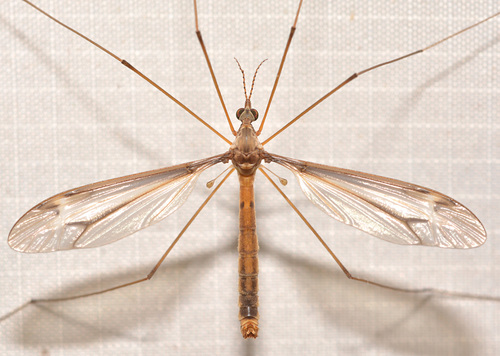
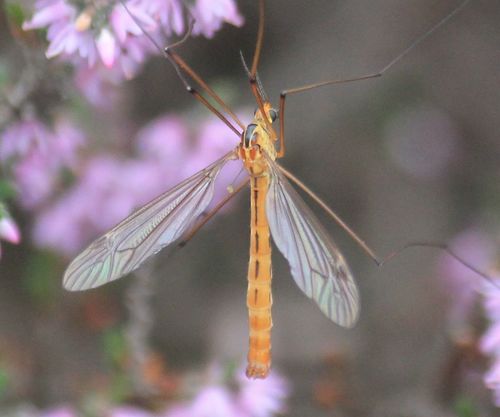
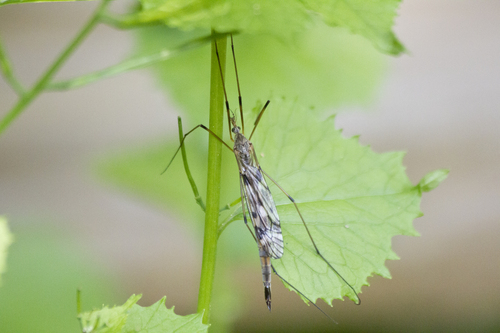
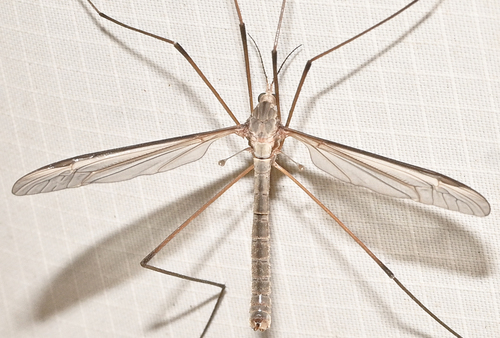
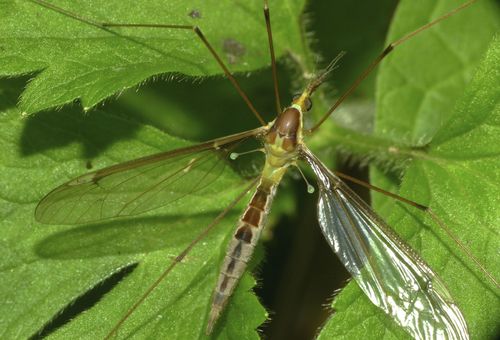
The original species description provided by Edwards for Leptotarsus albistigma notes that it differs from M. viridis in several key features. The middle praescutal stripe is obsolete, while the lateral pair of stripes is noticeably darker. The abdomen is duller, more ochreous in tone, its tip is not darkened, and all tergites except the first have rather broad lateral bands of grey dusting. The hypopygium is smaller, and the claspers have a slightly different structure. The legs are lighter in colour, the wings have a distinct brown tinge; the lower pre-arcular cell, costal and subcostal cells, base of cell R2, and veins are dark brown, and the stigma is clearly whitish-ochreous. Cell M1 is sessile in some specimens, and cell Ax is broadest at its middle. Body length ranges from 16–17 mm in males and 17–20 mm in females; wing length is 18–23 mm; halter length is approximately 3 mm; female hind leg length is 45–50 mm. Leptotarsus albistigma is pale green overall. Its eggs are elliptical, measuring 0.75 mm in length. Mature larvae measure between 16.5 mm and 20 mm in length, are moderately flattened, and are a light brown colour resembling cinnamon. This species is endemic to New Zealand. It is most commonly found in the South Island, where it occurs on damp logs of non-native tree species, including rotting Pinus radiata and willow logs.