About Leptoptilos dubius (Gmelin, 1789)
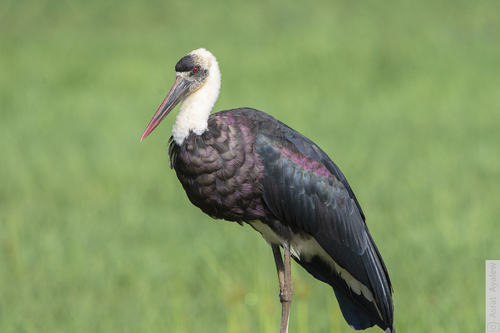
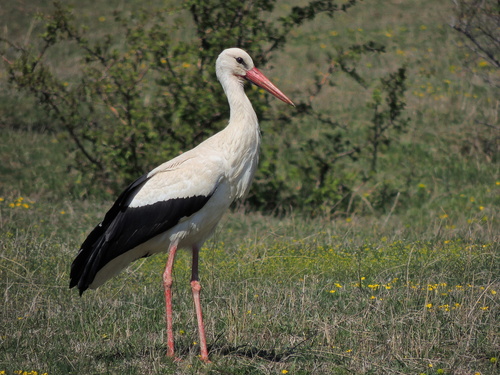
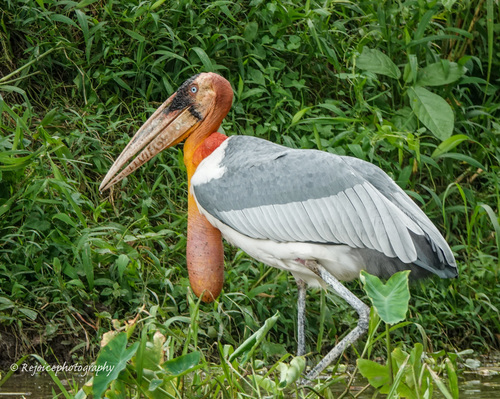
The greater adjutant, Leptoptilos dubius (Gmelin, 1789), is an extremely large stork species. Adults stand 145–150 cm (4 ft 9 in – 4 ft 11 in) tall, with an average length of 136 cm (4 ft 6 in) and an average wingspan of 250 cm (8 ft 2 in). It may match its close relative, the marabou stork (Leptoptilos crumeniferus), as the largest extant stork by wingspan. No weight measurements have been published for wild greater adjutants, but the species ranks among the largest living storks, with published body measurements overlapping those of the jabiru (Jabiru mycteria), saddle-billed stork (Ephippiorhynchus senegalensis) and marabou stork. Captive juvenile greater adjutants have weighed between 8 and 11 kg (18 and 24 lb). One injured nestling that recovered in captivity after a nest collapse weighed 4.71 kg (10.4 lb) as a nestling, and reached 8 kg (18 lb) when mature and ready for re-release. For comparison, the heaviest recorded wild stork was an 8.9 kg (20 lb) marabou stork; adult marabou storks range from 4–6.8 kg (8.8–15.0 lb) for females and 5.6–8.9 kg (12–20 lb) for males. The greater adjutant's huge, wedge-shaped bill averages 32.2 cm (12.7 in) long, and is pale grey with a darker base. Average body measurements for other parts are: 80.5 cm (31.7 in) for the wing chord, 31.8 cm (12.5 in) for the tail, and 32.4 cm (12.8 in) for the tarsus. Except for tarsus length, the greater adjutant's standard measurements are on average larger than those of other stork species. A white ruff of feathers at the base of its bare yellow to red-skinned neck gives the greater adjutant a vulture-like appearance. During the breeding season, the species' neck and pendant inflatable pouch turn bright orange, and the upper thighs of its grey legs turn reddish. Adult greater adjutants have dark wings that contrast with light grey secondary coverts, and a whitish underside to the body. The sexes cannot be told apart in the field. Juveniles have duller coloration than adults. The species' pendant inflatable pouch connects to the air passages, not the digestive tract. Its exact function is unknown, but contrary to past belief it is not used for food storage. This was confirmed in 1825 by Dr. John Adam, a student of Professor Robert Jameson, who dissected a specimen and found the two-layered pouch was filled mostly with air. The only other species that could easily be confused with the greater adjutant in its range is the smaller lesser adjutant (Leptoptilos javanicus), which lacks a pouch, prefers wetland habitats, has a lighter grey skull cap, a straighter edge to the upper mandible, and does not have the contrast between dark wings and grey secondary coverts seen in greater adjutants. Like other storks, the greater adjutant lacks intrinsic muscles in the syrinx, and produces sound mostly by bill-clattering; low grunting, mooing or roaring sounds are also made, especially when nesting. The greater adjutant performs its bill-clattering display with its bill held high, which differs from the closely related African marabou stork, which holds its bill pointed downward during this display. This species was once a widespread winter visitor in the riverine plains of northern India. Its breeding areas were largely unknown for a long time, until a very large nesting colony was discovered in 1877 at Shwaygheen on the Sittaung River, Pegu, Burma. It was believed that all Indian greater adjutants bred at this site. This breeding colony, which also hosted spot-billed pelicans (Pelecanus philippensis), shrank over time and disappeared entirely by the 1930s. After the colony vanished, a nest site in Kaziranga was the only known breeding area until new breeding sites were discovered in Assam, at Tonle Sap lake, and in Kulen Promtep Wildlife Sanctuary. In 1989, the breeding population in Assam was estimated at 115 birds, and between 1994 and 1996 the total population in the Brahmaputra valley was estimated to be around 600. A small colony with approximately 35 nests was discovered near Bhagalpur in 2006; this number grew to 75 nests by 2014. Fossil evidence suggests this species may have occurred in northern Vietnam around 6000 years ago, though the genus Leptoptilos included several other now-extinct species that may have been the ones found there. The IUCN records that the greater adjutant's extant range is limited to Cambodia and India; the species is considered probably extinct in Bangladesh, Lao People's Democratic Republic, Myanmar, Nepal, Pakistan, Thailand, and Vietnam. During the non-breeding season, greater adjutants in India disperse widely, mostly across the Gangetic Plains. Sightings from the Deccan region are rare, and records of flocks further south near Mahabalipuram have been questioned. In the 1800s, greater adjutants were extremely common within the city of Calcutta during the summer and rainy season. These aggregations along Calcutta's Ghats declined and disappeared entirely by the early 1900s; improved sanitation has been suggested as a cause of this local disappearance. Greater adjutants were recorded in Bangladesh in the 1850s breeding in the Sundarbans, but have not been recorded there since. Greater adjutants are usually seen alone or in small groups, stalking through shallow lakes, drying lake beds, and garbage dumps. They are often found in the company of kites and vultures, and will sometimes sit hunched and still for long stretches. They may also hold their wings outstretched, presumably to regulate their body temperature. They soar on thermals using their large outstretched wings.